Why Don't We Experience Two Eclipses Every Month?
Explore why we don't see two eclipses every month, despite the lunar cycle allowing for it. Understand the celestial mechanics behind this phenomenon.
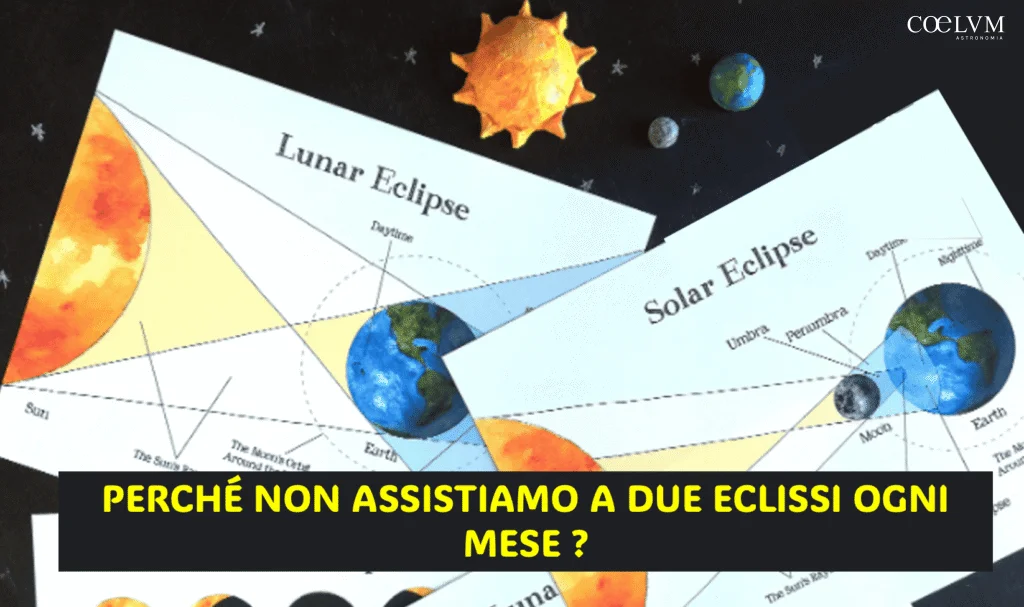
Eclipses are fascinating celestial events that capture the imagination of many. However, it may come as a surprise that we do not witness two eclipses every month, despite the lunar cycle allowing for such an occurrence.
The primary reason for this phenomenon lies in the tilt of the Earth's orbit. The Moon's orbit is inclined at an angle of about 5 degrees relative to the Earth's orbit around the Sun. This inclination means that during a new moon or full moon, the three celestial bodies—Earth, Moon, and Sun—do not always align perfectly.
To have a solar or lunar eclipse, the alignment must occur when the Moon is at or near one of the two points in its orbit where it crosses the plane of the Earth's orbit, known as the nodes. These nodes are not stationary; they gradually shift over time due to gravitational interactions with the Earth and the Sun.
As a result, eclipses can only happen during specific periods known as eclipse seasons, which occur approximately every six months. During these seasons, it is possible to have multiple eclipses, but outside of these windows, the opportunity for eclipses diminishes significantly.
In summary, while the Moon's cycle could theoretically allow for two eclipses each month, the tilt of its orbit and the necessity for precise alignment with the Sun and Earth prevent this from occurring regularly. Understanding these celestial mechanics enriches our appreciation of the cosmos and the intricate dance of the heavenly bodies.
This explanation highlights the complexity of celestial movements and the reasons behind the rarity of simultaneous eclipses. The next time you gaze up at the sky during an eclipse, you can appreciate the unique conditions that made it possible.