Understanding Solar Eclipses: A Celestial Event
Explore the fascinating phenomenon of solar eclipses, their mechanics, and the differences between total and annular eclipses. Learn how alignment of celestial bodies creates these awe-inspiring events.
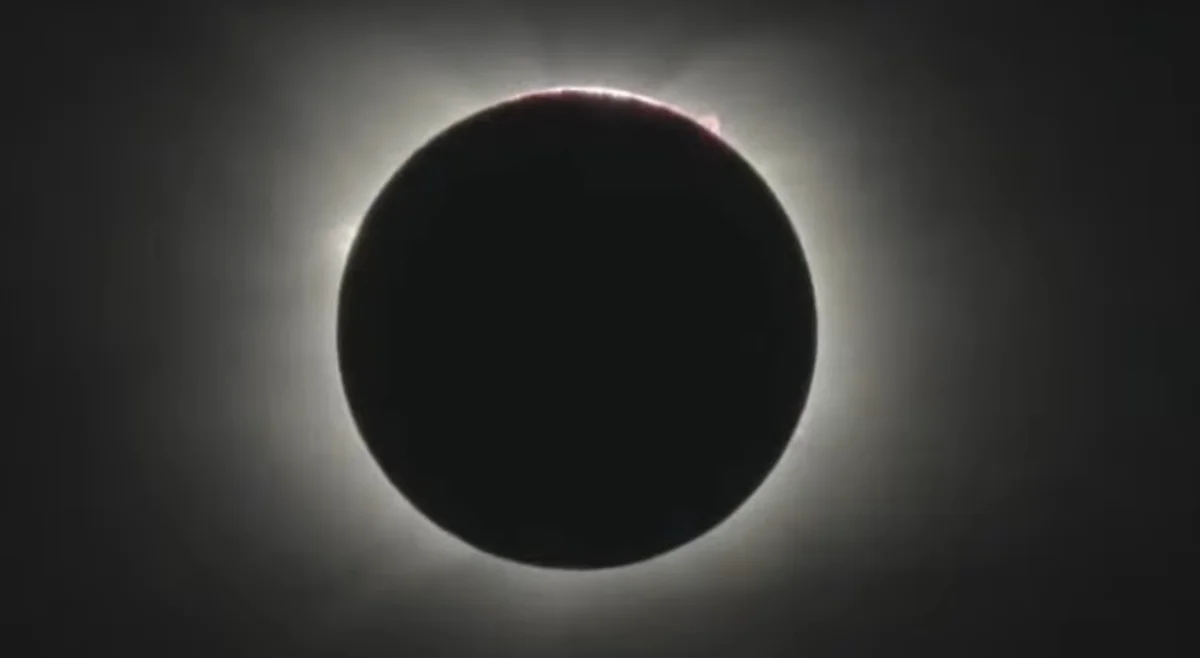
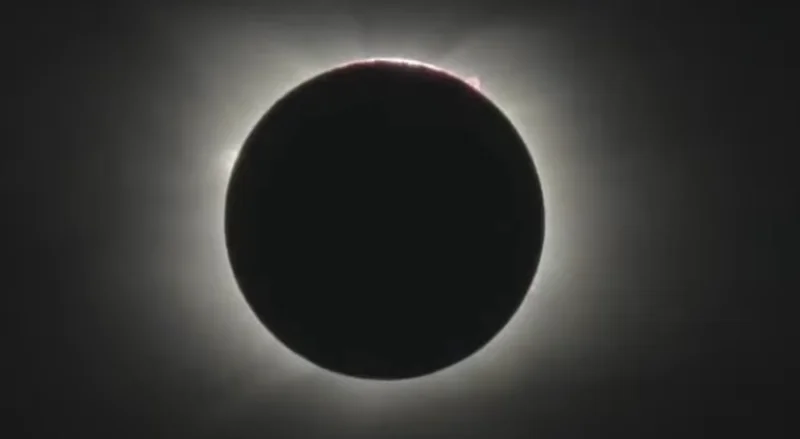
The phenomenon of a solar eclipse, where the sun dims as the moon passes in front of it, has historically sparked awe and concern among observers. Fortunately, modern science has demystified this celestial event, revealing it as a precise alignment of astronomical bodies.
A solar eclipse occurs when the moon moves directly between the Earth and the sun. Under specific conditions, the moon's trajectory intersects perfectly with that of the sun, allowing it to obscure the sun's light. This results in a dramatic transformation of daylight into darkness.
The mechanics of this event, while straightforward, raise several intriguing questions. For instance, why are some solar eclipses total while others are only partial? The answer lies in the alignment of the three celestial bodies. To witness a total eclipse, an observer must be aligned with both the moon and the sun. When this alignment is perfect, the dark disk of the moon completely covers the sun from the observer's perspective, plunging the area into darkness.
Conversely, if the alignment is slightly off, the moon will appear to shift, leaving part of the sun still visible. Observers in this scenario will experience a partial eclipse, which requires protective eyewear due to the sun's brightness.
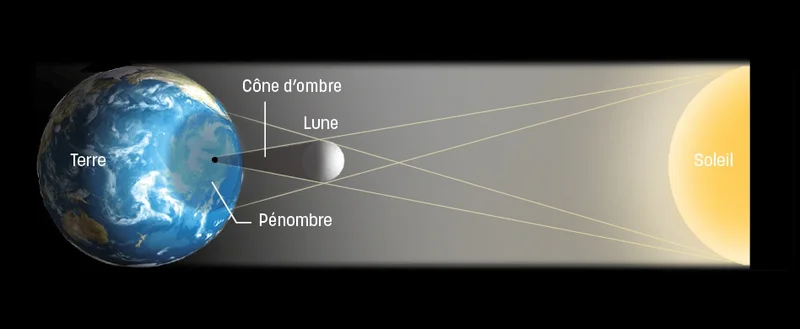
As the moon orbits the Earth and the Earth rotates on its axis, this perfect alignment is fleeting. Typically, it lasts only a few minutes unless viewed from a high-speed aircraft. Thus, witnessing a total solar eclipse is a unique opportunity that necessitates being at a specific location at a precise time, aligned with the celestial bodies.
The precision required for viewing a total solar eclipse varies by event. Generally, the area on Earth where the moon's shadow falls spans a few hundred kilometers. The rapid rotation of the Earth means that this shadow sweeps across thousands of kilometers in a short period. For instance, the total eclipse on August 12, 2026, will be visible along a path stretching from the Arctic to the Balearic Islands.
The Case of Annular Eclipses
Interestingly, a perfect alignment of the observer, moon, and sun does not always result in a total eclipse. This may seem counterintuitive at first, but it is essential to consider the apparent size of the moon in the sky. Although the moon and sun appear similar in size from our vantage point, this is a remarkable coincidence given their actual distances and dimensions.
Upon closer examination, it becomes clear that the moon's apparent size can vary. Its distance from Earth fluctuates between approximately 362,000 km and 405,400 km due to its elliptical orbit. Consequently, there are instances when the moon, while aligned with the sun, is too far away to completely cover it. This results in an annular eclipse, where a ring of the sun remains visible around the moon.
In most cases, however, the moon is close enough to entirely obscure the sun's disk, revealing the sun's corona—a rare and stunning sight that is usually obscured by the sun's intense glare. This is an event not to be missed.