Astronomical Events in August: Total Solar Eclipse and Partial Lunar Eclipse
August 2026 features two significant celestial events: a total solar eclipse on August 12 and a partial lunar eclipse on August 28, both visible from German-speaking regions.
August 2026 promises to be an exciting month for astronomy enthusiasts, featuring two significant celestial events visible from German-speaking regions. The first is a total solar eclipse on August 12, 2026, which will appear as a deep partial eclipse in Germany. The second event is a partial lunar eclipse occurring during the latter half of the night on August 28.
On the evening of August 12, a new moon will perfectly align in front of the sun, completely obscuring it for a brief period in parts of northern Spain and the Balearic Islands. This alignment will create a moment of darkness akin to advanced twilight in this narrow strip of the Earth's surface.
Solar Eclipse Details for Wednesday, August 12
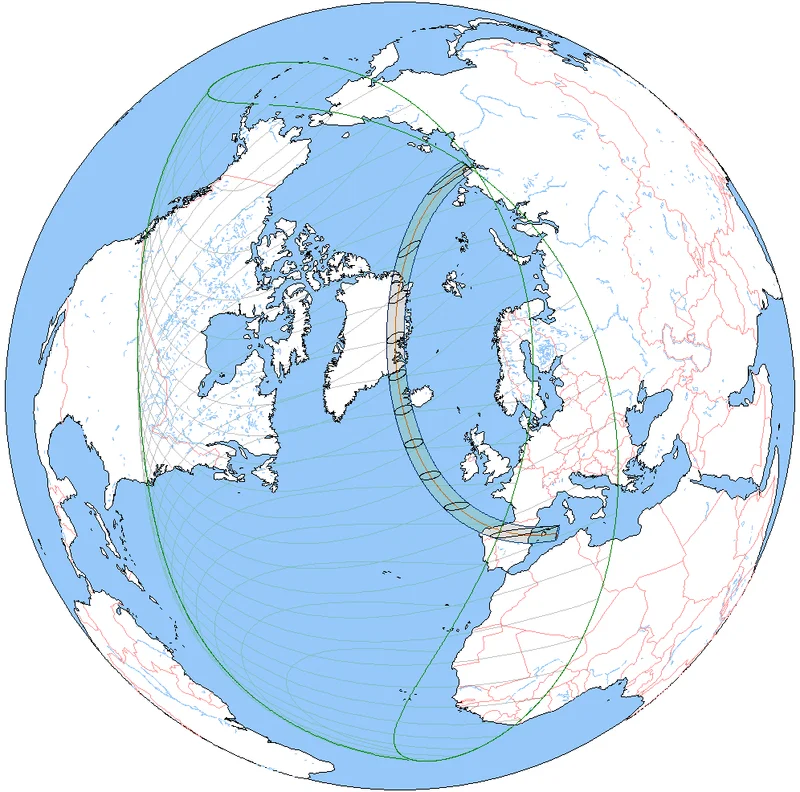
The partial solar eclipse will be visible across much of the German-speaking area on Wednesday evening. With a magnitude of 1.039, it can be observed in its partial phase from North America, West Africa, and Europe. The path of totality will traverse the Arctic, Greenland, Iceland, Spain, the Arctic Ocean, and the northern Atlantic. The maximum eclipse will occur west of Iceland in the Atlantic at coordinates 65° 13′ N latitude and 25° 14′ W longitude, lasting for two minutes and 18 seconds.
The first contact, when the new moon begins to cover the sun, will take place in Lübben at 18:16 CEST. At this time, the sun will be positioned 11 degrees above the northwest horizon. The eclipse will reach its maximum coverage of 87% at 20:09, with the sun only three degrees above the horizon. The fourth contact, when the moon exits the sun’s disk, will occur after sunset at 19:59, rendering it invisible for observers in Germany.
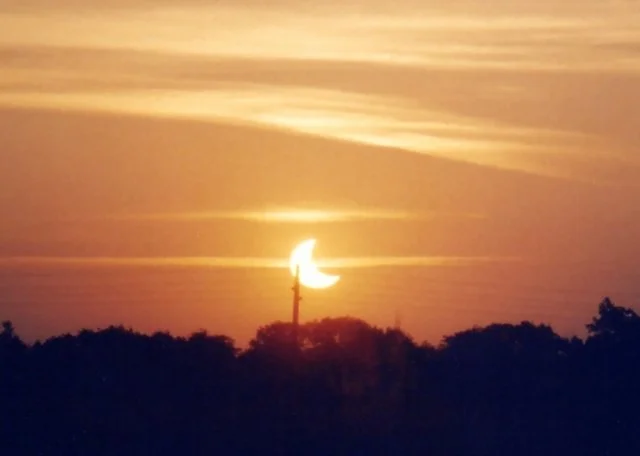
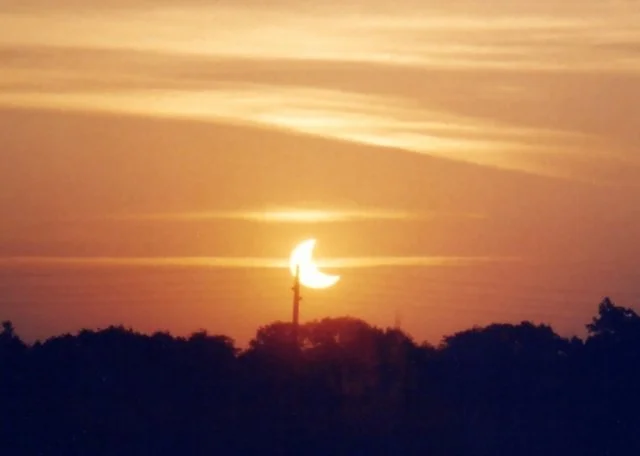
The extent of coverage during the eclipse will vary across Germany, ranging from 85% to 90%. This should be visually striking, particularly in Central and Southern Europe, where the event will unfold in the late afternoon and evening, just before sunset. If weather conditions permit and the local horizon allows, observers in Germany will witness a setting crescent sun, visible from around 19:20 in the west-northwest. Under clear skies, it may even be observable without optical aids. It is crucial to ensure that the sun is not blinding to prevent irreversible eye damage. The central line of the total solar eclipse will also pass over the Iberian Peninsula, with the moon's shadow ultimately leaving the Earth's surface in the Mediterranean region east of the Balearics. On the holiday island of Mallorca, the sun will be completely eclipsed at sunset over the sea.
Solar eclipses are rare natural phenomena, occurring only during a new moon near the two nodal points where the moon's orbit intersects the ecliptic plane, the apparent path of the sun. Typically, the new moon passes either above or below the sun due to an inclination of about 5° in the moon's orbit relative to the ecliptic plane. This is why solar eclipses do not occur every month. The moon's umbra during total and annular eclipses is only observable within a narrow strip of 200 kilometers on the Earth's surface, while the partial phase can be seen over a much larger area.
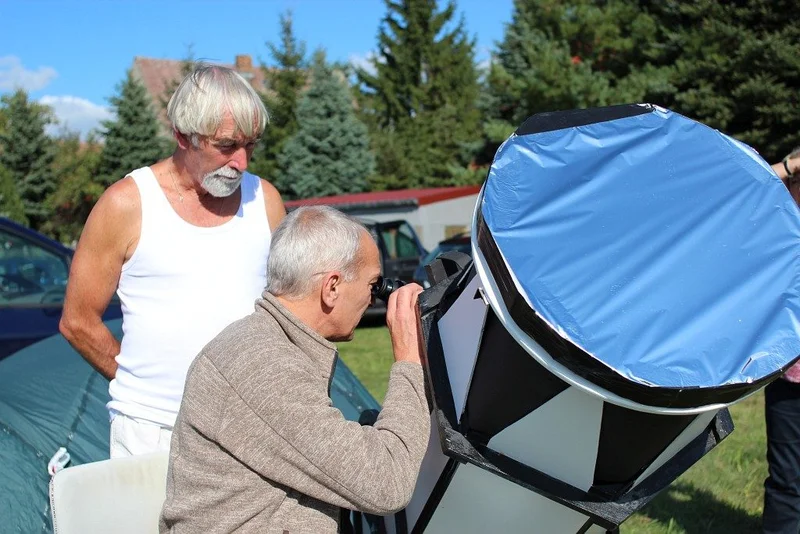
It is essential to never observe the sun without proper protection, as this can lead to severe eye damage. Only during the totality of a solar eclipse is a brief, unprotected glance at the sun safe. For observing the partial phase, specialized solar filters, such as film or glass filters, or certified eclipse glasses should be used. These block over 99.5% of light and harmful infrared radiation. Alternatively, the sun can be projected onto a white surface, allowing multiple observers to safely view our central star simultaneously. Observing with experienced astronomy enthusiasts at public observatories or astronomical societies is highly recommended, where suitable equipment for safe solar observation is available.
Lunar Eclipse Details for Friday, August 28
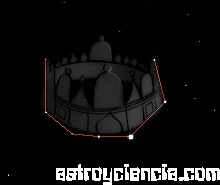
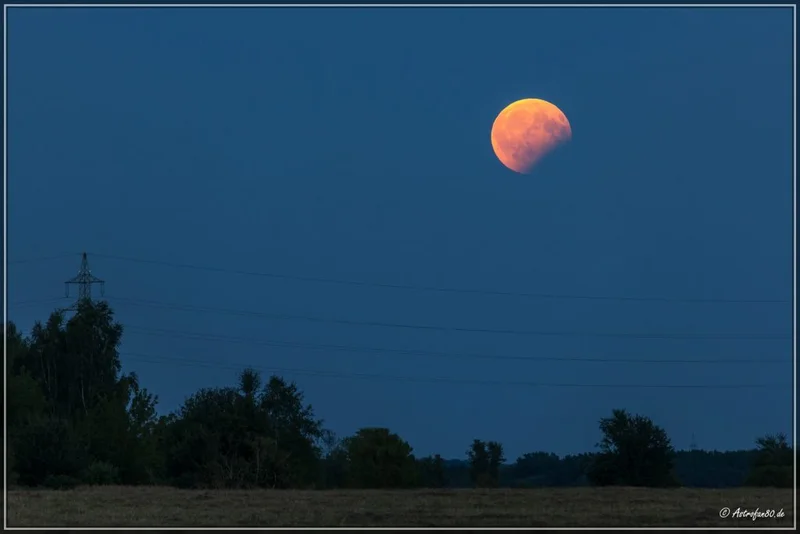
Unfortunately, the partial lunar eclipse will only be partially observable in Germany, Austria, and Switzerland. At the peak of the eclipse at 6:13 AM CEST, when 93% of the moon's surface will be engulfed by the Earth's umbra, the moon will be positioned on the horizon in bright twilight. Consequently, observers in German-speaking regions will not be able to witness the exit from the umbra, which will occur about an hour and a half later. However, the moon will start to darken as it enters the Earth's shadow at 4:34 AM, positioned just 13 degrees above the southwest horizon in the constellation Aquarius; thus, a clear view towards this direction is essential. A standard pair of binoculars mounted on a tripod will suffice for observation.
By the time of the eclipse's peak, the moon will have already set in many parts of Eastern Central Europe, or will be just a few degrees above the horizon. Therefore, clear air and unobstructed views toward the west-southwest are crucial. At my location, it sets at 6:15 AM, with the sun already above the horizon in the northwest. Even under optimal conditions, it would not be visible, as demonstrated by the last lunar eclipse last year.
The moon will have entered the penumbral shadow upon rising, but it will only be visible when the sky is dark enough and the moon has risen sufficiently above the lower haze layers of the horizon. This year, only a small portion of the northern lunar hemisphere will remain in the Earth's penumbra, theoretically visible to the naked eye, but more easily discernible with binoculars or a telescope. Optical instruments enhance the perception of fine contrasts significantly.
The exit from the Earth's umbra at 7:53 AM and from the penumbra at 9:04 AM will occur below the horizon and will be unobservable. The moon's entry and exit from the penumbra are generally subtle. However, near the umbra, the full moon will appear noticeably paler than usual. The lunar eclipse will be visible in the East Pacific region, North and South America (excluding Alaska and the eastern Pacific), southern Greenland, Europe, Africa, and the Atlantic.
The European Space Agency (ESA) will broadcast the solar eclipse live.
Looking Ahead
The next lunar eclipse will occur on February 21, 2027, as a penumbral eclipse, which is less interesting for visual observers. However, almost exactly one year later, on August 2, 2027, another solar eclipse will take place, also observable from German-speaking regions. In southern Spain, the moon's umbra will even cover the Iberian Peninsula near Gibraltar. In 2028, three lunar eclipses will occur, all partially or fully visible: two partial eclipses on January 12 and July 6, and a total eclipse on New Year's Eve.
Let’s hope for clear skies to enjoy both of these celestial events!