Curiosity Discovers Bee Hive-like Structures on Mars
Curiosity rover discovers bee hive-like structures in Valle Grande on Mars, revealing potential insights into the planet's geological history.
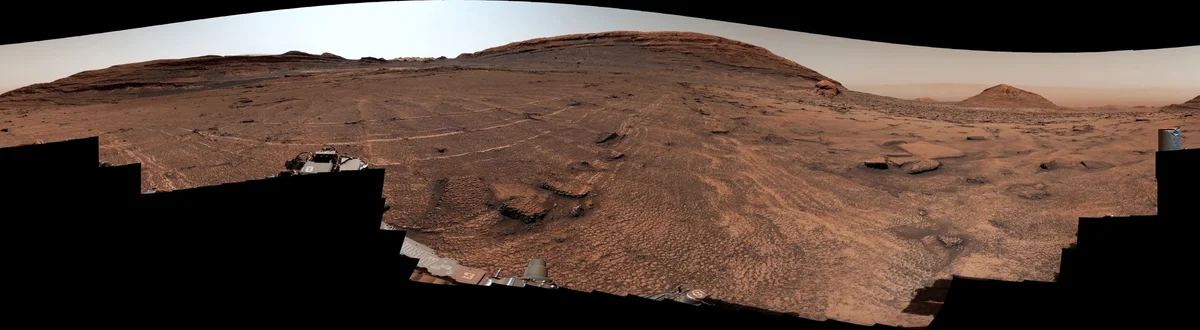
On its journey across the slopes of Mount Sharp, NASA's Curiosity rover has made a fascinating discovery: a valley whose surface is covered with structures resembling bee hives.
These hive-like formations appear to be fossilized and stretch across an entire valley. This unexpected finding was captured by Curiosity's cameras in recent days. The rover, which is currently experiencing significant wear on its wheels, is slowly traversing Valle Grande, a valley approximately 1 kilometer wide on the western flank of Mount Sharp (officially known as Aeolis Mons). Since June, the ground around the rover has been characterized by polygonal structures measuring between 4 to 8 centimeters in diameter.
Curiosity has conducted measurements of the composition of these formations, which may help scientists understand their origins. It is possible that these structures resulted from the cracking of mud or thermal cycles driven by seasonal changes. However, it remains too early to determine whether these formations are linked to the presence of water, which Curiosity has previously confirmed existed in the past.
Noteworthy Discoveries
In a separate astronomical achievement, a team of amateur astronomers has unveiled a new planetary nebula after an extensive effort totaling 310 hours of cumulative exposure time. This nebula, known as FACT 1, shines with a faint glow in the constellation of Auriga and is approximately one-third the size of a full moon.
The discovery of such structures on Mars, alongside the ongoing exploration efforts, continues to provide invaluable insights into the planet's geological history and potential habitability.