Exploring the Bresser AC 102/1000 Telescope: A Comprehensive Review
A detailed review of the Bresser AC 102/1000 telescope, highlighting its features, performance, and user experience for astronomy enthusiasts.
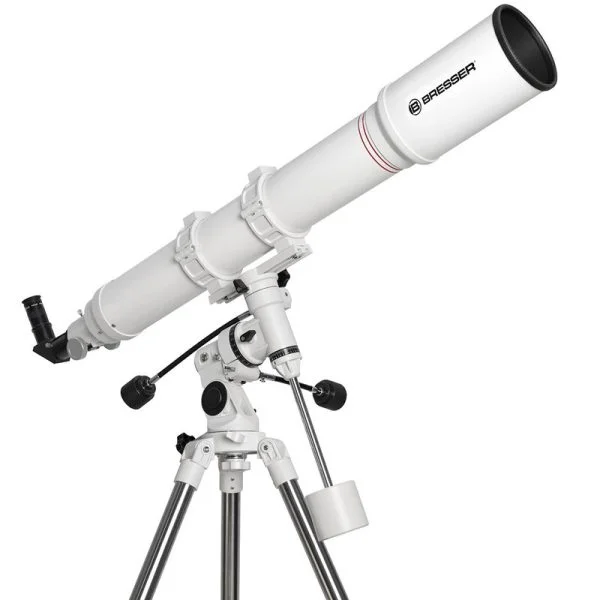
The Bresser AC 102/1000 telescope has recently garnered attention among astronomy enthusiasts for its impressive specifications and capabilities. This telescope, designed for both beginners and seasoned stargazers, promises to deliver a satisfying viewing experience of celestial wonders.
One of the standout features of the Bresser AC 102/1000 is its 102mm aperture, which allows for a significant amount of light to enter the telescope. This larger aperture is crucial for observing faint objects in the night sky, such as distant galaxies and nebulae. Furthermore, the 1000mm focal length provides a good balance between magnification and field of view, making it versatile for various astronomical observations.
In terms of design, the telescope is mounted on an EQ-3 equatorial mount, which facilitates smooth tracking of celestial objects as they move across the sky. This feature is particularly beneficial for astrophotography, where precise tracking is essential to capture clear images of celestial phenomena.
Users have reported a generally positive experience with the Bresser AC 102/1000, highlighting its ease of use. The setup process is straightforward, making it accessible for beginners who may be intimidated by more complex telescopes. Additionally, the telescope's sturdy construction contributes to its stability during observations, ensuring that users can enjoy a steady view of the stars.
However, some users have noted that while the telescope excels in many areas, it may require additional accessories to fully optimize its potential. For example, investing in higher quality eyepieces can enhance the viewing experience significantly, allowing for clearer and more detailed images of celestial objects.
In summary, the Bresser AC 102/1000 telescope stands out as a solid choice for those looking to delve into the world of astronomy. Its combination of a substantial aperture, an efficient equatorial mount, and user-friendly design makes it a commendable option for both newcomers and experienced astronomers alike.