Astronomers Discover Strong Evidence of a Companion Star to Betelgeuse
Astronomers have found strong evidence that Betelgeuse, one of the most famous stars in the night sky, is not alone. Using the Very Large Telescope, a team led by Miguel Montargès captured what is likely Betelgeuse B, its companion star.
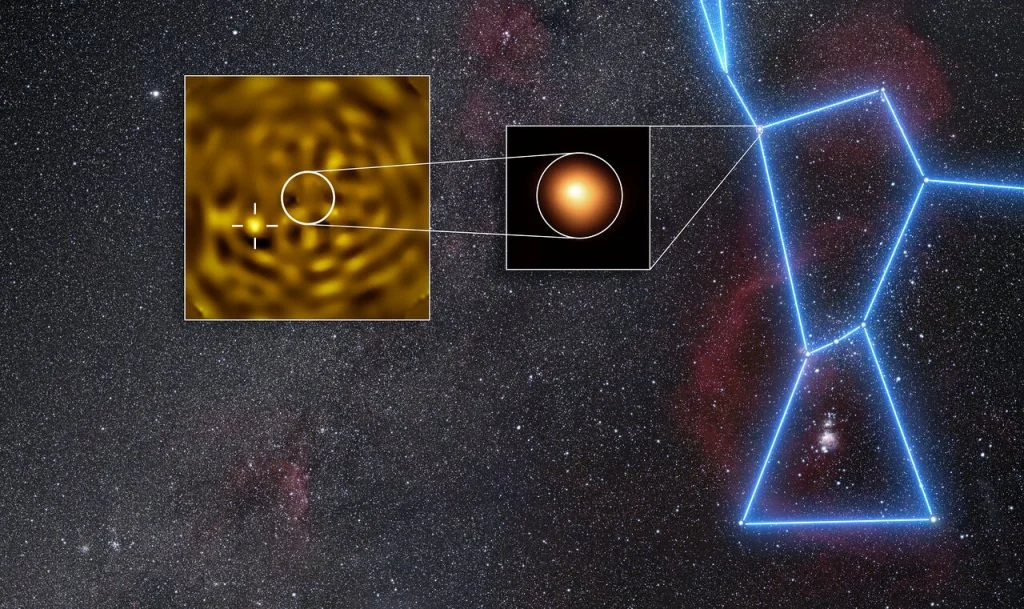
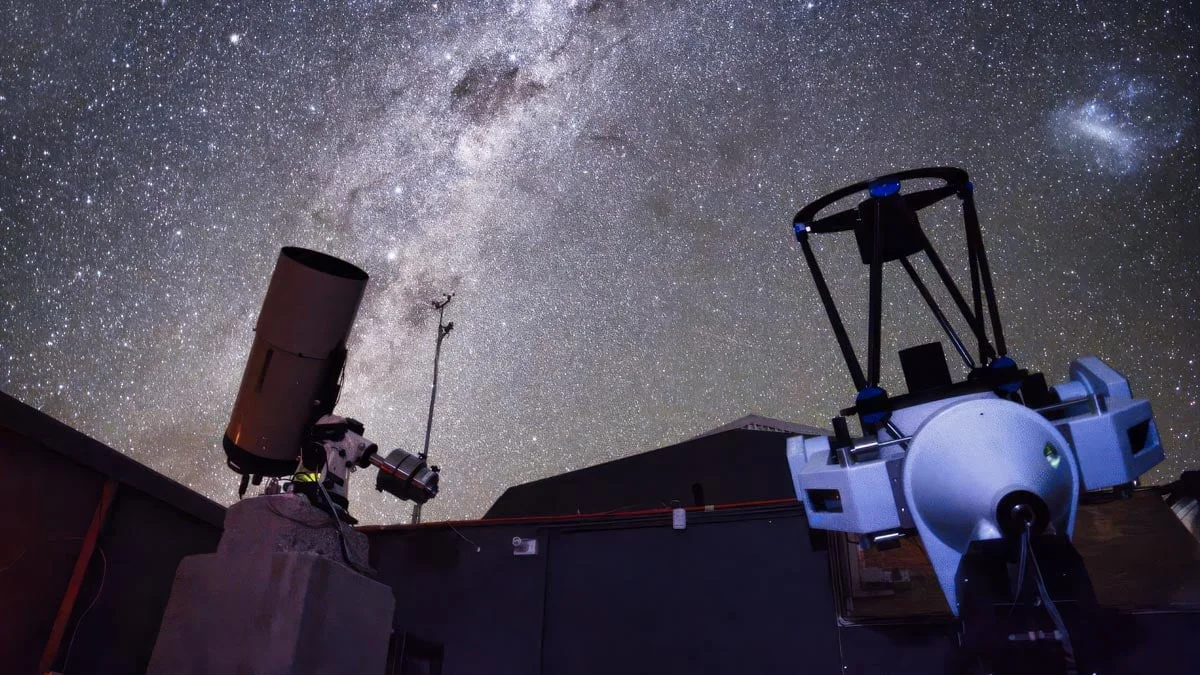
Recent astronomical research has provided compelling evidence that Betelgeuse, one of the most prominent stars in the night sky, is not alone. A team led by French researcher Miguel Montargès utilized the Very Large Telescope (VLT) of the European Southern Observatory (ESO) to capture the clearest image yet of what is likely Betelgeuse B, the star orbiting Betelgeuse. "This is the culmination of a centuries-long search," Montargès stated.
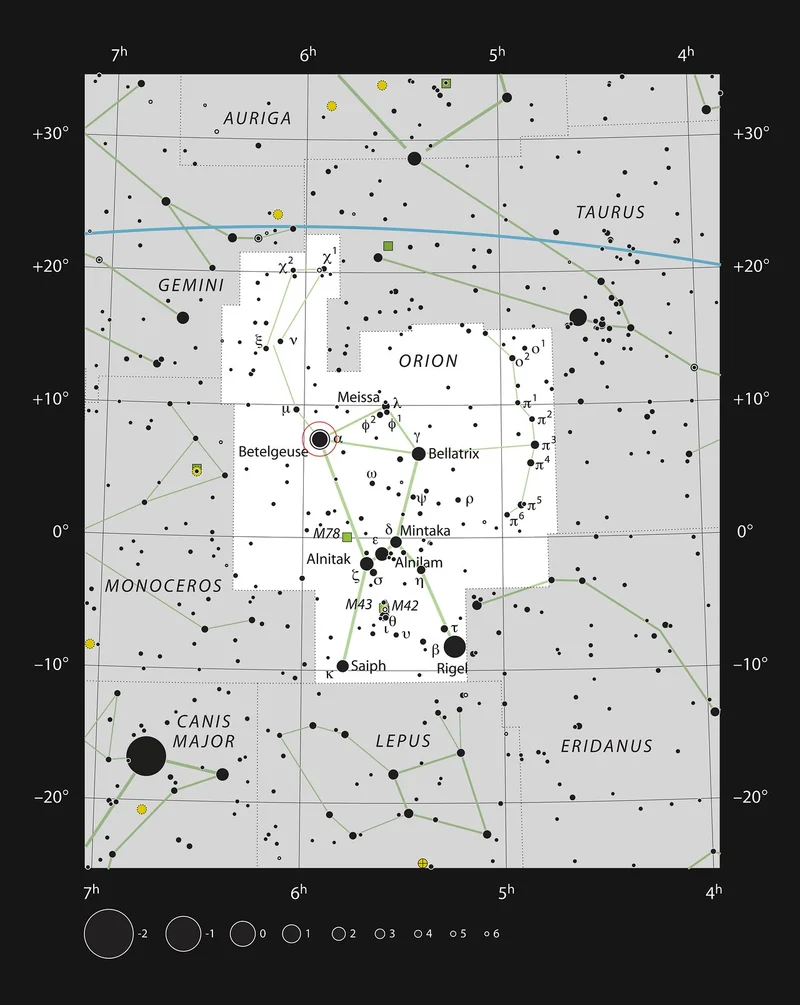
"We have demonstrated that Betelgeuse is not a solitary star but is accompanied by a faint stellar companion," said Montargès, who is affiliated with the Observatoire de Paris – PSL and is the lead author of a study published in Astronomy & Astrophysics. Betelgeuse, a reddish star located in the constellation Orion, is easily visible to the naked eye and is known for its brightness fluctuations. Despite being observed for thousands of years, it continues to surprise astronomers.
"I jumped out of my chair when I saw the processed images," Montargès recalled. Researchers have been searching for this potential companion for nearly a century, initially proposed to explain the brightness variations of Betelgeuse. Two studies released in 2024 reliably predicted that the companion would be at its greatest distance from Betelgeuse in December of the same year, making it easier to detect. Montargès and his team set to work, observing the star with the VLT in December 2024 and spending several months processing the data.
"To be honest, I thought our sensitivity wouldn’t be enough to detect Betelgeuse B as predicted," Montargès explained. "However, since the companion is more massive than expected, we can see it!" Initially, it was assumed that Betelgeuse B would have a mass comparable to that of the Sun, but new observations indicate it has a mass two to three times that of the Sun. "The fact that we can still discover a close companion around such a well-studied star, which is more massive and brighter than the Sun, is remarkable," Montargès noted. "This is one of the best moments in science: to see something new and unexpected."
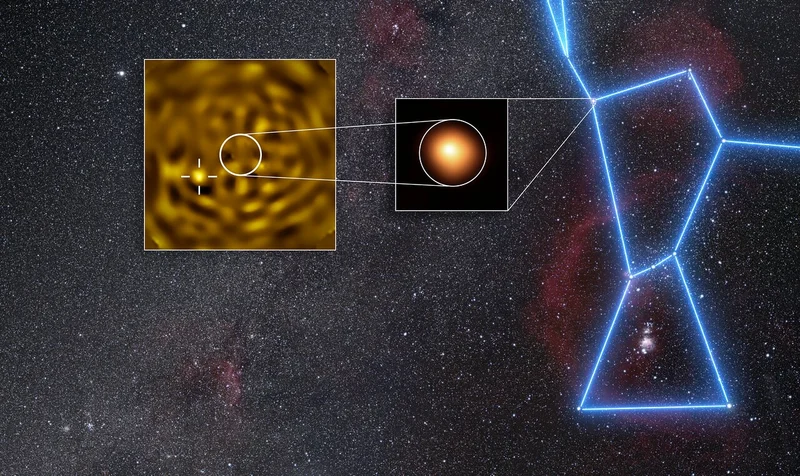
Betelgeuse B was directly imaged, meaning that the light from the star itself was detected. This achievement was made possible using the SPHERE instrument on the VLT located in the Atacama Desert of Chile. Although there had been hints of the existence of this companion star, including a possible direct detection with the Gemini North Telescope in Hawaii, this represents the strongest evidence yet for Betelgeuse B and the clearest image of the star. "It’s remarkable how SPHERE and modern data processing techniques, originally developed for exoplanet searches, are also effective in detecting a companion around a massive evolved star like Betelgeuse," commented co-author Anthony Boccaletti, also an astronomer at the Observatoire de Paris.
"To be absolutely certain that the companion is indeed there, we need to observe it on the other side of the star in a year. But there is very little room for doubt," Montargès added.
A few years ago, Betelgeuse garnered significant attention from both professionals and the public when it began to dim noticeably. Being a developed supergiant, Betelgeuse is expected to end its life in a supernova explosion, leading some to speculate that an explosion was imminent. However, a team of astronomers led by Montargès investigated the star using the VLT and discovered that it was instead obscured by a dust cloud.
The potential discovery of Betelgeuse B will prompt researchers to explore how this companion might influence the anticipated supernova explosion of Betelgeuse. "The question is now completely open as to whether this companion will affect the evolution of the red supergiant," concluded Montargès.
MN
Background Information
This research was presented in a scholarly article titled "VLT/SPHERE images the candidate companion of Betelgeuse," which will be published in the journal Astronomy & Astrophysics. The team includes M. Montargès (Laboratoire d’Instrumentation et de Recherche en Astrophysique, Observatoire de Paris, Université PSL, Sorbonne Université, Université Paris Cité, CY Cergy Paris Université, CNRS, France [LIRA]), A. Boccaletti (LIRA), O. Flasseur (Université Claude Bernard Lyon 1, Centre de Recherche Astrophysique de Lyon UMR5574, ENS de Lyon, CNRS, France), A. de Koter (University of Amsterdam, Anton Pannekoek Institute for Astronomy, Netherlands), J. Millii (Univ. Grenoble Alpes, CNRS, IPAG, France), P. Kervella (French-Chilean Laboratory for Astronomy, IRL 3386, CNRS and U. de Chile, Chile and LIRA), S. Ridgway (National Optical Astronomy Observatory, USA), E. Bordier (I. Physikalisches Institut der Universität zu Köln, Germany), E. Lagadec (Université Côte d’Azur, Observatoire de la Côte d’Azur, CNRS, Laboratoire Lagrange, France), A. K. Dupree (Center for Astrophysics | Harvard & Smithsonian, USA), F. Backs (Instituut voor Sterrenkunde, KU Leuven, Belgium), T. Calderwood (American Association of Variable Star Observers, USA [AAVSO]) and P. Morgan (AAVSO).