A Night Under the Stars: Astrocamping Adventures
An engaging account of a night spent stargazing, detailing observations of various celestial objects and the use of different equipment.
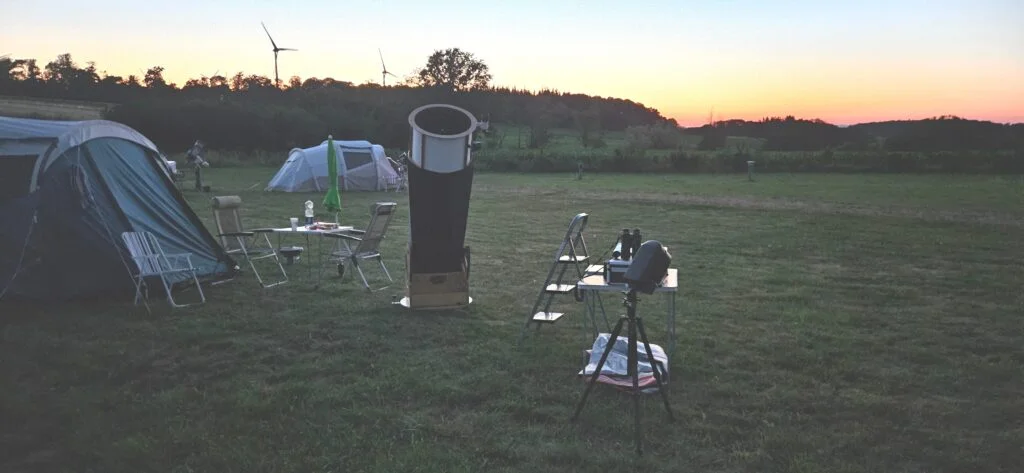
As the evening set in, I found myself rejuvenated after spending much of the day in a semi-reclined position in my camping chair, occasionally dozing off. With twilight approaching, I turned my attention to preparing my equipment for the night ahead.
Classic Observations: From Binocular Highlights to High Magnification
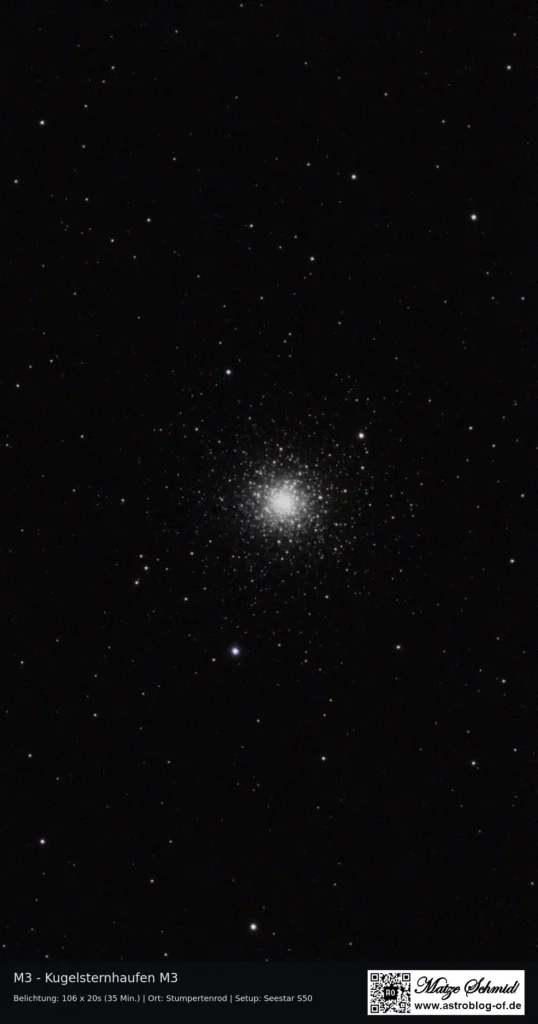
I began my stargazing session with the Cr399 asterism in the constellation of Canes Venatici, a sight that always lifts my spirits. Following that, I observed the globular cluster M3 in Canes Venatici, which served as a delightful introduction to the evening. Next on my list was Epsilon Lyrae in Lyra. The binary star system initially eluded me, but on my second attempt, I successfully identified it. While only two main components are visible through the optical finder, the true quadruple nature of the system was revealed at a magnification of 323x through my Dobsonian telescope.
Continuing my exploration of the summer sky, I couldn't miss Albireo, the stunning double star in Cygnus. Unfortunately, my search for NGC 6905 in the Little Fox was unsuccessful this time, but I had better luck with other objects. The globular cluster M107 in Ophiuchus was well-observed, followed by the classic M13 in Hercules, which never fails to impress.
Due to the low altitude of the constellation Ophiuchus, I decided to skip further observations in that area.
Wandering Through Sagittarius and Beyond
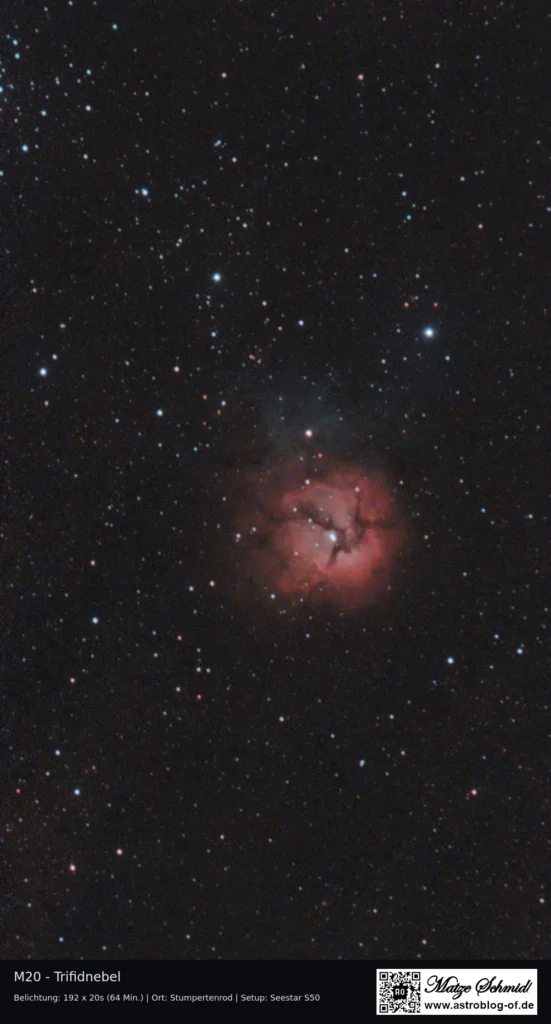
Later, I enjoyed the region around Sagittarius. The light conditions made it a bit challenging to orient myself among the stars, so I quickly grabbed my binoculars. With a rough direction and some sweeping motions, I was able to locate the objects. Both M8 (Lagoon Nebula) and M20 (Trifid Nebula) looked fantastic through the binoculars, providing a striking contrast against the rest of the sky.
As it finally grew darker in the west, I ventured into observing some of the more challenging celestial objects. The Owl Nebula M97 in Ursa Major was initially faint but became significantly more defined with the use of a UHC filter. Similarly, the Whirlpool Galaxy M101 appeared delicate at first. A highlight for me was once again the Cirrus Nebula in Cygnus. At 127x magnification, I could discern more intricate structures and details in the filaments than I had seen before. I then turned my attention to NGC 6934, a small yet exquisite globular cluster in the constellation Delphinus.
Conclusion of the Observation Night
As the night drew to a close, I focused on classic targets in the northern and eastern skies: the galaxies M81, M82, and M109 in Ursa Major were on my agenda. M71, a globular cluster in Sagitta, also proved to be a worthwhile target. While searching for M76 in Perseus, I employed a little trick by orienting myself using two bright stars nearby, which made the find much easier. The grand finale included the open star cluster NGC 6939 in Cepheus, the small galaxy NGC 404 in Andromeda, and a final look at the Andromeda Galaxy M31, which I briefly enjoyed through my binoculars as a parting view.
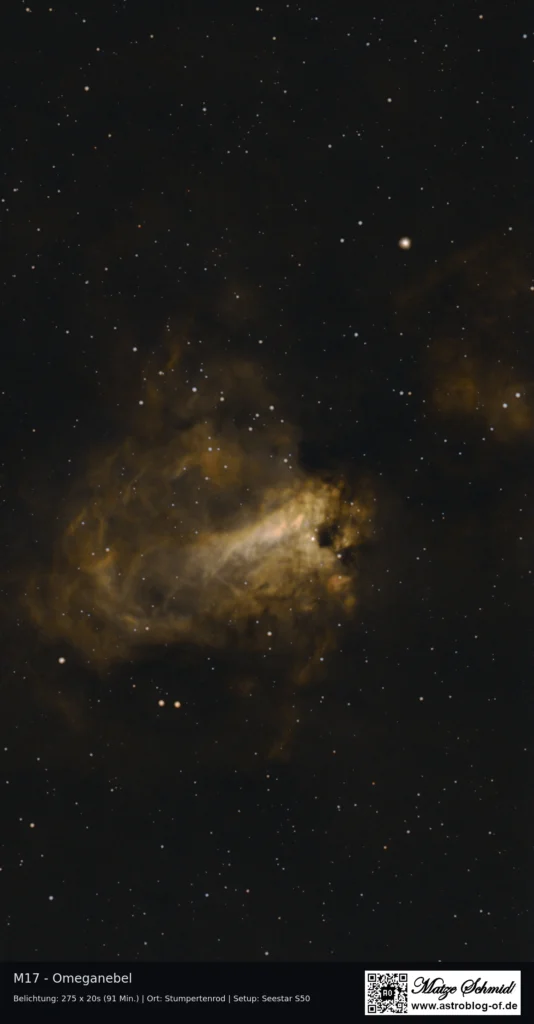
Here’s a snapshot of the Omega Nebula that I captured that night with my Starfish:
If you're interested in seeing more images of deep-sky objects, feel free to check out my newly created photo gallery.
Constructive feedback is always welcome, as are positive comments. Perhaps you've also observed an object mentioned in this report and would like to share your experiences here.