MAVEN Mission Concludes: NASA's First Mission Dedicated to Studying the Martian Upper Atmosphere
After eleven years, contact with NASA's MAVEN spacecraft, orbiting Mars, has officially been terminated. MAVEN was designed to study the Martian atmosphere and its evolution.
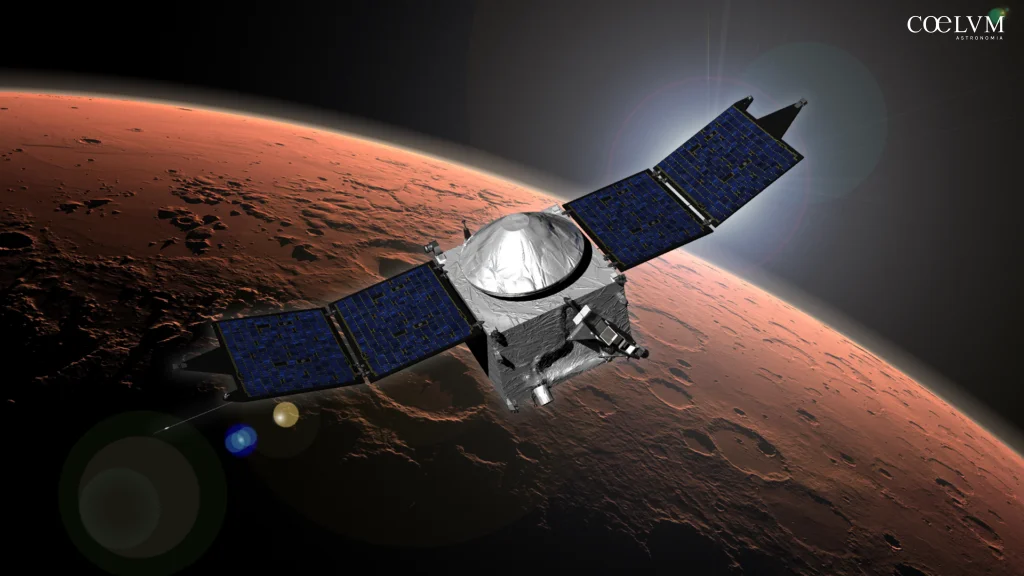
After eleven years, contact with NASA's MAVEN spacecraft, orbiting Mars, has officially been terminated. MAVEN (Mars Atmosphere and Volatile Evolution) was designed to study the outermost layer of the Martian atmosphere. The mission aimed to determine how the loss of gases has gradually altered the planet's climate.
It is important to note that Mars does not possess a global magnetic field like Earth; this exposes the planet's atmosphere to the solar wind, which consists of charged particles from the Sun that over millions of years erode it, "scraping" away its outer layers.
MAVEN investigated the amount of atmosphere eroded over time, precisely measuring the current erosion rate and the physical processes of interaction with the solar wind. In this way, scientists can work backward and reconstruct whether and for how long, in ancient times, Mars had a sufficiently thick atmosphere to maintain the presence of liquid water on its surface and milder temperatures, making it more Earth-like and potentially suitable for the development of life.
In December 2025, an unexpected loss of contact occurred with the orbiter; this caused an anomaly in the telemetry systems, leading the spacecraft to spin uncontrollably and consequently drain its batteries. Since then, the team at NASA has attempted to re-establish contact, but yesterday (June 3, 2026), it was unfortunately announced that the recovery of the mission is no longer possible.
During this decade, MAVEN has revealed important information about the history and evolution of Mars, but not only that. Thanks to its complete and innovative suite of instruments, it was possible to conduct a broad study, with six devices dedicated to characterizing the solar wind and the planet's ionosphere – the so-called Particles and Fields Package – in addition to cameras and multi-band optical instrumentation and a spectrometer.
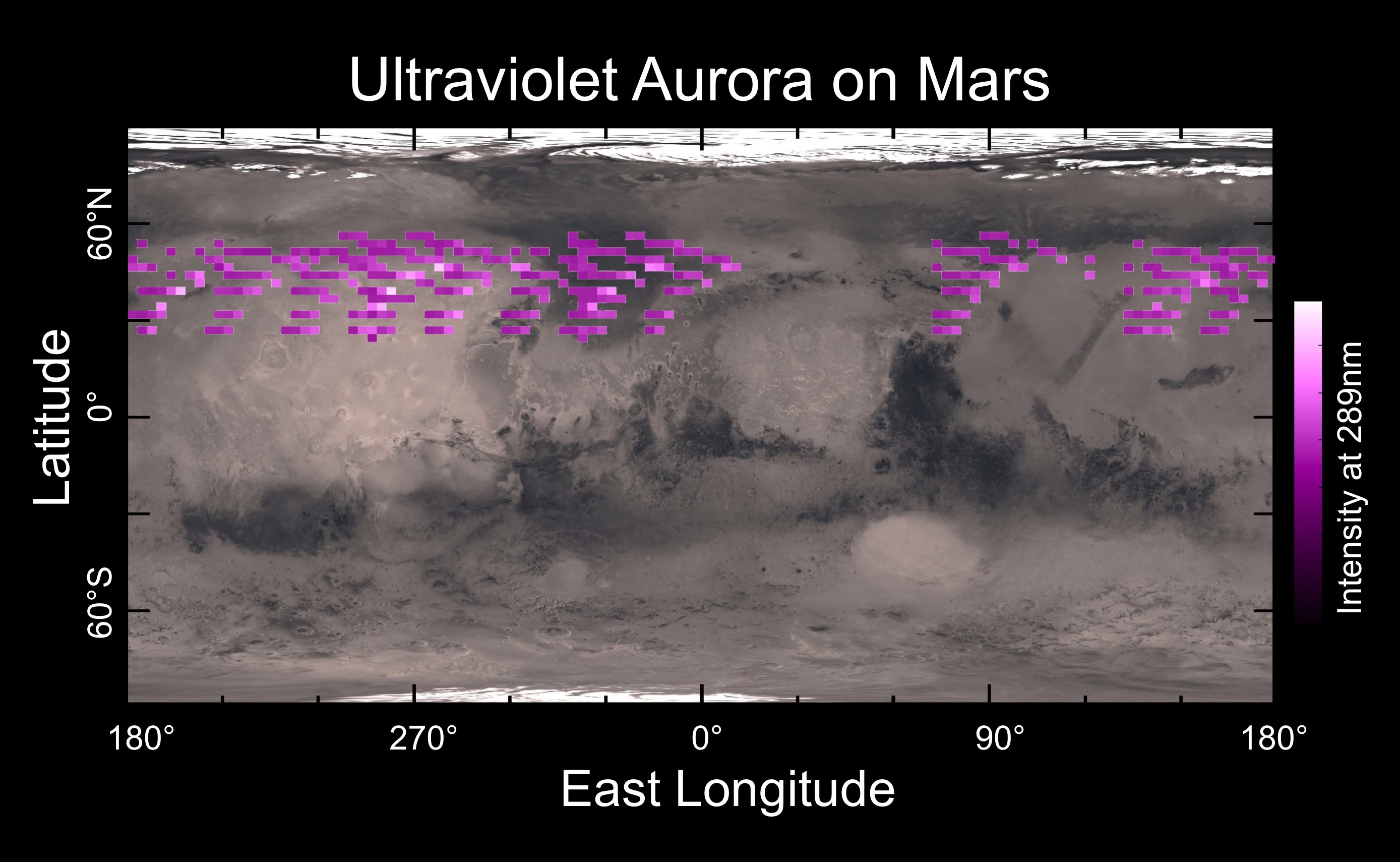
In particular, in 2018, it showed us how some dust storms can envelop the entire planet, transporting dust into the upper atmosphere, thus facilitating a faster dispersion of water into space. It also observed particular auroras caused by the interaction of protons from the Sun with the weak Martian atmosphere. But most importantly, it helped us understand Space Weather, which is how solar activity and wind influence interplanetary space, with significant consequences here on Earth as well.
After eleven years – ten more than its nominal duration – the mission, therefore, concludes; but the research work does not stop. The data collected by the spacecraft will still be studied and compared with those obtained from other missions. Piece by piece, scientists will attempt to reconstruct the puzzle and shed light on Mars' ancient past and the other mysteries that still concern our planetary system.