NASA's Juno Spacecraft Measures Io's Subsurface Temperature
NASA's Juno mission has provided the first subsurface temperature measurements of Io, revealing significant heating and new insights into volcanic activity on the most volcanically active body in the solar system.
NASA's Juno Spacecraft Measures Io's Subsurface Temperature
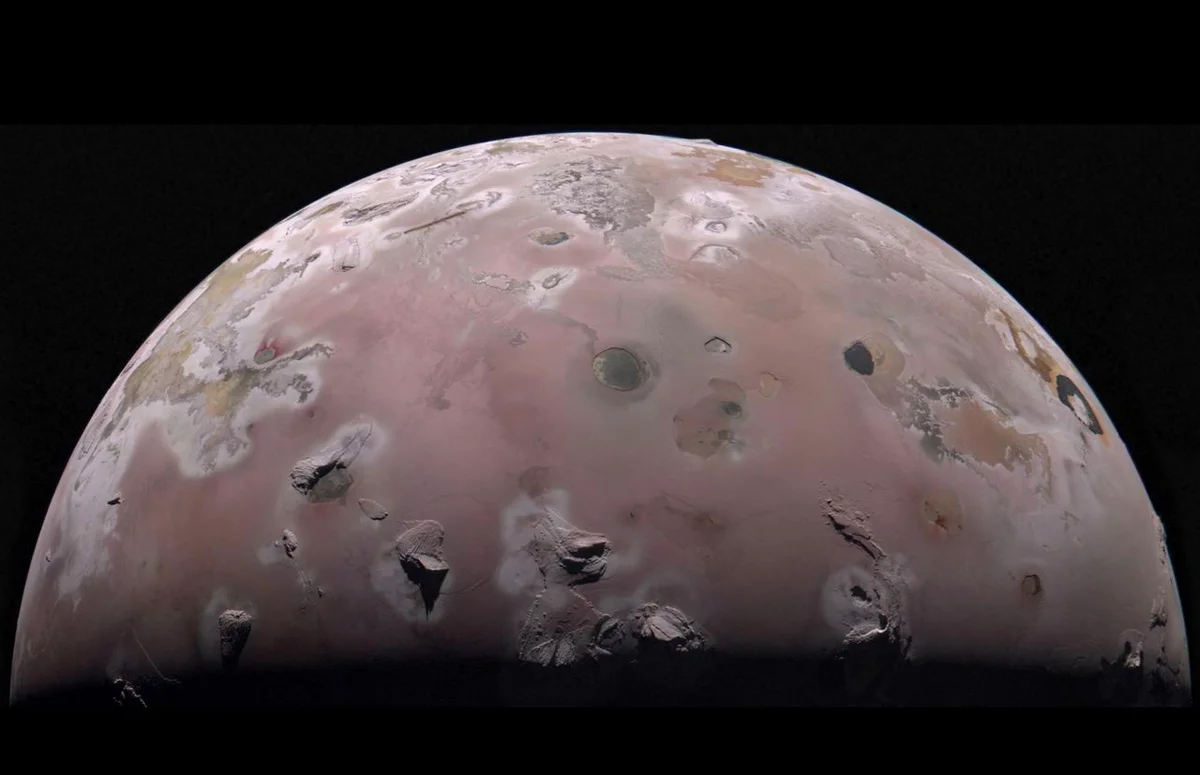
Recent findings from NASA's Juno mission have revealed the first measurements of subsurface temperatures on Io, Jupiter's moon and the most volcanically active body in the solar system. The data, gathered during two close flybys, indicate significant heating in Io's surface layers. Published in the Journal of Geophysical Research: Planets, these results provide fresh observational insights into fiery and icy worlds beyond Earth.
An Extremely Volcanic Moon
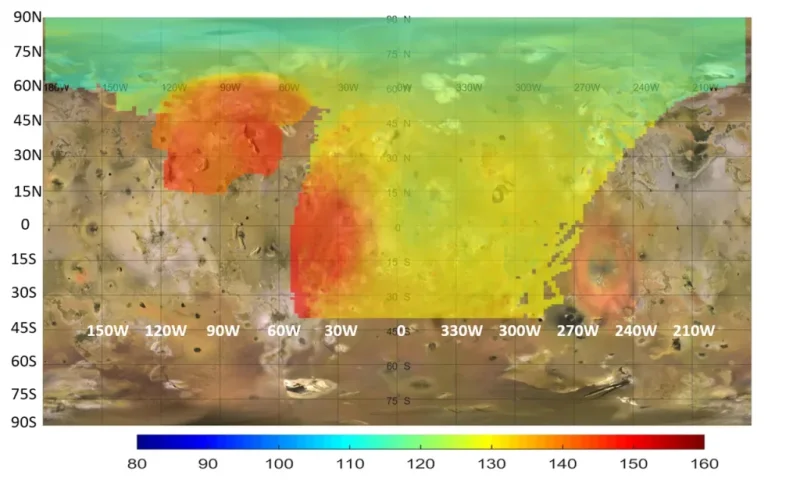
Io's intense volcanic activity is driven by tidal heating. The moon is continually stretched and compressed by Jupiter's immense gravity as it follows its slightly elliptical orbit, generating internal heat far surpassing that of Earth. Until now, most knowledge about this heat came from infrared observations, which only detect surface temperatures. The latest findings stem from data collected by Juno's Microwave Radiometer (MWR).
The Juno spacecraft's microwave radiometer has directly observed Io's heat emissions by looking beneath its surface. The ability to probe below the rocky crust of a moon holds significant implications for the study of terrestrial volcanoes. Juno's findings suggest that if we used an MWR-like instrument near a volcano on Earth, we might discover a similar temperature gradient below the surface, offering new insights into volcanic activity.
Designed by Bolton, the Juno radiometer was intended to peer beneath Jupiter's cloud tops and analyze the dynamics and composition of the gas giant's deep atmosphere. The MWR's six microwave antennas function as a single instrument, simultaneously detecting microwaves across a broad range of wavelengths, from about 1.3 to 51 centimeters. During its extended mission phase, the MWR has provided the chance to study three of Jupiter's Galilean moons: Ganymede, Europa, and Io.
Fire and Ice
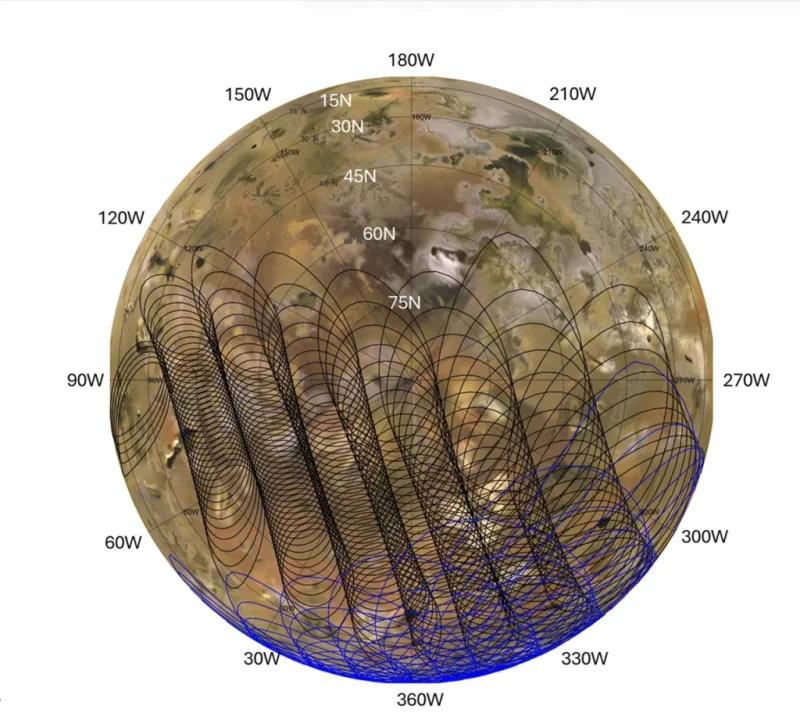
This innovative technique allows each wavelength to explore different depths, providing a new method for characterizing the deep atmospheres of giant planets and the underground crusts of icy and rocky moons. While Ganymede and Europa have been examined to depths of several kilometers, the opportunity to probe Io's volcanic rock was an unexpected discovery.
During flybys on December 30, 2023, and February 3, 2024, Juno, powered by solar energy, approached the moon's surface to within approximately 1,500 kilometers. The instrument measured Io's thermal emissions at depths ranging from a few centimeters to several meters. Across the board, a temperature increase of over 40 degrees was noted just a few meters beneath the surface, indicating a much steeper gradient than what solar heating alone could explain.
The data suggests two potential explanations for this phenomenon. Firstly, heat may be continuously rising through a conductive crust. Although this background heat flow, measured between 1 and 3 watts per square meter, is relatively weak on a local scale (roughly equivalent to a small nightlight under each square meter), it represents an energy release up to 30 times greater than Earth's average across the entire lunar surface. Alternatively, the signal could originate from cooling lava flows, covered by approximately 9-11 meters of solidified crust, which currently encompasses about 10% of Io's surface.
The Great Plains of Io
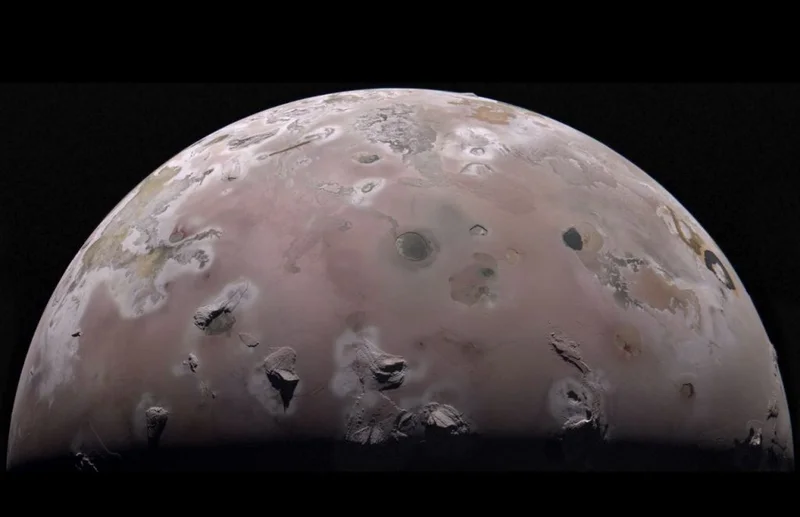
Another significant discovery from the two flybys is the remarkable smoothness of Io's surface. Previously known for its towering mountains, the MWR indicates that, in addition to this visible topography, the surface features extensive smooth areas spanning over 100 kilometers. As Juno flew over overlapping regions of Io from different angles, the team was able to map how the surface reflects microwaves, similar to how a passenger in an airplane might see the ocean glisten in sunlight from specific viewpoints.
Far from the mountains, the surface resembled the Great Plains of North America, and despite being a rocky body, the surface material exhibited very low density, more akin to pumice or soft volcanic ash than solid rock.
For more information
- Read the original article on NASA\JPL
- Read the scientific paper titled “Io Sub-Surface Temperature Profile Observed by the Juno Microwave Radiometer” published in the Journal of Geophysical Research: Planets