James Webb Space Telescope Investigates Stars Suspected of Hosting Dyson Spheres: Findings Revealed
The James Webb Space Telescope has analyzed two stars suspected of hosting Dyson spheres: here's what astronomers actually discovered.

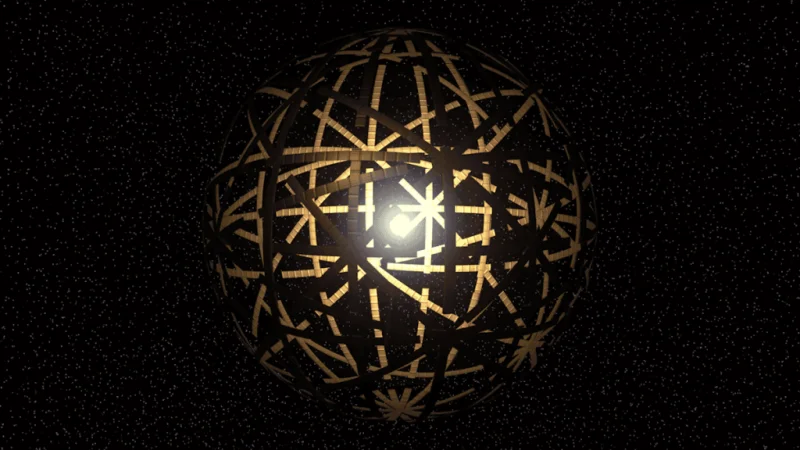
The concept of a Dyson Sphere, introduced by physicist Freeman Dyson in 1960, continues to captivate the search for advanced extraterrestrial civilizations. These hypothetical structures are envisioned to encircle a star, capturing energy on a grand scale. Scientists believe that such devices would emit a telltale signature: waste heat released as infrared radiation, akin to emissions from any energy-utilizing machine, from computers to household light bulbs. Building on this premise, the Hephaistos project, led by astrophysicist Erik Zackrisson from Uppsala University, scrutinized approximately five million stars in the Milky Way for signs of anomalous infrared light. Among the candidates, seven stars passed the initial assessments, with two emerging as the most promising.

Webb Telescope Uncovers “False Dyson” Signals
To investigate these two promising candidates, researchers directed the James Webb Space Telescope (JWST), which offers significantly more precise infrared observations than the WISE telescope that initially detected the anomalies. The results came swiftly: in both instances, the infrared excess was not emanating from the stars themselves but from a much more distant galaxy, almost perfectly aligned with the stars from a terrestrial viewpoint.
The first candidate was found to be obscured by a Hot DOG (Hot Dust-Obscured Galaxy), where a central supermassive black hole heats vast clouds of dust. In contrast, the second candidate was obscured by a starburst galaxy, rich in dust and characterized by intense star formation. Both types naturally emit the kind of infrared glow that astronomers were investigating, mimicking the potential signal of an alien megastructure.
Cosmic Coincidences Challenging to Decipher
The alignment between the stars and the galaxies behind them proved particularly difficult to analyze. For the first candidate, the hidden galaxy was only a second of arc away from the star, a minimal angular distance. In the second instance, the star nearly overlapped with one of the brightest nodes of an extensive and fragmented galaxy, complicating measurements further; researchers could isolate the star's signal only by utilizing the characteristic “diffraction spikes” inherent in JWST images.
A Result Beyond Disappointment
While neither of the two stars actually harbors a Dyson Sphere, the study was not a failure. Scientists uncovered two scientifically intriguing galaxies that would have otherwise gone unnoticed and identified one of the most compelling ways the universe can mimic a technosignature of alien origin. This type of “false positive” will assist future research programs in more quickly recognizing similar misleading signals, enhancing the reliability of upcoming searches for potential extraterrestrial megastructures.