Exploring ESTRACK: ESA's Global Ground Station Network
This episode explores the ESTRACK network, a global system of ground stations by ESA for satellite and probe communication. Insights from Gerhard Billig and a trainee at the SMILE Lab reveal its operational significance.
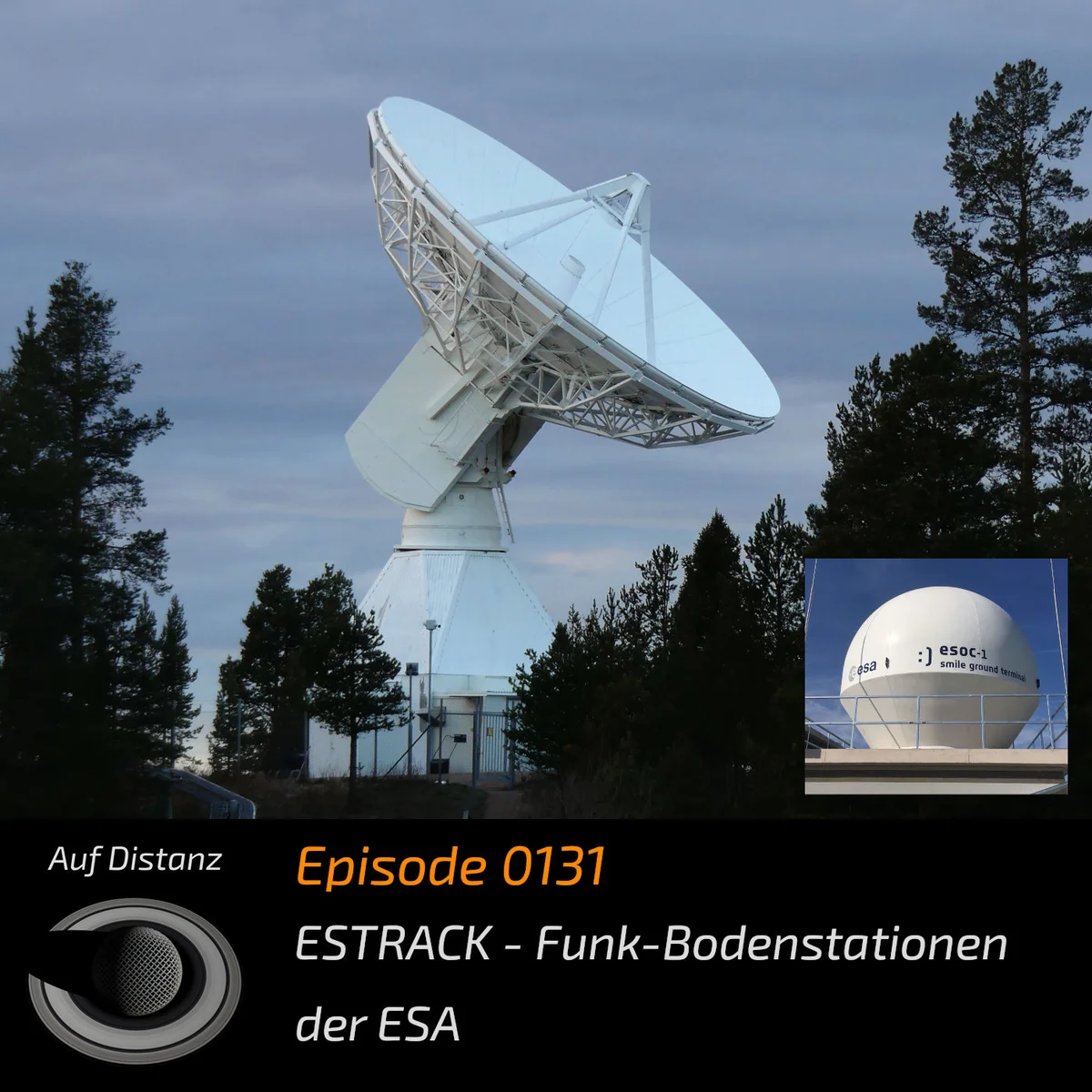
In this episode, we delve into the ESTRACK network, a vital component of the European Space Agency (ESA) that consists of ground stations strategically located around the globe. These stations are equipped with various antenna systems designed to facilitate communication with satellites and space probes. During my conversation at the European Space Operations Centre (ESOC) in Darmstadt, I spoke with Gerhard Billig, who shared insights into the history and structure of ESTRACK, along with its technical and planning aspects.
One of the highlights of our discussion was the ESTRACK facility located in Kiruna, Sweden. I had the opportunity to visit this site in November 2024, where I witnessed firsthand the significant role it plays in supporting ESA's missions.
Additionally, the episode features an interview with Daniel Friedrich, a Young Graduate Trainee working in the Special Mission Infrastructure Lab Environment (SMILE) Lab. This lab boasts its own control center and antenna systems, showcasing the innovative infrastructure that supports ESA's diverse missions.
Erschienen: 06.01.2026, Dauer: 1:14:00
- Gesprächspartner: Gerhard Billig (Ingenieur für Bodenstationen, ESA)
Agencies and Organizations
- European Space Agency (ESA)
- Centre national d’études spatiales (CNES)
ESTRACK Overview
The ESTRACK network is crucial for maintaining communication with ESA's various space missions. It includes stations such as the ones in Cebreros, New Norcia, and Malargüe, among others, each strategically positioned to ensure coverage across different regions of the Earth. The Kiruna station, in particular, is noteworthy for its role in deep-space communication.
Scientific and Technical Foundations
The operation of ground stations like those in the ESTRACK network involves complex technical processes. This includes telemetry, tracking, and command (TT&C) systems that are essential for monitoring spacecraft and ensuring their successful operation. The use of advanced antenna technology is also vital for maintaining reliable communication links with satellites orbiting the Earth and those venturing further into space.
Interview with Daniel Friedrich
In our conversation, Daniel Friedrich discussed his experiences as a Young Graduate Trainee at ESA, highlighting the importance of the SMILE Lab in supporting special missions. The lab's facilities are equipped to handle a variety of tasks, reinforcing ESA's commitment to innovation and excellence in space exploration.
Closing Thoughts
As we wrap up this episode, I reflect on the challenges and achievements of the past year. Despite facing difficulties in 2025, I successfully published 24 episodes of my podcast, "Auf Distanz," and I look forward to continuing this journey in the new year. Upcoming episodes will feature current topics, including the anticipated mission of ESA astronaut Sophie Adenot, scheduled to launch on February 15 for an eight-month mission.
I extend my gratitude to all the supporters of this podcast, whose contributions make this endeavor possible.
Title Image of the Episode Large Antenna of the ESTRACK Ground Station in Kiruna Credit: Lars Naber, Auf Distanz