3I/ATLAS: A Glimpse into an Ancient Solar System
Astronomers have used the Very Large Telescope to analyze 3I/ATLAS, the brightest interstellar object, suggesting it originates from an ancient solar system.
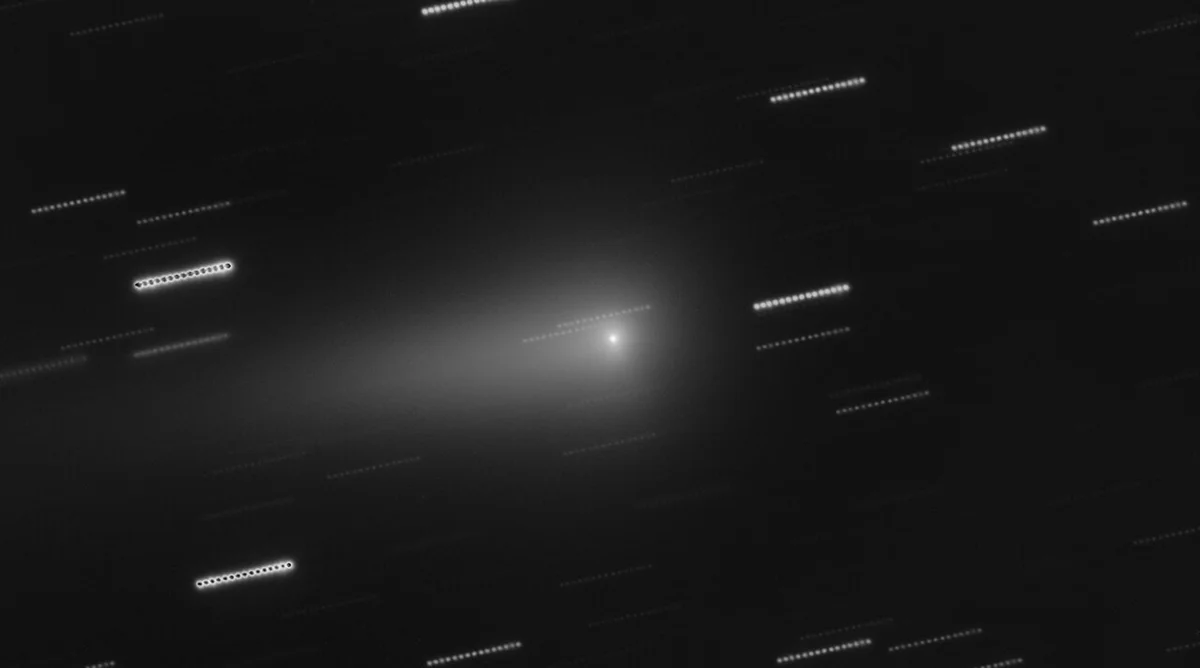
Astronomers have utilized the Very Large Telescope (VLT) of the European Southern Observatory (ESO) to conduct an in-depth analysis of 3I/ATLAS, the brightest interstellar object ever observed. By measuring specific chemical signatures—marking the first such observations of a comet formed outside our solar system—they have concluded that 3I/ATLAS likely originated from the outer regions of an ancient stellar system. These findings shed new light on the comet's formation history, suggesting it may be significantly older than the Sun.
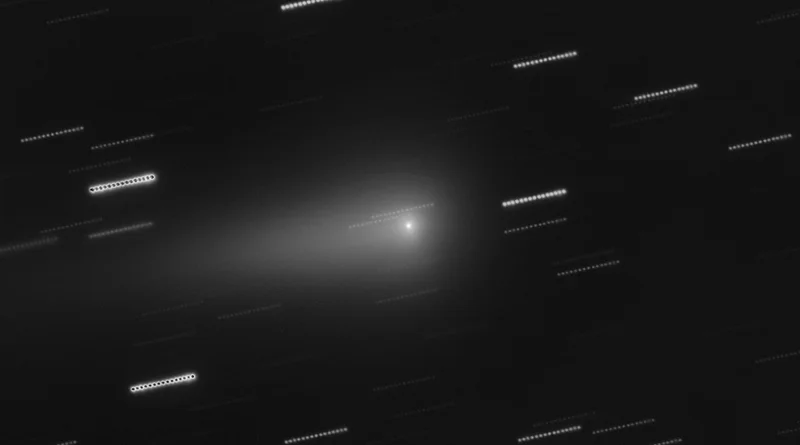
Interstellar comets are icy bodies that form around stars other than the Sun and occasionally venture into our solar system. "They are, in a sense, fossils of a planet formation process that occurred very far away, which we can study from a much closer perspective," explains astronomer Cyrielle Opitom, a researcher at the University of Edinburgh in the UK. Opitom, along with Jean Manfroid and Damien Hutsemékers from the University of Liège in Belgium, led a study on 3I/ATLAS, published today in Nature Astronomy.
3I/ATLAS is the third interstellar object confirmed after 1I/ʻOumuamua and 2I/Borisov. It was discovered as it approached the Sun, lingering long enough in our solar system for astronomers to conduct detailed studies. Determining the composition of the first two interstellar objects was challenging; the first showed no detectable gas, while the second was too faint. However, 3I/ATLAS provided a unique opportunity. Thanks to its unprecedented brightness, Opitom, Manfroid, Hutsemékers, and their team were able to measure the isotopic ratios of the comet, which reflect the relative proportions of different isotopes of the same element.
Using the UVES instrument on the VLT, the team measured the ratios of carbon and nitrogen isotopes in cyanide molecules present in the gas surrounding the comet. These ratios serve as reliable indicators of a comet's origin, as they are highly sensitive to the physical conditions in the formation environment and are expected to remain relatively unchanged as the comet travels through space.
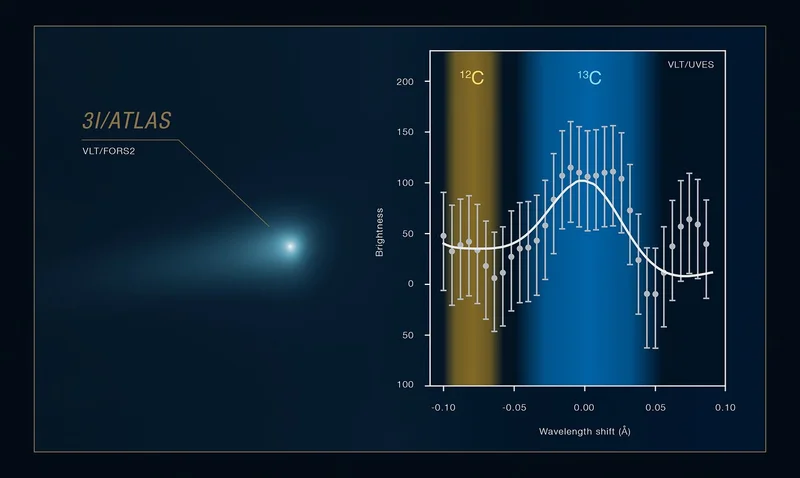
"Unlike comets from our solar system, this interstellar visitor exhibits unusually high carbon and nitrogen isotope ratios," explains Aravind Krishnakumar, a researcher at the University of Liège and co-author of the new study. A similar investigation led by Martin Cordiner at NASA's Goddard Space Flight Center, published late last month in Nature, reported comparable carbon isotope ratios and elevated deuterium levels—also known as heavy hydrogen [1]. This study relied on data from the James Webb Space Telescope, a collaborative project involving U.S., European, and Canadian space agencies.
Overall, Opitom's team's results suggest that the comet likely formed in the outer regions around an ancient star with "low metallicity." A low metallicity star is one whose composition contains few elements heavier than helium; it is believed to have formed when the universe was much younger and chemically less rich than it is today. Consequently, the team posits that 3I/ATLAS formed around a star that is much older than the Sun. "3I/ATLAS provides a truly exciting opportunity to study the composition of another planetary system that formed long before our Sun and solar system even existed," states co-author Rosemary Dorsey, a researcher at the University of Helsinki in Finland. The findings from various teams indicate that 3I/ATLAS is more than twice as old as the Sun.
As 3I/ATLAS moves away from the Sun and becomes increasingly faint, observations at the VLT are nearing their conclusion. The upcoming Extremely Large Telescope (ELT) from ESO will enable similar measurements on future interstellar objects, including those that are less bright than 3I/ATLAS. "The field of interstellar objects is still very new, and we don’t really know what to expect. Each time a new object is discovered, we experience new surprises," summarizes Opitom.
MN
Endnotes
[1] A team led by Salazar-Manzano and Panque-Carreño utilized the Atacama Large Millimeter/submillimeter Array (ALMA), in which ESO is a partner, to measure deuterated (or semi-heavy) water in 3I/ATLAS. They also found that the concentrations of this type of water are elevated compared to those in comets from the solar system.
Background Information
These research findings will be presented in an article to be published in Nature Astronomy (doi:10.1038/s41550-026–02921-7).