Perseids 2026: A Guide to Observing the Meteor Shower of San Lorenzo
The Perseids, known as the 'tears of San Lorenzo,' make August nights magical. Discover everything you need to know about observing this meteor shower.
The Enchanting 'Shooting Stars' of August: All You Need to Know About the Perseids
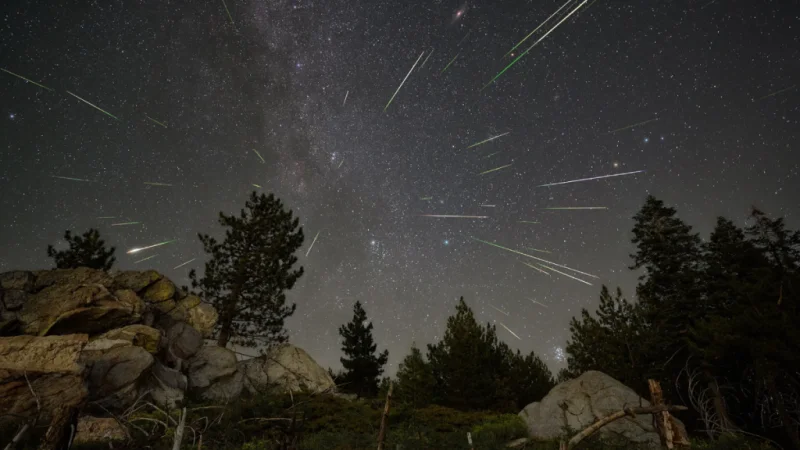
The Perseids are renowned as one of the most spectacular meteor showers. Often referred to as “shooting stars,” these meteors travel at remarkable speeds of 59 km/s and are known for their bright displays, frequently leaving behind colorful trails of light as they streak through Earth’s atmosphere. The Perseids are among the most intense meteor showers, with an impressive rate of 50 to 100 meteors visible per hour. This celestial event can be observed from late July until the end of August during the warm summer nights. While there are other notable meteor showers, such as the Geminids, Leonids, and Orionids, the “tears of San Lorenzo” are undoubtedly the most captivating.
When and Where to Watch
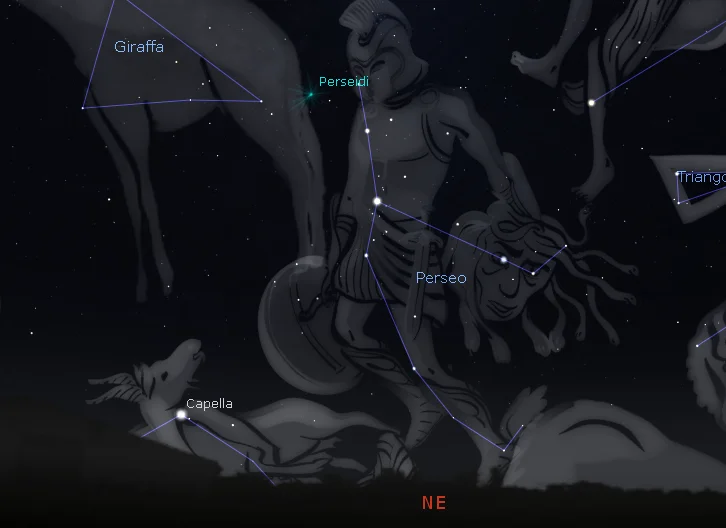
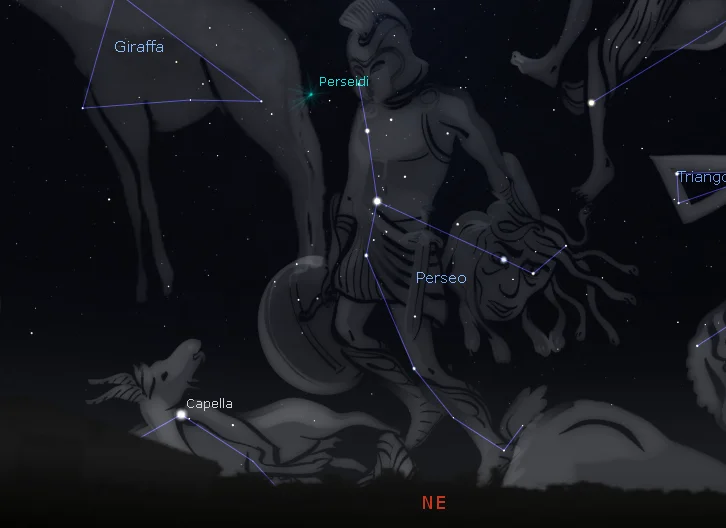
The meteors will be visible throughout the current month, with a peak expected on the night of August 12 to 13, 2026. During this time, observers can anticipate seeing between 50 and 100 meteors per hour, provided they are in areas free from light pollution (the Moon may interfere with visibility due to its brightness, even in its waning phase). The radiant point, from which the meteors appear to originate, is located in the constellation of Perseus—hence the name Perseids. To catch the best view, look towards the northeast starting around 10:30 PM. Using sky observation apps like Stellarium, Google Sky Map, or Star Walk can enhance the experience. Enjoy the spectacle with the naked eye; no special equipment is needed.
The Origins of the Meteors
Meteors originate from particles shed by comets or fragments of asteroids. As comets orbit the Sun, they leave behind a trail of dust. Each year, Earth passes through these debris trails, which, upon entering the atmosphere, disintegrate and create fiery streaks (due to friction) and colorful displays in the sky (the colors depend on their chemical composition). The Perseids are associated with the comet 109P/Swift-Tuttle, which has a nucleus measuring 26 kilometers in diameter. This comet takes 133 years to complete one orbit around the Sun. In 1865, Giovanni Schiaparelli identified this comet as the source of the Perseids, while it was first discovered in 1862 by Lewis Swift and Horace Tuttle. The Swift-Tuttle last traversed the inner solar system in 1992. For those interested in stargazing, a recommended read is Daniele Gasparri’s book, “Primo incontro con il cielo stellato.” Here’s the link.
Source