Asteroid (44) Nysa: A Potential Three-Lobed Structure Revealed
New high-resolution images of asteroid (44) Nysa reveal a potential three-lobed structure, a first in astronomical observations. A small moon discovered may help clarify its mystery.
Asteroid (44) Nysa: A Potential Three-Lobed Structure Revealed
Recent high-resolution images of asteroid (44) Nysa have unveiled a surprising potential structure that may consist of three distinct lobes, marking a first in astronomical observations. This discovery was made by an international team led by Kate Minker from the Lowell Observatory, who also identified a small, unexpected moon that could help clarify the asteroid's formation.
For a long time, the precise shape of Nysa remained uncertain. Classified as one of the largest and brightest E-type asteroids in the main belt, it is characterized by a surface rich in enstatite. Despite being observed for over a century, previous images of Nysa were often blurry. Researchers could only infer a possible elongated body, or perhaps two merged masses, without definitive conclusions.
Two Powerful Telescopes Capture Unprecedented Detail
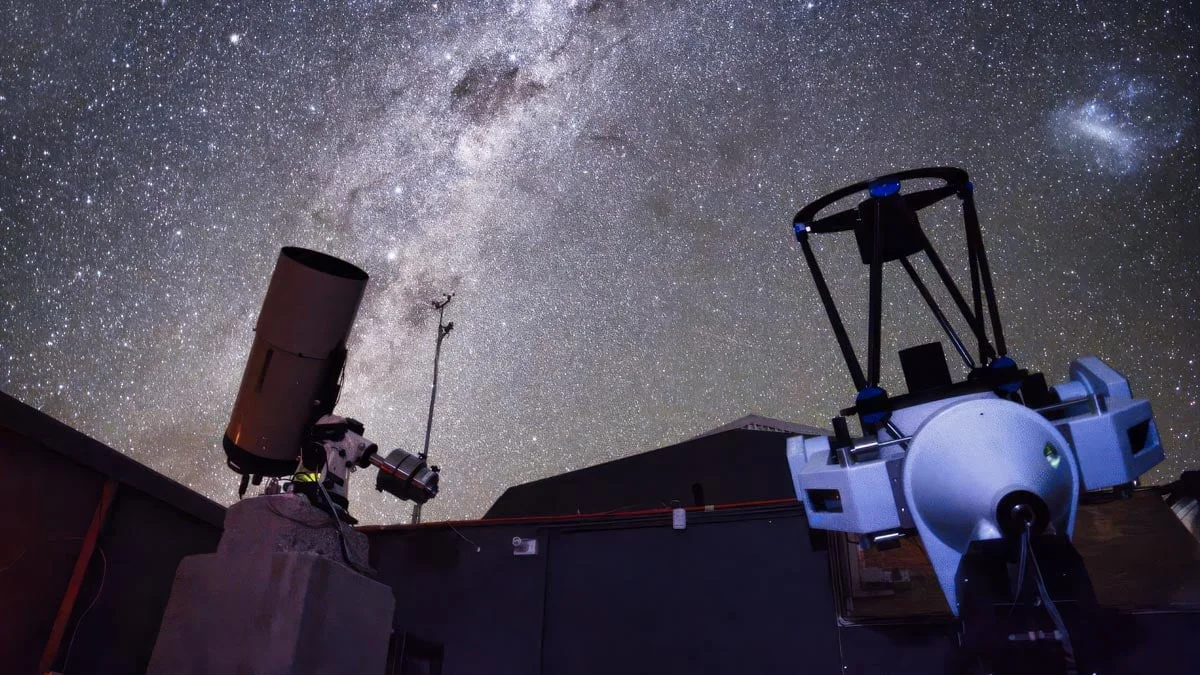
To resolve the mystery, Minker and her team utilized two of the world's most powerful telescopes: SHARK-VIS on the Large Binocular Telescope in Arizona and SPHERE/ZIMPOL on the Very Large Telescope in Chile. Employing adaptive optics, which corrects atmospheric distortions in real-time, along with specialized image processing techniques, the team succeeded in capturing the sharpest images of the asteroid ever recorded. Minker noted that the quality of these images is comparable to those obtained by a space probe, despite being captured from Earth.
A Three-Lobed Structure
The new images reveal two deep valleys encircling the asteroid. The research team interprets these features as “necks,” which are narrow junctions where originally separate bodies may have fused together. Consequently, Nysa could be a single object composed of three distinct lobes, extending approximately 75 kilometers in length. Although similar phenomena have been observed, such as the 67P comet resembling a rubber duck and the Kuiper Belt object Arrokoth appearing like a flattened snowman, this would be the first recorded instance of a “trinary contact” structure.
However, scientists remain cautious. An alternative hypothesis suggests that Nysa might be a single body that has been so damaged and eroded that it appears to consist of three parts. This scenario would also be unprecedented, as no other known object exhibits such a unique appearance.
An Unexpected Moon Could Provide Clarity
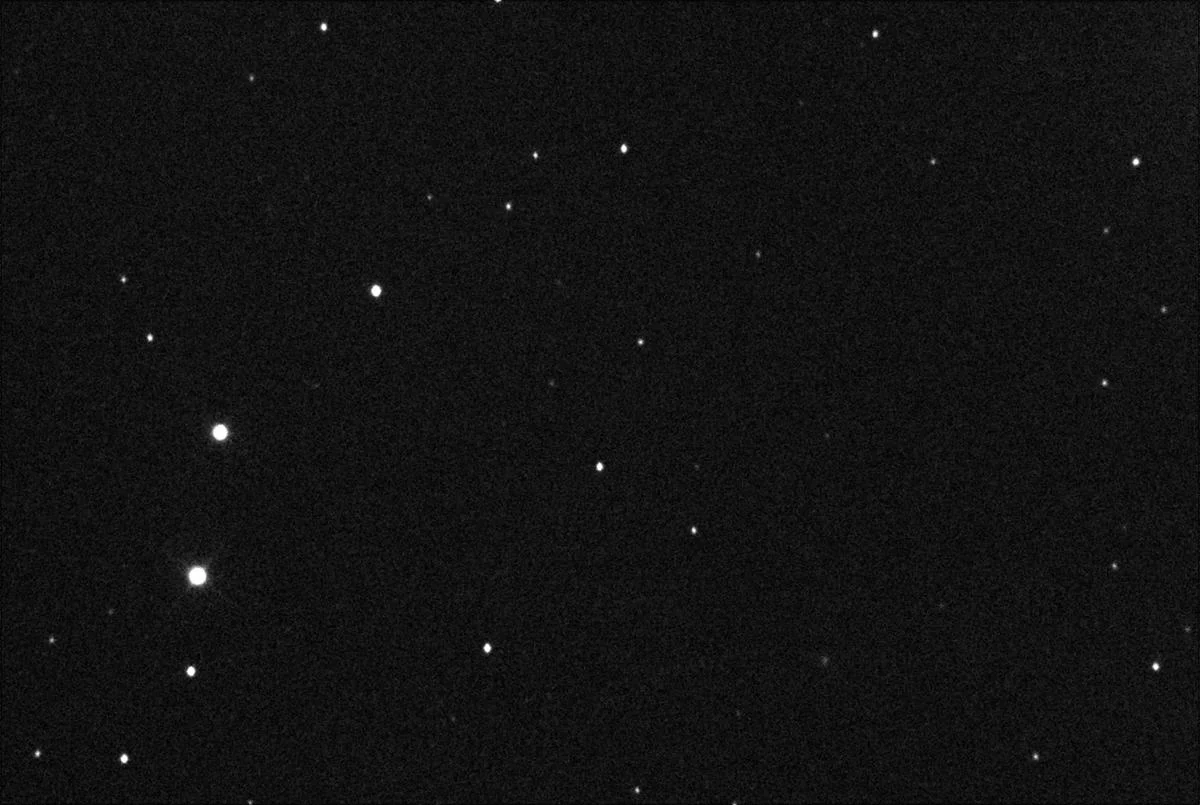
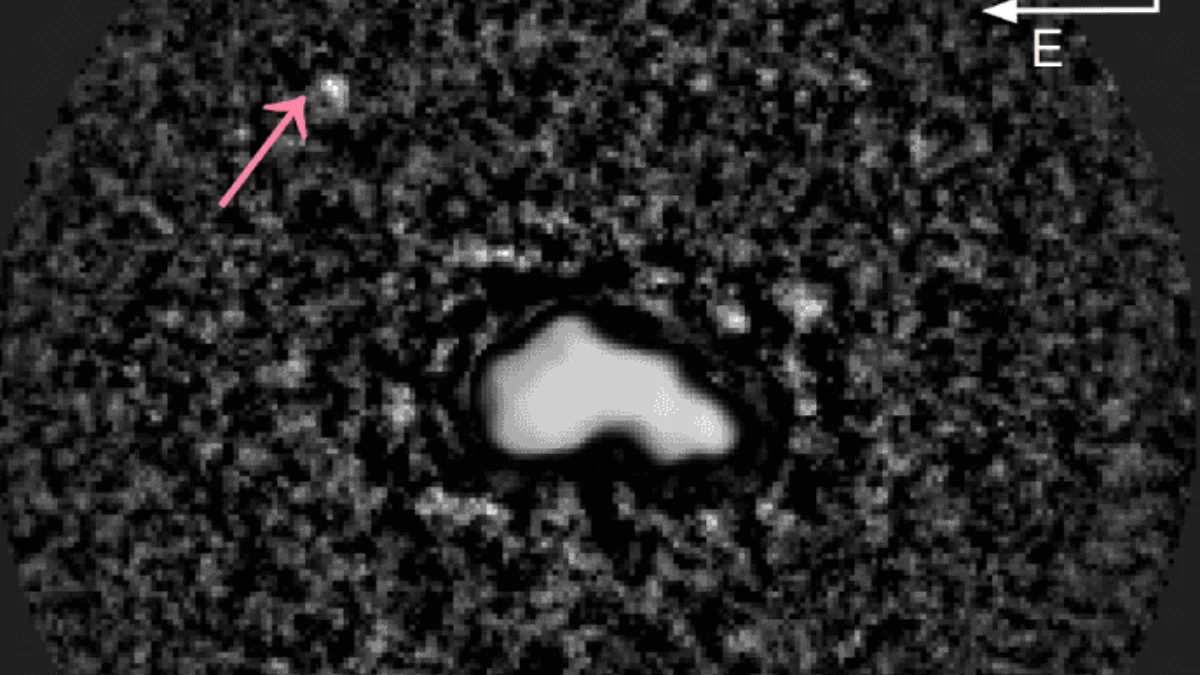
While analyzing Nysa's shape, researchers stumbled upon a small moon. Using high-contrast imaging techniques designed for exoplanet detection, the team managed to isolate a faint point of light—a satellite approximately one kilometer in diameter orbiting at least 170 kilometers from the main body. This moon has been provisionally named S/2026 (44) 1, and its presence has been confirmed through two independent observational sessions.
This discovery could be pivotal. By tracking the moon's orbit, scientists can calculate Nysa's mass, and when combined with volume measurements, derive its density. This information is crucial for distinguishing between a porous mass of collision debris and a solid, compact rock. Ironically, the enigmatic nature of the asteroid may be clarified not by the images that sparked the inquiry but rather by the tiny point of light—Nysa's moon.
Implications for Understanding the Solar System
The implications of this research extend beyond Nysa itself. E-type asteroids are thought to be remnants of the primordial inner Solar System, rich in enstatite—either primitive building blocks that never formed into planets or fragments of a larger body that was destroyed. Understanding how an object with such a peculiar shape as Nysa formed could bring us closer to unraveling the processes that led to the assembly of planets in our Solar System.