Voyager 1 Captures the Sounds of Interstellar Space from 18 Billion Kilometers Away
NASA's Voyager 1 has captured the sounds of interstellar space from over 18 billion kilometers away, revealing the vibrations of plasma in this unexplored region.
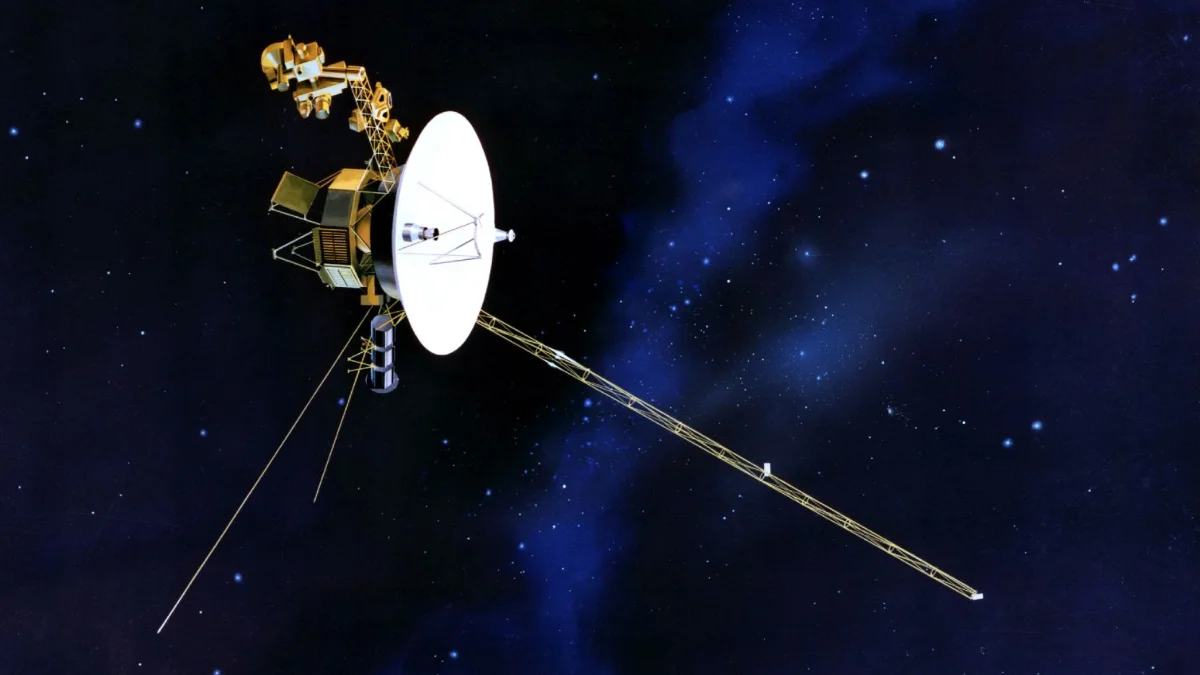
Voyager 1 Records Sounds from Interstellar Space
NASA's Voyager 1 spacecraft has successfully captured the sounds of interstellar space, revealing the vibrations of dense interstellar plasma, or ionized gas. This remarkable data was collected using the spacecraft's plasma wave instrument during two periods: from October to November 2012 and again from April to May 2013. The following graph illustrates the frequency of the waves, which indicate plasma density (the colors represent wave intensity, with red indicating stronger waves and blue indicating weaker ones).
Rising Tones
Scientists observed that each ‘event’ recorded by Voyager 1 produced a rising tone. The dashed line in the graph indicates that these increasing tones follow the same slope, suggesting a continuous increase in density. By extrapolating this line further back in time (not shown in the video), researchers deduced that Voyager 1 first encountered interstellar plasma in August 2012. Here are the sounds that have traveled to us from 18 billion kilometers away:
Beyond the Heliosphere
On August 25, 2012, Voyager 1 crossed the heliopause—the boundary where the solar wind emitted by our Sun is halted by the interstellar medium—marking its entry into interstellar space. This event made Voyager 1 the first human-made object to explore this new region. At that time, the spacecraft was approximately 122 AU (astronomical units) from the Sun, which translates to about 18 billion kilometers. This type of interstellar exploration is the ultimate goal of the Voyager mission. Voyager 2, traveling in a different direction, officially entered interstellar space on November 5, 2018, after crossing the heliopause.
Learn More:
- Explore the dedicated section on interstellar missions from NASA.