Tonight's Visible Starlink Satellite Train Over Italy
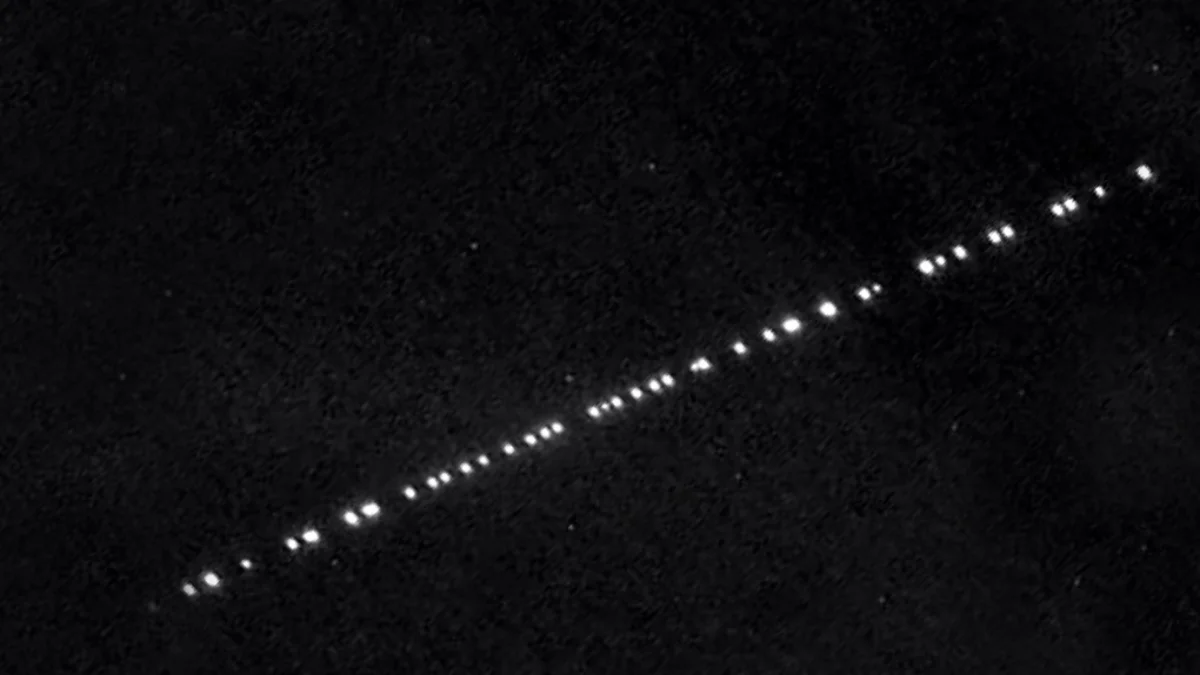
Tonight, August 15, 2026, at 21:36, a bright passage of SpaceX's Starlink satellites will be visible across Italy. Learn how to track them and understand their impact on the night sky.
Tonight, August 15, 2026, a Bright Passage of Starlink Satellites Will Be Visible Across Italy
At 21:36 local time, observers in Italy will have the opportunity to witness a remarkable sight in the night sky: a bright procession of SpaceX's Starlink satellites. Often described as a train of lights, these satellites are part of a constellation designed to provide global internet coverage, particularly beneficial in rural and remote areas where connectivity is often unreliable or entirely absent. The system is owned by SpaceX, a private aerospace manufacturer founded by Elon Musk in 2002, with the goal of creating a global broadband network utilizing low Earth orbit (LEO) satellites to deliver high-speed internet services.
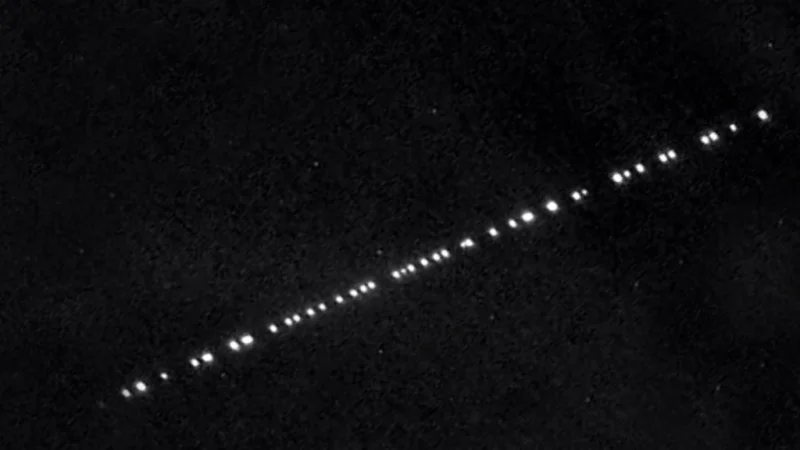
The satellite passage tonight will be moving from south to north and will last approximately four minutes. It is advisable to set up your viewing spot a bit earlier to fully enjoy the experience. If you encounter issues accessing the tracking map on Heavens-Above, try again later or visit their website for more details.
How to Track the Satellites
Finding out when and where the Starlink satellites will be visible from your location is straightforward. The quickest method is to visit Heavens-Above and select your city from the menu. After that, choose 'Starlink Passes' to get the relevant information. The site also offers downloadable maps with precise times and dates, as well as tracking for other satellites and the International Space Station (ISS). Happy observing! Here’s a video of a previous pass:
The Impact of Starlink on the Night Sky
Many people often ask, "What is that train of lights moving across the sky?" We aim to provide answers by highlighting the visibility of Starlink satellites from Italy. While they are undoubtedly fascinating to watch, there is a downside. These bright lights represent a form of pollution. They are akin to the shimmering colors seen in a puddle of diesel; visually appealing yet indicative of chemical contamination.
Artificial Satellites and Light Pollution
It is crucial to recognize that artificial satellites contribute significantly to light pollution in the night sky. Their intense brightness can severely hinder both professional and amateur scientific research, often contaminating data collected by telescopes, even in the most pristine locations free from typical light pollution, such as observatories in Chile, Hawaii, and the Canary Islands. The ever-increasing number of satellites in low Earth orbit heightens the risk of catastrophic collisions, potentially leading to a chain reaction that could render these valuable orbits unusable (known as the Kessler syndrome). The proliferation of satellites is transforming the once pristine night sky into a distant memory, even in the most remote areas of the Earth that were previously untouched by artificial light.
For more information, you can refer to the following document:
- https://www.iau.org/static/science/scientific_bodies/working_groups/286/dark-quiet-skies-2-working-groups-reports.pdf