Reflect Orbital: A Controversial Leap into the Night Sky
Reflect Orbital's ambitious plan to deploy thousands of mirrors in space raises significant concerns for astronomy and light pollution, potentially altering the night sky forever.

On July 9, the Federal Communications Commission (FCC) of the United States granted approval to the California-based startup Reflect Orbital, which plans to launch a massive mirror into low Earth orbit. This initiative aims to create illuminated zones on Earth at night, with the ambitious goal of deploying 50,000 such mirrors by 2035. If realized, this project could drastically alter the landscape of terrestrial optical astronomy.
Reflect Orbital's mission is to redirect sunlight to areas of the Earth that are in darkness, achieving brightness levels comparable to solar noon in specific regions. The startup claims this technology will provide "clean and abundant energy on demand." They suggest that these illuminated areas could enhance agricultural productivity, assist in natural disaster relief operations, and allow solar panels to generate electricity during the night. However, the astronomical community quickly recognized the detrimental implications of such a venture. The light beams from these orbiting mirrors could severely disrupt the operation of sensitive telescopes and exacerbate light pollution, akin to the interference caused by a full moon, which hampers deep-sky observations. Roohi Dalal, Deputy Director of Public Policy at the American Astronomical Society, aptly stated, "With 50,000 satellites, this would likely mean the end of ground-based astronomy, or at least optical astronomy."
Following the FCC's approval, Reflect Orbital plans to launch its first satellite, Eärendil-1, by the end of this year. This satellite, roughly the size of a mini-refrigerator, will orbit at an altitude of 625 kilometers and deploy a mirror the size of a tennis court, albeit just a few microns thick. The mirror will be positioned to concentrate sunlight on various test sites, with the team tasked with evaluating deployment and pointing mechanisms. The initial mirror is expected to illuminate an area of approximately 24 square kilometers on the Earth's surface. The company assures that the light beam can be turned off on demand, but skepticism remains about this claim.
Ben Nowack, co-founder and CEO of Reflect Orbital, emphasizes their intent to demonstrate how they can provide benefits without shining light where it is unwelcome. The Reflect Orbital team has reportedly developed hundreds of mirror prototypes and plans extensive testing with independent researchers to investigate the effects of their devices. They have also implemented control mechanisms to ensure their technology does not interfere with astronomers' work, a claim that echoes early assurances from Starlink.
In addition to the concerns about light pollution, Reflect Orbital faces significant risks associated with satellite operations. A minor hardware or software malfunction could lead to catastrophic outcomes, such as a failed deployment of the enormous mirrors. Imagine a scenario where the first mirror becomes uncontrollable due to a satellite failure, continuously illuminating a specific area or multiple zones as it drifts unpredictably.
Once the test mirrors are deployed, Reflect Orbital will need to carefully monitor the potential impact of debris from other spacecraft in low Earth orbit. The presence of numerous small fragments poses a real threat, as these could easily collide with the large surface area of the mirrors. Repeated impacts could diminish their effectiveness and generate even more debris, escalating risks if Reflect Orbital proceeds to launch thousands of mirror satellites.
The first test satellite, approved by regulatory authorities, is designed to emit light equivalent to that of a full moon. This is already deemed excessive, and it highlights that to achieve their goals of enhancing solar energy production or illuminating urban areas at night, the company will require a significantly larger fleet of satellites. This, in turn, raises the likelihood of collisions and the potential for a catastrophic Kessler syndrome scenario.
A spokesperson for Reflect Orbital stated that they will strive to avoid collisions with space debris. However, the feasibility of this assurance remains questionable.
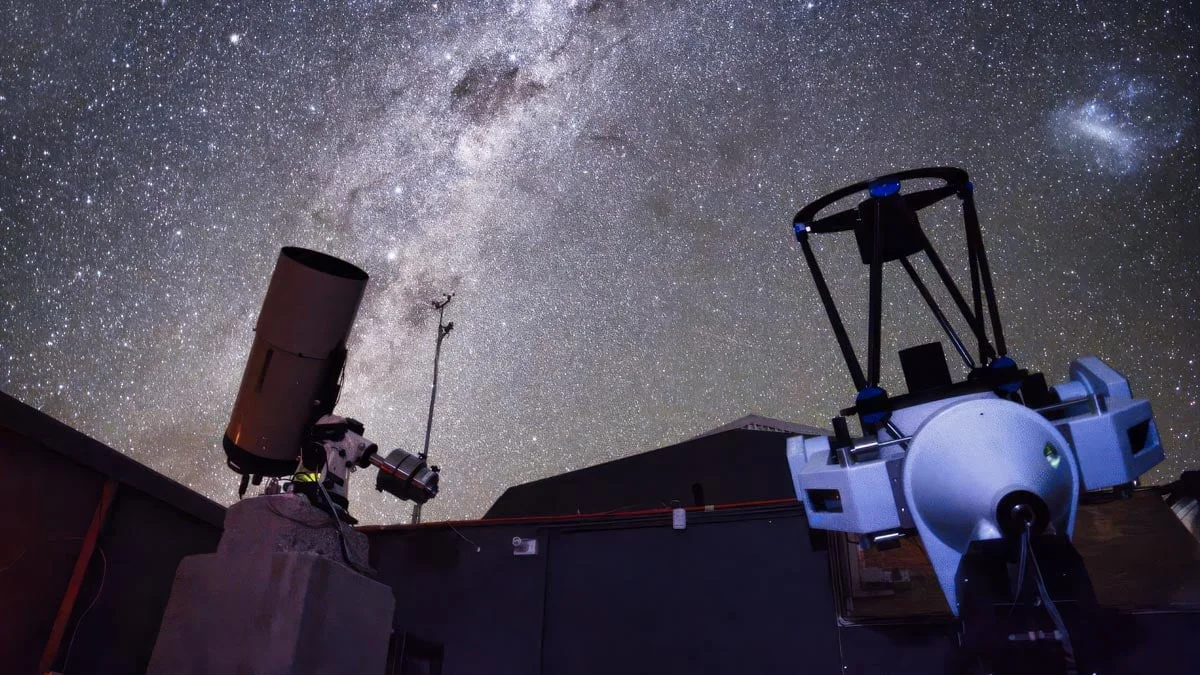
The implications for astronomy are dire. Many researchers fear that Reflect Orbital's mission could hinder astronomical observations and data collection. Optical telescopes, such as the Vera C. Rubin Observatory in Chile, rely on ultra-sensitive instruments that could suffer severe interference from reflected light beams. For instance, if one of Rubin's images captured a reflection from a Reflect Orbital mirror, it would be completely saturated and rendered useless.
Reflect Orbital claims that precise control over the mirror beams to prevent stray light is a top priority from the outset. The company is reportedly working on an agreement with the National Science Foundation (NSF) to address scientists' concerns, with Nowack promising to establish "exclusion zones" to protect astronomical facilities.
However, astronomers—both professional and amateur—along with the general public, do not merely require "exclusion zones." What is truly needed is the cancellation of these reckless plans for constellations of tens of thousands of increasingly reflective satellites that threaten to obliterate the night sky.
The most troubling aspect of this situation, reminiscent of the Starlink constellation, is that a handful of decision-makers in the United States could irreparably pollute low Earth orbit and disrupt the nocturnal experiences of eight billion people who simply wish to gaze at the starry sky.