How to Use Filters for Planetary Observation
Learn how to enhance your planetary observations with filters. Discover the types of filters suitable for different planets, installation tips, and techniques for optimal viewing.
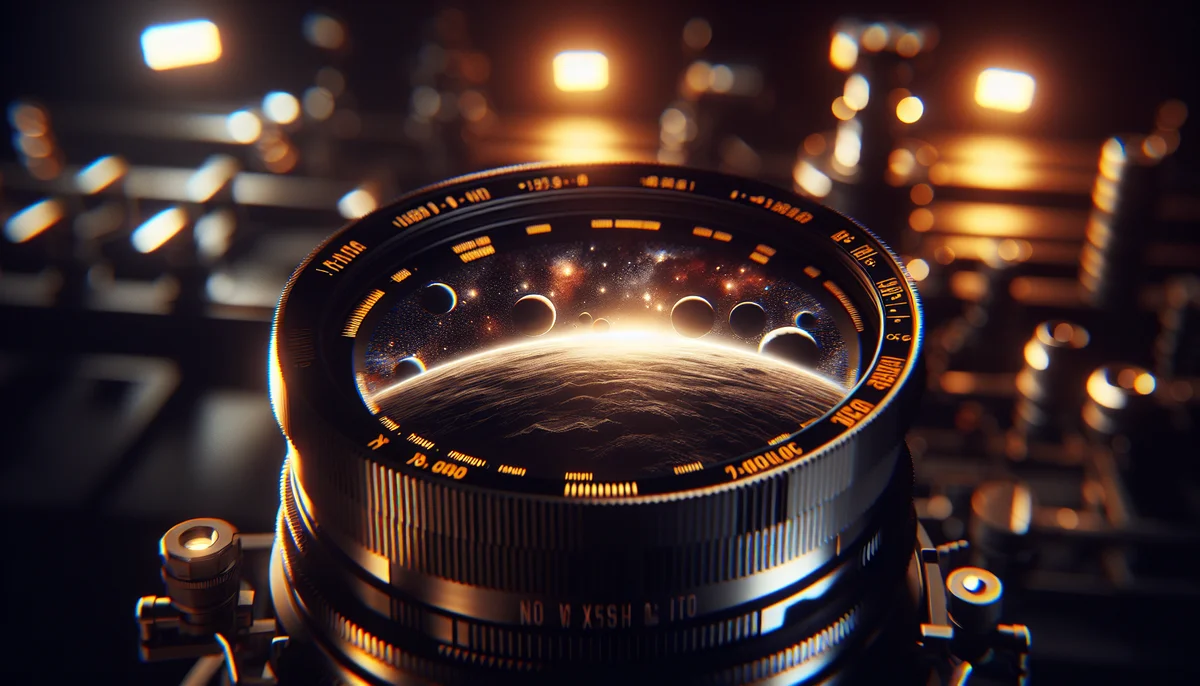
Observing planets through a telescope can be a daunting task, particularly when it comes to discerning subtle features on their surfaces. How can a simple filter enhance this experience? What types of filters are best suited for each planet? Let's explore the advantages and techniques to maximize the use of these valuable astronomical accessories.
Table of Contents
- What is a Filter in Astronomy?
- Definition and Purpose
- Types of Filters for Planetary Observation
- Compatible Equipment for Filters
- Why Use a Filter for Planetary Observation?
- Enhancing Detail Visibility
- Reducing Light Pollution
- Protecting the Eye and Equipment
- How to Choose the Right Filter for Each Planet?
- Filters for Jupiter and Saturn
- Filters Suitable for Mars
- Filters for Venus and Mercury
- How to Install a Filter on Your Telescope or Binoculars?
- Installation Steps
- Tips to Avoid Mistakes
- Verification and Adjustment
- Techniques to Optimize Observation with a Filter
- Choosing the Right Night and Sky Conditions
- Adjusting the Instrument with the Filter
- Prolonged Observation Practices
What is a Filter in Astronomy?
In this section, we will delve into the nature of filters used in astronomy, their primary function, and the various types suited for planetary observation. Understanding what a filter is essential for effective use and selecting the most appropriate model.
Definition and Purpose
An astronomical filter is an optical accessory placed either in front of the eyepiece or integrated into the optical path of a telescope or binoculars. Its primary function is to select a specific range of wavelengths, allowing for the reduction of certain unwanted light or highlighting particular details on celestial bodies. For instance, when observing Jupiter, a red filter can help to better distinguish the Great Red Spot and the cloud bands.
Filters also protect both the instrument and the observer's eyes by reducing excessive brightness, particularly when viewing Venus, which can be blinding due to its high reflectivity. In essence, a filter enhances visual quality and minimizes fatigue during extended observation sessions.
Types of Filters for Planetary Observation
There are several categories of filters in astronomy, specifically designed for planetary observations. Colored filters, such as red, blue, or green, enhance certain contrasts on planetary surfaces. For example, a blue filter improves visibility of cloud bands on Jupiter and Saturn, while a red filter reveals more details on the Martian surface.
Narrowband or "interference" filters target specific wavelengths and are often used to isolate atmospheric phenomena or specific features of a planet. Light pollution reduction filters diminish the impact of urban lighting, allowing for clearer observations of celestial objects from well-lit areas.
Compatible Equipment for Filters
Most amateur telescopes are compatible with a wide range of filters, provided that the threading diameter matches. Standard 1.25-inch and 2-inch eyepieces have threads where these filters can be easily screwed on. Some binocular models offer accessory systems or external filters that are suitable.
It is crucial to check the filter's compatibility with your instrument, especially for specific telescope models or compact telescopes. Some filters are intended for particular uses, so it is advisable to choose based on your equipment and the type of observation planned.
Why Use a Filter for Planetary Observation?
Using a filter is not merely a gimmick; it offers tangible benefits during planetary observation. In this section, we will discuss how it improves view quality, mitigates external disturbances, and ensures safety during your observation sessions.
Enhancing Detail Visibility
Filters accentuate subtle contrasts that can be challenging to perceive with the naked eye through a telescope. For example, the orange filter is often recommended for observing Mars as it highlights the polar caps and darker regions on its surface, revealing structures that many enthusiasts struggle to distinguish without assistance.
On Jupiter, green or blue filters can enhance the visibility of gas bands and storm zones, while a yellow filter reduces certain dominant colors, providing a more natural view. This enriches the observation experience, emphasizing details while decreasing the effects of atmospheric turbulence.
Reducing Light Pollution
Observing a planet from an urban area can be challenging due to light pollution. Specific light pollution reduction filters, such as those made with sodium chloride, mitigate stray lights while allowing useful light from planets to pass through. As a result, stars and planets appear sharper, even above cities.
These filters effectively diminish the light from street lamps or signs, which is a significant advantage for astronomers in urban peripheries. Their use can transform a polluted sky into a setting conducive to enjoying planetary observation fully.
Protecting the Eye and Equipment
Certain filters are designed to protect both the optical instrument and the observer's eyes. For instance, solar filters allow safe observation of the Sun, while neutral density filters reduce eye strain during nighttime planetary observation by limiting excessive brightness. Venus, being very bright, often benefits from this type of filter.
Moreover, by reducing light transmission, filters decrease the risks of damage or premature fouling of optical components, extending the lifespan of sensitive instruments. This precaution is especially valuable when investing in quality equipment.
How to Choose the Right Filter for Each Planet?
Each planet has its unique visual characteristics, making filter selection often critical. This section discusses the recommended filters for each major planet to optimize your observation experience.
Filters for Jupiter and Saturn
Jupiter, the gas giant with its colorful cloud bands, is well-illustrated by deep blue or light green filters. These filters help define the boundaries of the cloud bands and observe storms like the famous Great Red Spot. On Saturn, similar filters enhance the perception of rings and atmospheric contrasts.
Orange or red filters help to reduce overall brightness, aiding in detail observation while avoiding glare. Feel free to experiment with multiple options, as local atmospheric conditions can influence the best selection.
Filters Suitable for Mars
Mars is often observed for its bright red appearance, but its small size and brightness can make details hard to discern. Red or orange filters are particularly effective for enhancing contrasts in polar caps, dark regions, and dust storms.
Additionally, a yellow filter can sometimes improve visibility of Martian cloud formations by mitigating shimmering caused by the Earth's atmosphere. Local observation conditions play a role, so it may be beneficial to combine several filters depending on the weather and Martian season.
Filters for Venus and Mercury
Venus and Mercury pose particular challenges: their intense brightness can interfere with observation. Neutral density or variable density filters are essential for reducing this excessive brightness. For Venus, an orange or yellow filter can also enhance the visibility of planetary phases, similar to those of our Moon.
Mercury, being smaller and closer to the Sun, is often more difficult to observe: a good anti-glare filter is vital, as is observing at times when the planet is far from the solar halo. These filters allow for more comfortable detail capture while minimizing eye strain.
How to Install a Filter on Your Telescope or Binoculars?
A proper filter installation is crucial for observation quality. Here’s how to proceed simply to avoid mistakes and ensure optimal instrument performance.
Installation Steps
For telescopes, most filters install by screwing the accessory directly onto the eyepiece. First, remove the eyepiece, then gently screw on the filter without forcing it to avoid damaging the threads. For certain astronomical telescopes, the filter may fit into a specific filter holder.
For binoculars, some accept external filters, or an appropriate accessory may be required. In all cases, ensure that the filter is securely attached and will not fall during use.
Tips to Avoid Mistakes
It is essential to handle filters carefully, as their surfaces are often fragile and sensitive to scratches. Use a clean microfiber cloth for cleaning, never with fingers. Avoid installing a filter at an angle, as this could degrade the image.
Always adjust the focus after installing the filter, as it may slightly alter the initial focus. Finally, if you need to change filters, do so gently to avoid disturbing the telescope's alignment.
Verification and Adjustment
Once the filter is in place, observe a bright star to verify that the focus is correct. If the image appears blurry, make small corrections. Also, check for any distracting reflections or halos, which may indicate that the filter is misaligned.
It is also useful to test different filters on the same planet during the same session to identify which offers the best rendering based on current conditions. Observing objects like Jupiter through various filters, for instance, illustrates these variations.
Techniques to Optimize Observation with a Filter
Beyond filter selection and installation, several observation techniques can maximize your chances of discovering fascinating details on planets. Here are some strategies to refine your practice.
Choosing the Right Night and Sky Conditions
It is always best to observe during clear nights, without a full moon, and with stable skies where atmospheric turbulence is low. The quality of the sky has an even greater impact when using a filter that highlights subtle details. For instance, observing Mars or Saturn on a calm night offers a much sharper spectacle.
Avoid very cold or humid nights that can cause dew on the instrument, complicating filter use. Staying away from any sources of light pollution remains imperative to fully benefit from the positive effects of light pollution reduction filters.
Adjusting the Instrument with the Filter
Install the filter on the eyepiece, then perform fine focusing. The presence of the filter may slightly alter the initial focus, so adjustments may be necessary. Additionally, take time to observe the object, noting any changes in detail visibility as you switch between different filters.
Prolonged Observation Practices
Engaging in prolonged observation sessions can lead to discovering intricate details that may not be apparent during short viewing. Taking breaks to rest your eyes while maintaining focus on the planet can enhance your overall experience.
By applying these techniques and utilizing appropriate filters, astronomers can significantly enrich their planetary observation experiences, transforming the night sky into a canvas of wondrous details and celestial phenomena.