August 2026: A Celestial Overview
Explore the celestial events of August 2026, featuring the moon's phases, planetary positions, and notable comets and asteroids visible in the night sky.
The Moon's Journey
On the first evening of August, stargazers can observe the waning moon positioned at the boundary of the constellations Aquarius and Pisces. Notably, on the night of August 3rd to 4th, the moon will pass just 5.5 degrees north of the ringed planet Saturn, which resides in the constellation Pisces. By August 6th, the moon will be in its last quarter in Aries. Observers will find the moon just a few degrees west of the Pleiades star cluster in Taurus during the night of August 6th to 7th.
In the early morning of August 9th, the waning crescent moon will be located just four degrees above Mars at the border of Gemini and Taurus. Following this, the slender crescent will traverse the constellation Gemini. On August 11th, just before sunrise, the moon will be visible for the last time, positioned 5.5 degrees above Mercury on the eastern horizon. The new moon phase will occur on August 12th, coinciding with a total solar eclipse over Spain, which will be partially observable in Central Europe at over 80%. Approximately half an hour after maximum coverage, the sun will set below the western horizon.
After the new moon, on the evening of August 15th, the thin waxing crescent moon will be spotted shortly after sunset, just 6.5 degrees southwest of Venus in Virgo. The following evening, it will shift to a position 6.5 degrees southeast of the evening star. As the moon continues its journey eastward, it will pass through Libra and Scorpio, reaching the first quarter on August 20th. After traversing the constellations Ophiuchus, Sagittarius, and Capricorn, the moon will culminate in a full moon phase in Aquarius on August 28th. A partial lunar eclipse will be visible in Central Europe during this full moon, with the moon obscured at maximum coverage. On the night of August 30th to 31st, the waning moon will again be positioned in Pisces, near Saturn, and just under 6 degrees above the ringed planet.
The Planets
The swift planet Mercury will achieve its greatest western elongation from the sun on August 2, 2026, positioned 19°28′ away. At this time, the bright Mercury, with a magnitude of 0.2, will be only 7 degrees above the horizon at civil twilight, making it necessary to use binoculars for observation. From August 7th, it will reappear in the morning sky with an apparent brightness of -0.4 magnitude visible to the naked eye, rising at 3:56 AM. The last opportunity to see Mercury with the naked eye will be on August 15th, when it rises at 4:31 AM, shining at -1.2 magnitude. An interesting event occurs on the morning of August 11th when Mercury will be positioned just above the horizon, with the moon 5.5 degrees above it.
From August 14th to 16th, Mercury will pass within 34 arc minutes of the giant planet Jupiter. Mercury will shine at -1.2 magnitude, while Jupiter will be at -1.8 magnitude. This conjunction will only be visible through binoculars or telescopes, as both celestial bodies will reach a height of only 5 degrees at civil twilight. Through a telescope, observers will note that Mercury's apparent diameter decreases to 5.6 arc seconds by August 15th, while its illumination rises to 83%, marking the dichotomy (half-Mercury) on August 5th. Finally, on August 27th, Mercury will be overtaken by the sun, reaching superior conjunction at a distance of 46 million kilometers from our star.
Our sister planet Venus remains visible as the evening star in Virgo shortly after sunset. On August 15, 2026, it will achieve its greatest eastern elongation from the sun, with an angular distance of 45°54′. Its apparent brightness will continue to rise to -4.6 magnitudes, but it will become increasingly difficult to see in the evening sky as its setting times become earlier and the evening ecliptic runs flat to the horizon. By the end of civil twilight, Venus will only be 6 degrees above the western horizon, setting at 10:17 PM on August 1st and at 8:45 PM by August 31st. On August 12th, Venus will appear half illuminated, marking the dichotomy. As the month progresses, its illumination will decrease, transforming into a crescent shape with an apparent diameter of 29.6 arc seconds. A particularly interesting sight will be the encounter between Venus and the thin waxing crescent moon during the evening twilight on August 16th.
Our red neighbor Mars will be visible in the morning sky, moving through Taurus and transitioning into Gemini on August 12th. Its apparent brightness will rise to 1.3 magnitude, though its apparent diameter will only be 5 arc seconds, insufficient to discern interesting albedo features on its surface. Mars will rise earlier in the month, from 1:37 AM to 1:04 AM by the end of August, reaching an elevation of 35 degrees above the eastern horizon at the start of civil twilight. On August 9th, the waning moon will be positioned above our neighboring planet.
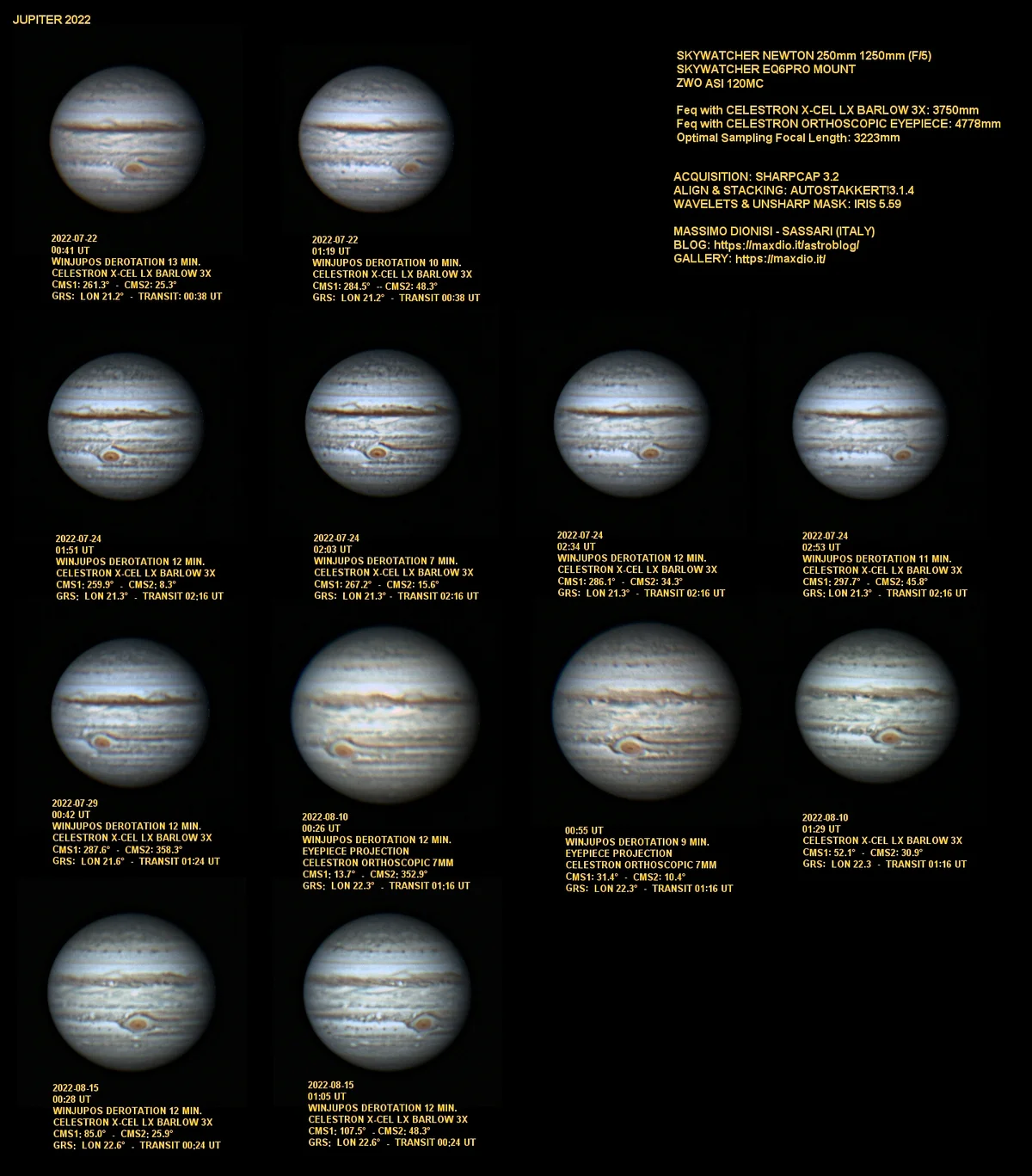
Following its conjunction on July 29th, the giant planet Jupiter will reappear in the morning sky within the constellation Cancer during the second half of the month. Jupiter, shining at -1.8 magnitude, will rise at 4:37 AM on August 15th, with its rising times advancing to 3:54 AM by August 31st. At the start of civil twilight, it will already be at an elevation of 15 degrees. On August 15th, the swift planet Mercury will pass by Jupiter at a northern distance of just one full moon's width, an event observable with binoculars or a small telescope.
The ringed planet Saturn is moving retrograde through Pisces and is nearing its opposition, which will occur in early October. Consequently, it will be visible almost all night. Its apparent brightness will slightly increase to 0.5 magnitudes, with rising times advancing from 10:59 PM to 9:59 PM by the end of August. In the morning hours, Saturn will culminate at 43 degrees above the southern horizon, appearing 19 arc seconds in size through a telescope. Compared to last year, when the rings appeared as a narrow line, its interesting ring system will be more open at 8.5 degrees.
On the nights of August 3rd to 4th and August 30th to 31st, the waning moon will pass north of the ringed planet.
Uranus will be a morning sky object, moving slowly through Taurus and positioned between the Hyades and Pleiades star clusters in the "Golden Gate of the Ecliptic." By the end of the month, the planet will almost come to a standstill. With an apparent brightness of 5.8 magnitudes, Uranus is theoretically visible to the naked eye. Through a telescope, the pale green disc of Uranus will measure only 3.6 arc seconds without further details. At the beginning of the month, Uranus will rise at 12:36 AM, with its rising time occurring two hours earlier by the end of August.
The outer planet of our solar system, Neptune, will approach its opposition next month, making it almost fully visible throughout the night in the constellation Pisces. It will stand nearly 9 degrees north of Iota Ceti (3.6 mag). Its culmination times will advance from 4:43 AM to 2:43 AM by the end of the month. With an apparent brightness of 7.8 mag, the planet can only be observed with binoculars or a telescope, appearing as a greenish disc of only 2.4 arc seconds without discernible details.
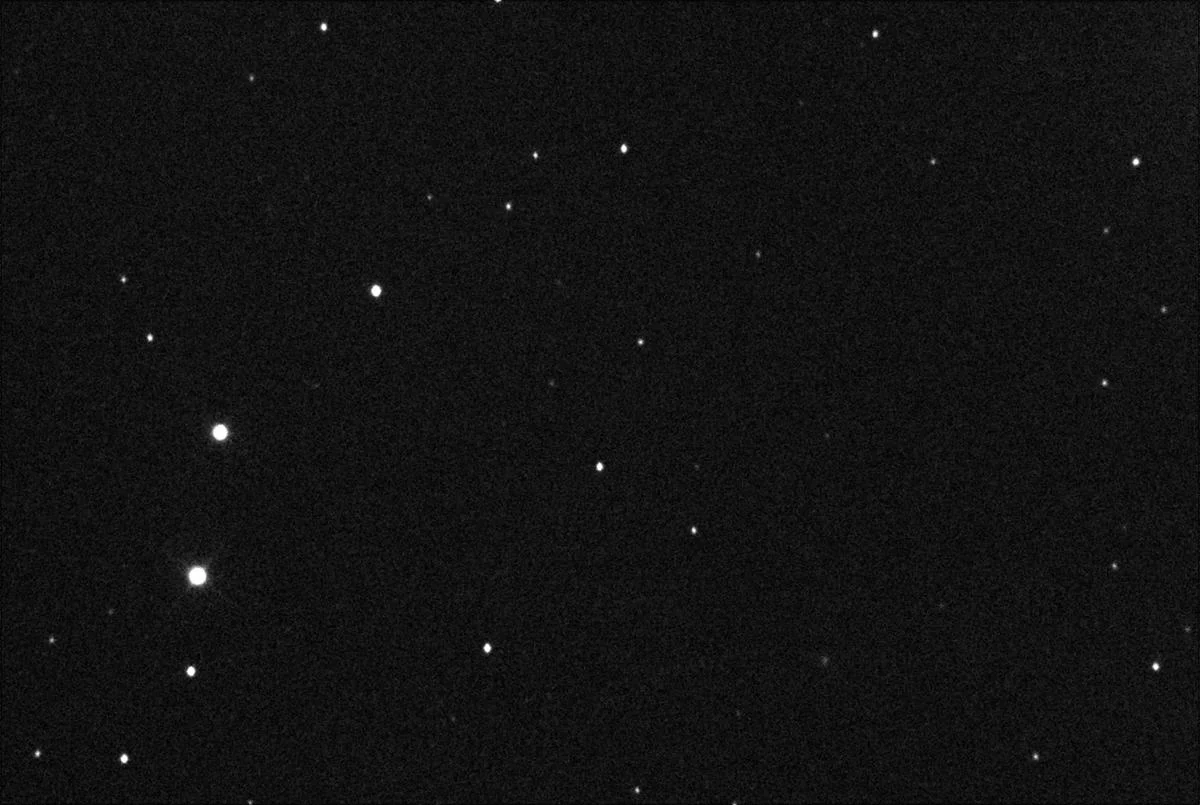
At the beginning of the month, the dwarf planet (134340) Pluto will still be visible for most of the night in the constellation Capricorn, but it will retreat from the second half of the night as the month progresses. Its setting times will advance from 4:46 AM to 2:44 AM by summer time. With an apparent brightness of 14.4 magnitudes, Pluto will appear as a tiny point in the star field of Capricorn.
Bright Comets and Asteroids
The short-period comet 10P/Tempel will be positioned just above the horizon, moving from the constellation Capricorn into the Southern Fish. With a brightness of about 10 mag, observing it so close to the horizon will be challenging, even with larger telescopes.
The short-period comet 88P/Howell will be visible in the morning sky within the constellation Cetus. Its apparent brightness will decrease from 12 to 13 mag in August, necessitating large telescopes to locate the comet.
The short-period comet 169P/NEAT will be near Earth and approaching its perihelion, traversing the sky in August. Despite its apparent brightness increasing from 12.5 to 11 mag, its visibility conditions in the evening sky will worsen. During this time, the comet will pass through the constellations Hercules, Northern Crown, Bootes, Canes Venatici, Ursa Major, and Leo. A particularly interesting encounter will occur with the globular cluster M 13 in Hercules, as the comet will pass within less than half a degree southwest of the cluster on the night of August 2nd to 3rd. Additional notable encounters will happen on August 15th with the Cat's Eye Galaxy (M 94) in Canes Venatici and just two days later with the Silver Needle Galaxy (NGC 4244).
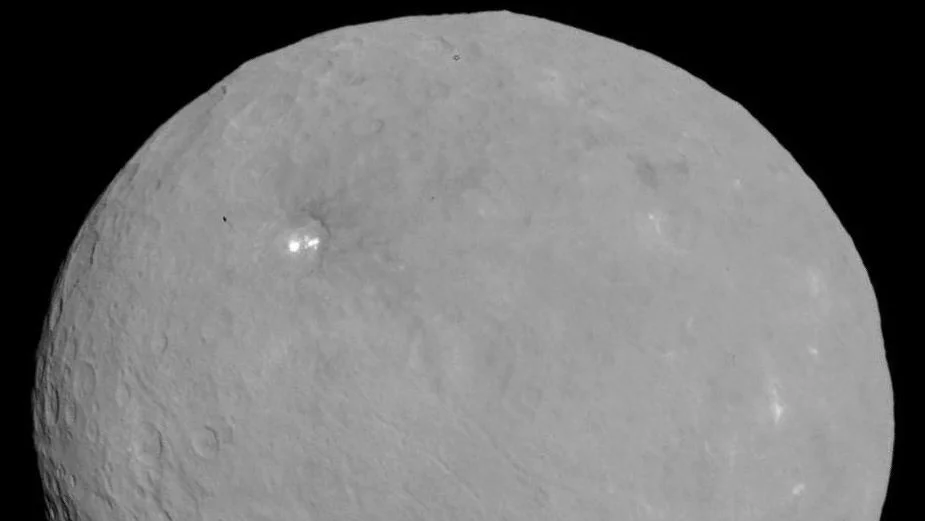
The 9.0 mag bright dwarf planet (1) Ceres will be visible in the morning sky within Taurus at the beginning of August. It will transition into Orion on August 7th and then into Gemini on August 14th, with its rising times advancing from 1:58 AM at the start of the month to 12:41 AM by the end of August. On August 23rd, Ceres will pass within 5 arc minutes of Eta Geminorum (3.3 mag), which can serve as a guide star. Further passages near bright stars will occur on August 1st (SAO 77358, 6.4 mag) and August 15th (141 Tau, 6.4 mag) at distances of 8.5 arc minutes each.