The Night Sky in April 2026 - Spreewald-Spechtler
The moon's path and planetary movements in April 2026, including visibility details for comets and meteor showers.
The Moon's Path
In the night from April 1 to April 2, we can observe the full moon in the constellation Virgo. On the evening of April 2, it will be only 2 ½ degrees south of Spica, the main star of Virgo. On April 5, the moon reaches Libra and becomes an object for the second half of the night. Between April 6 and April 7, the moon travels through the constellation Scorpius. In the morning hours of April 7, we can spot it 3 ¾ degrees southeast of Antares. After a brief detour into the southern area of Ophiuchus, we will see it on the morning of April 9 in Sagittarius. One day later, it reaches the last quarter. Subsequently, the moon will successively pass through the constellations Capricorn, Aquarius, and Pisces. On the morning of April 16, we will see it for the last time as a thin crescent rising in the east before entering the new moon phase on April 17. Due to the steep ecliptic position, the narrow crescent of the waxing moon will reappear above the west-northwest horizon in the evening twilight of April 18. It can be located 8 ½ degrees southwest of the evening star Venus. On the following evening, the moon crescent will have already passed Venus and will be positioned directly above the open star cluster of the Pleiades in the constellation Taurus, only 7 ½ degrees away from Venus. Together with the evening star, this creates a fascinating sight over the western horizon, which is also interesting for astrophotographers. The moon crescent continues to travel through Taurus and crosses into the constellation Gemini on the night of April 21 to April 22. On the night of April 22 to April 23, the waxing moon will pass just 2 ¾ degrees north of the giant planet Jupiter. In the morning of April 24, it will finally traverse the first quarter in the constellation Cancer. On the night of April 25 to April 26, the waxing moon will approach the main star Regulus in the constellation Leo. Around 4 a.m., it will disappear less than one degree from the star below the horizon. From April 28 until the end of the month, we can once again locate our Earth’s satellite in Virgo.
The Planets
The swift planet Mercury reaches its greatest western elongation from the sun on April 4, 2026, at a distance of 27°49′. Unfortunately, due to the shallow ecliptic position, this is not sufficient for morning visibility of the innermost planet of our solar system, even though the elongation angle is nearly maximal. Mercury remains invisible in the morning sky. Only south of 38° north latitude can Mercury be found in the morning twilight above the eastern horizon. On the same day, it also passes its aphelion and is then 69.9 million kilometers away from the sun.
Throughout the month, our sister planet Venus continues to increase its visibility in the evening sky. It travels through the constellation Aries and switches to the constellation Taurus starting April 19. Due to the increasingly late onset of evening twilight, its visibility shifts by only three-quarters of an hour. On April 1, Venus sets at 9:33 p.m. summer time. By the end of the month, the setting time of the evening star shifts to 11:06 p.m. At the end of April, just before the end of civil twilight, it will still be 16 degrees high above the western horizon. Its apparent brightness of -3.9 mag remains constant throughout the month. By the end of the month, a 12 arc-second large disk of Venus, illuminated to 88 percent, will be visible in the telescope. On April 19, the narrow, waxing moon crescent will be near Venus – the moon crescent itself will be located directly northwest of the Pleiades. In the last third of the month, the evening star travels through the “Golden Gate of the Ecliptic” and can be found only 3.5 degrees south of the Pleiades. Particularly interesting is the encounter of Venus with the planet Uranus on April 24. On this day, the evening star will pass by the distant ice giant at a distance of only 47 arc minutes. However, this is reserved for experienced observers.
Our red neighbor Mars is still too close to the sun and is overshadowed by the bright rays of our central star. It remains invisible in the morning sky throughout April.
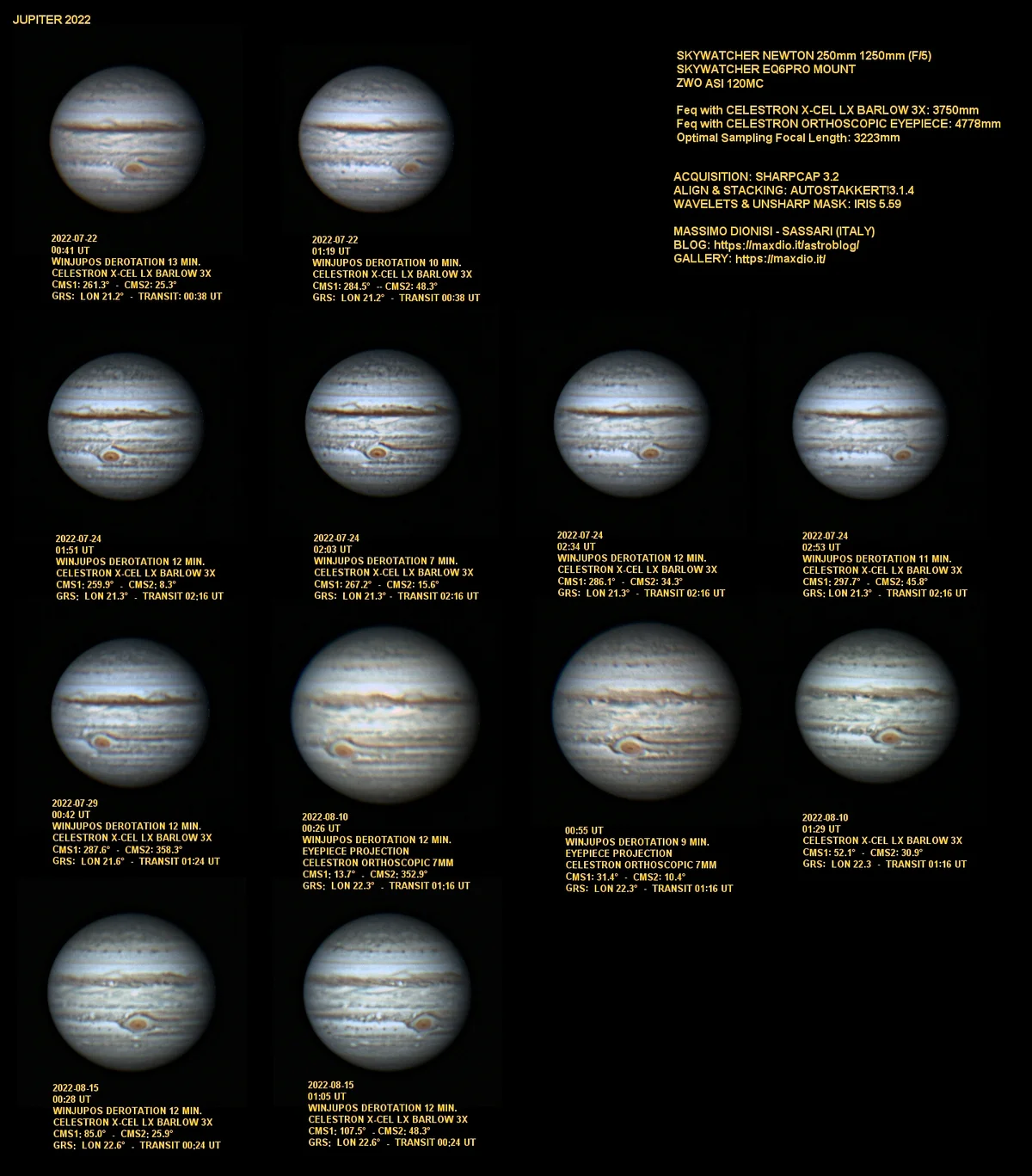
The giant planet Jupiter moves direct in the constellation Gemini and dominates the first half of the night. Throughout the month, it slowly retreats from the second half of the night. At the beginning of the month, it is still well over 60 degrees high in the south at nightfall. By the end of the month, it reduces its horizon distance to 40 degrees. At the same time, its apparent brightness decreases from -2.2 to -2.0 magnitudes. On the 1st of the month, Jupiter sets in the west at 3:50 a.m. By the end of the month, its setting times advance to 2:06 a.m. summer time. In the telescope, its flattened planetary disk appears only under an angle of 37 arc seconds. On the 22nd of the month, there will be a close encounter with the waning moon crescent at only three degrees north distance.
The ringed planet Saturn was in conjunction with the sun at the end of March and is still not visible from our latitudes this month. On April 20, Saturn, Mercury, and Mars will be in a field of view of only 1.7 degrees. Unfortunately, this interesting conjunction cannot be seen from Central Europe. However, it can be observed in the tropics and in the southern hemisphere of the Earth in the morning sky.
This month, Uranus completely withdraws from the evening sky and becomes invisible. It can be found in the constellation Taurus and is located 4 ½ degrees southwest of the Pleiades. Only experienced amateur astronomers can still spot the 5.8 mag bright, distant ice giant low in the west at the beginning of the month. Its setting times advance from 0:06 a.m. to 10:17 p.m. By telescope, its tiny, blue-green disk appears only 3.5 arc seconds large. On April 23, the bright Venus will pass northwest of the planet.
In the previous month, the outer planet of our solar system, Neptune, was in conjunction with the sun in the constellation Pisces. It also remains hidden from our view.
The 14.5 mag bright dwarf planet (134340) Pluto in the constellation Capricorn also remains invisible.
Bright Comets and Asteroids
The comet C/2026 A1 (MAPS) is a sun-grazing comet of the Kreutz group, which was only discovered on January 13, 2026. It will pass its perihelion on April 4, 2026, at a very close distance of only 800,000 kilometers from the sun. If it survives its close approach to the sun, it will briefly become very bright and develop a very long tail. Between April 4 and April 5, one should look for the comet shortly after sunset in the bright evening twilight, which could reach a maximum apparent brightness of -5 to -8 mag at perihelion.
The comet C/2025 R3 (PanSTARRS) can still be observed low in the morning sky in the constellation Pegasus until mid-April. With an apparent brightness of 10 mag, it can already be tracked down with small telescopes. By mid-April, its brightness is expected to rise to 7th magnitude, after which it will become invisible in the bright morning twilight and will finally pass its perihelion on April 19.
The comet C/2024 E1 (Wierzchos) is an object for the evening sky in April. It moves from the constellation Taurus into Gemini this month. Its apparent brightness of 11 mag at the beginning decreases further to 12 magnitudes throughout April. Thus, the comet will only be visible in larger telescopes. At the beginning of the month, Wierzchos is located only 4 degrees south of Aldebaran and the Hyades.
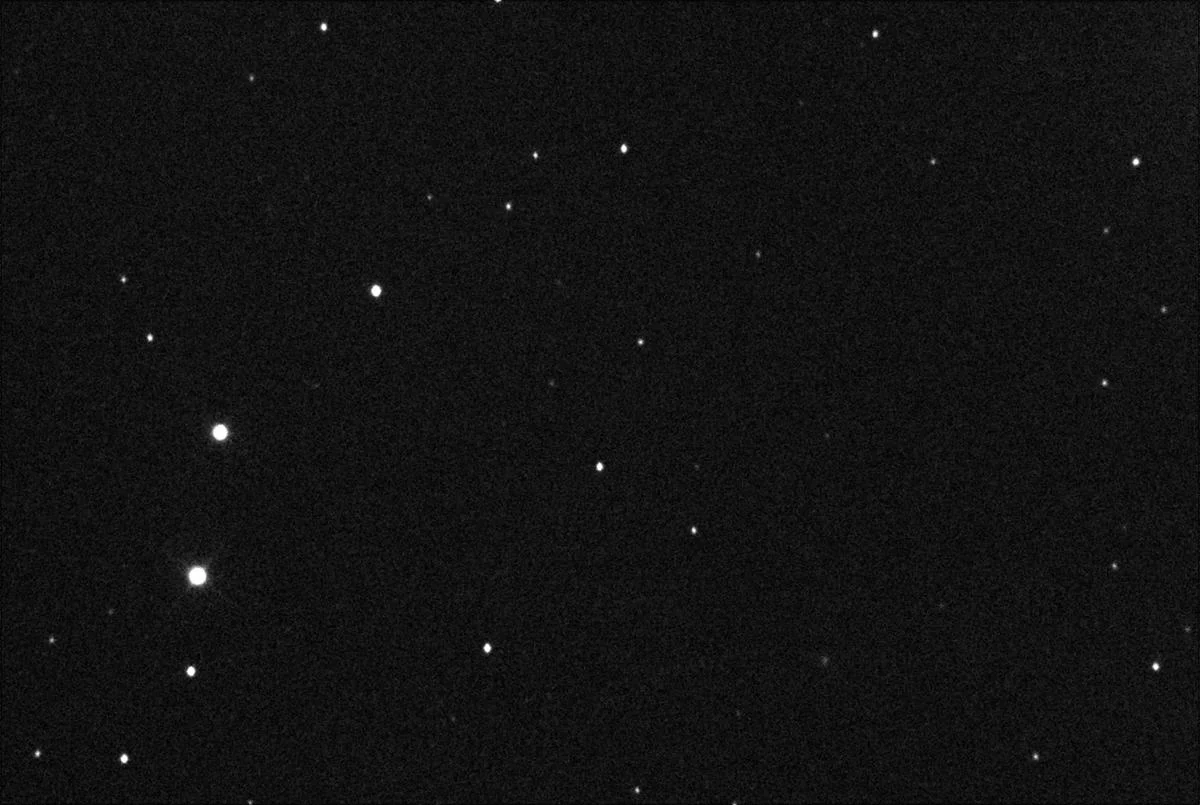
(7) Iris will become stationary in the constellation Sextans on April 14, thus ending its opposition period. Throughout the month, its apparent brightness decreases from 9.7 mag on April 1 to 10.4 mag. At the beginning of the month, it sets at 4:50 a.m., and by the end of the month, it sets at 3:04 a.m. summer time. On April 2, the 6.5 mag bright star 13 Sextantis can serve as a guide star. On this day, Iris is only 5 arc minutes away from this star.
(15) Eunomia was in opposition to the sun on March 25, 2026, but only reached a maximum brightness of 9.9 magnitudes. By April 3, its apparent brightness drops below 10th magnitude. Its culmination times advance from 0:11 a.m. at the beginning of the month to 9:56 p.m.
Also, (20) Massalia was in opposition to the sun in the previous month and continues to move through the constellation Virgo. Throughout the month, its apparent brightness significantly decreases, shrinking from 9.4 mag to 10.2 mag by the end of April. On April 1, it reaches its highest position in the south at 0:21 a.m. On April 30, it will be at the meridian at 10:08 p.m.
Meteor Showers
From April 16 to 25, the Lyrids can be seen, with their radiant point located about seven degrees southwest of Vega in the constellation Lyra. With an entry speed into the Earth's atmosphere of 49 km/s, the Lyrids are classified as medium-speed meteors. Their maximum is not very pronounced and occurs on the evening of April 22 around 8:40 p.m. The exact timing of the maximum can naturally shift by several hours. The best observation time for the Lyrid shower is between 10 p.m. and 4 a.m., when the radiant of the meteor shower is at a good observational height in the sky starting at 10:30 p.m. During the maximum, an average of 18 shooting stars can be expected, including some very bright specimens. The waxing moon only slightly interferes with the observation of the Lyrids. The meteor shower is also known for surprises: for example, in 1982, 90 meteors per hour were observed. Another outburst occurred in 1922 when 100 shooting stars per hour were recorded. This year, no increased activity is expected. The parent body of the Lyrids is considered to be the long-period comet C/1861 G1 Thatcher with an orbital period of 415 years.
From April 19 to May 28, the Eta Aquariids can be observed. However, this year they will be significantly disturbed by the waning moon. It is a medium-strength shower that is mainly visible in southern latitudes. In Central Europe, the radiant is only very low above the horizon. Therefore, there is only a short observation window just before the onset of morning twilight. The maximum is expected on May 5. For example, from Namibia, between 50 and 65 very fast meteors with entry speeds of 66 kilometers per second into the Earth's atmosphere can be seen. In 2003, a zenith rate of 100 was even recorded. In Central Europe, this number is reduced to 10 to 15 shooting stars per hour due to the low horizon height. Due to their shallow entry angle into the Earth's atmosphere, these meteors exhibit very long trajectories in the sky.