The Night Sky in June 2026 - Spreewald-Spechtler
The moon's path and planetary movements in June 2026, including visibility details for Mercury, Venus, Mars, Jupiter, Saturn, Uranus, Neptune, and notable comets and asteroids.
The Moon's Path
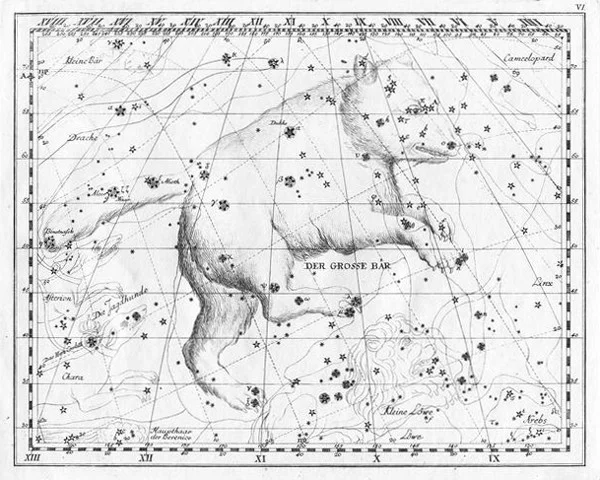
In the morning hours of June 1, we can spot the full moon 6 ¾ degrees southeast of Antares, the main star in the constellation Scorpius. Just one morning later, we see it in the constellation Sagittarius. On June 5, it reaches the constellation Capricorn and continues eastward through areas of the sky that contain only very faint stars. On June 8, it passes through the last quarter in the constellation Aquarius. After that, our silent companion wanders through Pisces and stands 5 degrees above the ringed planet Saturn on the morning of June 10. By around 3 AM, the distance between the moon and Saturn is only 5 ½ degrees. Starting June 12, the waning crescent moon travels through Aries. On June 14, it is visible for the last time above the northeastern horizon before reaching the new moon phase the following day. Already on June 16, the slender, waxing crescent moon reappears in the evening twilight. We can observe it just above the western horizon near Mercury, Jupiter, and Venus. This planetary alignment is particularly attractive for photographers, as the distance to Mercury will be only two degrees. Just one evening later, we can spot the moon crescent half a degree from the evening star Venus. From June 18, the moon is in the constellation Leo and encounters the main star Regulus on the evening of June 19. On June 21, the first quarter is reached in the constellation Virgo. On June 23, we see our silent companion below the main star of Virgo, Spica. After the waxing moon leaves the constellation Libra, we can spot it again near Antares in Scorpius on the evening of June 27. After a brief detour into Ophiuchus, the full moon stands east of the teapot asterism of Sagittarius on the last evening of June.
The Planets
At the beginning of June, the swift Mercury reappears above the northwest horizon in the evening sky. In the first half of the month, it is well visible low above the northwest horizon. Already on June 1, one can locate the -0.6 magnitude bright innermost planet of our solar system. It sets that evening at 11:01 PM. By June 10, Mercury reaches a maximum horizon height of 8 degrees at the end of civil twilight. By June 15, the Mercury set times only slightly delay to 11:08 PM summer time. Its brightness then decreases to 0.5 magnitude. From June 10, it becomes increasingly difficult to spot the now 0.2 magnitude bright Mercury above the horizon, even though it reaches its greatest eastern elongation of 24° 31′ on June 15, 2026. After that, the planet quickly retreats from the evening sky and becomes invisible. For the last time, we can spot it about half an hour after sunset on the evening of June 20. At this point, its brightness has already dropped to 0.9 magnitudes, so binoculars are needed for observation. It sets that evening at 10:53 PM. On June 9, the 7.2 arcsecond large Mercury disk is half illuminated. The so-called dichotomy occurs. After that, the Mercury disk grows to 8.0 arcseconds by mid-month. At the same time, the illumination degree continues to decrease. Mercury then appears as a slender crescent. On June 29, Mercury comes to a standstill and then quickly rushes back toward the sun, which it reaches on July 13. It will then be in inferior conjunction with our central star. On July 16, the thin, waxing crescent moon can serve as a guide for the swift planet, standing only 1 ½ degrees north of it.
Our sister planet Venus is a prominent object in the evening sky. Shortly after sunset, it shines with an apparent brightness of -4.0 magnitudes. Initially, it is visible in the constellation Gemini. On June 8, it passes just 4.7 degrees south of Pollux. On June 11, it reaches the constellation Cancer, which it leaves again on June 29, subsequently moving through the constellation Leo. On July 1, the evening star sets shortly after midnight. By June 30, its set times advance to 11:33 PM summer time. At this point, its brightness has slightly increased to -4.1 magnitudes. Throughout the month, its horizon distance also noticeably shortens. At the beginning of the month, it reaches a height of 16.5 degrees after the end of civil twilight. By the end of the month, it is only 12.5 degrees. Due to the shallow ecliptic position, its best evening visibility has already passed. In the telescope, one can see a 16 arcsecond large disk that is 75 percent illuminated. Its illumination degree continues to decrease while its apparent diameter increases. An interesting event is the close encounter with the giant planet Jupiter on the evening of June 9, as it passes only 1.6 degrees north of it. On June 17, the slender, waxing crescent moon joins the two planets. This is also an interesting sight for astrophotographers, as the moon is only 24 arcminutes south of the evening star.
Our red neighbor Mars moves direct through the constellation Aries and remains invisible in the morning sky. Before it has worked sufficiently out of the dense horizon layers, it fades in the bright morning twilight. Only experienced observers may manage to spot the 1.4 magnitude bright planet in the constellation Taurus towards the end of the month. Mars rises on June 30 at 2:31 AM summer time and already reaches a height of 13 degrees above the northeastern horizon at the beginning of civil twilight. A powerful pair of binoculars can help in the search for the Red Planet. It stands about 4 degrees below the Pleiades. On June 13, the waning moon is only 6 degrees north of our neighboring planet.
The giant planet Jupiter is retreating from the evening sky and will finally become invisible by the end of June. The -1.8 magnitude bright planet continues to move direct through Gemini and enters the constellation Cancer on June 22. Its set times advance from 12:17 AM to 10:37 PM summer time. In the second half of the month, it increasingly retreats from the evening twilight and is already no longer visible to the naked eye by June 25. On June 9, Jupiter is overtaken by the evening star Venus and will finally be caught up by the sun at the end of July.
This month, the ring planet Saturn is again visible in the morning sky. On the 3rd of the month, it switches from the constellation Cetus to the constellation Pisces. At the beginning of the month, Saturn rises at 2:57 AM summer time in the southeast. By the end of June, its rising times advance to 1:07 AM summer time. At the beginning of civil twilight, the ring planet reaches a horizon height of 12 degrees, which grows to 28 degrees by the end of the month. During this time, its apparent brightness slightly increases by 0.8 magnitudes. Its ring system still appears quite narrow in telescopes and is only 9 degrees open. By the end of June, the Saturn disk grows to 17.4 arcseconds. Between June 10 and 11, the waning moon passes north of Saturn.
Uranus moves direct through the constellation Taurus and was in conjunction with the sun in mid-May. It has not yet freed itself from the bright rays of the sun and remains invisible in the morning sky.
The outer planet of our solar system, Neptune, is moving increasingly slowly through the constellation Pisces and is almost at a standstill. Due to the bright June nights, it remains a challenging object, which can only be observed again in the morning sky by experienced observers from the second half of the month. The 7.9 magnitude bright planet rises on June 15 at 1:43 AM. By June 30, its rising times advance by one hour. About two hours later, it can be spotted in the telescope. However, only a 2.3 arcsecond large, greenish disk can be seen without further details.
The dwarf planet (134340) Pluto moves retrograde through Capricorn and is an object for the second half of the night. With an apparent brightness of 14.4 magnitudes, a larger telescope is needed to observe the distant celestial body. Its rising times advance from 1:08 AM to 11:05 PM summer time.
Bright Comets and Asteroids
The short-period comet 10P/Tempel moves from the southern area of the constellation Aquila into the constellation Aquarius and is especially well observable in the morning sky. Throughout the month, it increases its brightness from 10.5 to 8.5 magnitudes, making it visible in powerful binoculars and small telescopes. Particularly interesting is the encounter with the Saturn Nebula (NGC 7009) on June 30 at a distance of only one degree.
The short-period comet 88P/Howell is an object for the morning sky. It moves from the constellation Pisces into the constellation Cetus. Throughout the month, its apparent brightness decreases from 11.5 to 12 magnitudes, making it visible only with a medium-sized telescope.
(2) Pallas is again visible in the morning sky in the constellation Pisces in the last third of the month. From June 24, it is again brighter than 10 magnitudes. Its rising times advance from 2:02 AM on June 15 to 1:18 AM by the end of June. On June 12 and 13, Pallas stands less than one degree north of the ring planet Saturn.
(3) Juno can be spotted in the constellation Aquila. On June 3, the planetoid becomes stationary and begins its opposition loop. It then moves retrograde through the constellation and becomes brighter than 10 magnitudes again from June 17. By the end of the month, its brightness increases to 9.7 magnitudes. The rising times of Juno advance from 11:18 PM to 9:13 PM summer time.
(4) Vesta is also an object for the morning sky and moves through the constellation Cetus. Its apparent brightness slightly increases throughout June from 8.3 to 8.1 magnitudes. On June 1, Vesta rises at 3:10 AM in the east. By June 30, its rising times advance to 1:41 AM.
(8) Flora becomes brighter than 10 magnitudes again on June 12 and can be found low in the constellation Sagittarius. By the end of the month, its apparent brightness increases to 9.4 magnitudes. Its culmination times advance from 4:11 AM at the beginning of the month to 1:59 AM summer time by the end of June.
The asteroid numbered (14) Irene switches from the constellation Sagittarius to the constellation Ophiuchus on June 6. There, the asteroid comes into opposition to the sun on June 15 and reaches an apparent brightness of 9.3 magnitudes. At the beginning of the month, the 9.8 magnitude bright Irene stands in the south at 2:16 AM. By the end of the month, the asteroid reaches the meridian at 11:48 PM. Its brightness has then decreased to 9.9 magnitudes. On June 5, the celestial body is only 6 arcminutes away from the 6.6 magnitude star SAO 185678, which can serve as a guide.