The Night Sky in July 2026 - Spreewald-Spechtler
The Moon's path in July 2026 includes significant events such as its encounter with Saturn and the visibility of various planets including Venus and Mars. Discover the celestial highlights of the month.
The Moon's Path
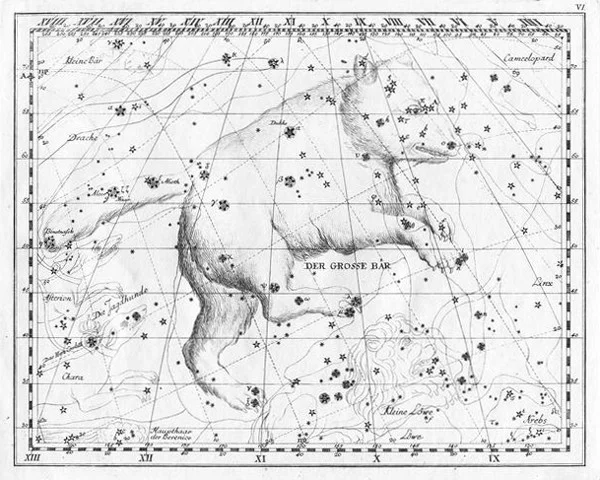
On the first evening of July, we see the waning moon in the constellation Capricornus. It is an object for the second half of the night and continues its journey eastward through the constellations Aquarius and Pisces. On July 7, the last quarter is reached. Just one night later, we can spot it 7 degrees north of Saturn in the constellation Pisces. After the encounter with the ringed planet, the moon moves on through the constellation Aries. On the morning of July 11, it stands in the "Golden Gate of the Ecliptic," just one degree east of the open star cluster of the Pleiades in the constellation Taurus and eight degrees north of our red neighbor Mars. On the morning of July 13, we can discover the very thin, waning crescent moon one last time in the morning twilight in the constellation Gemini. On July 14, the new moon phase occurs. Due to the shallow ecliptic position in the evening sky, we must wait until July 16 to spot the thin, waxing crescent moon in the evening twilight above the western horizon in the constellation Leo. Just one evening later, we can find the moon crescent 3.5 degrees south of the evening star Venus. On July 19, the waxing moon is located below Spica, the main star in the constellation Virgo. Finally, on July 21, the first quarter is reached. After the Earth’s satellite has passed the constellation Libra, it moves southward past Antares, the main star of the Scorpius, on the night of July 24 to 25. After a brief detour into the southern part of the constellation Ophiuchus, we will see it in the following nights in the constellation Sagittarius. On July 29, the moon is a full moon in the constellation Capricornus and at the end of the month again in the constellation Aquarius.
The Planets
On July 13, 2026, the swift planet Mercury is in inferior conjunction with the Sun. After its conjunction, it increases its western distance from our central star. However, this is not enough for morning visibility of the innermost planet of our solar system. It remains invisible. On July 1, Mercury passes the aphelion of its orbit and is then at a distance of 69.8 million kilometers from the Sun.
Our sister planet Venus is currently visible as the evening star in the constellation Leo. Its apparent brightness reaches -4.3 magnitudes this month. Unfortunately, its visibility decreases noticeably over the course of the month, even before it reaches its greatest western elongation in autumn: Venus sets in the west at 11:31 PM on July 1, but by July 31, it sets at 10:20 PM summer time. Its distance from the western horizon decreases from 12.5 to 8 degrees. In the telescope, it can be seen that the disk of Venus is increasing in size. By the end of the month, the apparent diameter is already 21 arc seconds. The illumination degree, however, decreases to 56%. On July 9, the evening star passes just 1.1 degrees north of Regulus. On July 17, the waxing crescent moon passes the evening star at a distance of only three degrees. By the end of the month, it approaches the boundary of the constellation Virgo.
At the beginning of July, our red neighbor Mars is again visible in the morning sky. It moves direct through the constellation Taurus. At the beginning of the month, the 1.3 magnitude bright red planet rises in the east at 2:29 AM. By the end of July, its rise occurs at 1:38 AM. At the start of civil twilight, it reaches a height of 14 degrees above the eastern horizon. By the end of July, it is already 27 degrees. For this reason, a binocular is still needed to discover the red planet just 4.5 degrees northwest of the Pleiades. Over the course of the month, Mars travels through the "Golden Gate of the Ecliptic" between the two star clusters Hyades and Pleiades. In the telescope, the diameter of the Mars disk is only 5 arc seconds, so no details on its surface are yet visible. Between July 2 and 6, Mars passes Uranus at a southern distance of only 6 arc minutes. On the night of July 11 to 12, the waning moon passes our neighboring planet.
The giant planet Jupiter moves direct through Cancer and reaches conjunction with the Sun on July 29, 2026. Since it is with the Sun in the daytime sky, it is no longer visible in the evening sky, except for the first evening of July. At the time of conjunction, Jupiter is 943 million kilometers away from Earth.
In the second half of the night, the ring planet Saturn can be found in the constellation Pisces. On July 27, it comes to a standstill and begins its opposition loop. Over the course of July, Saturn shifts its rise times to before midnight. While it rises in the east at 1:03 AM at the beginning of the month, by the end of July, its rise occurs two hours earlier. At the end of twilight, it reaches a height of 40 degrees above the horizon. Its apparent brightness increases slightly during this time from 0.8 to 0.6 magnitudes. Its apparent equatorial diameter also grows to 18 arc seconds. After its edge-on position last year, its interesting ring system is already opened by 9 degrees again. On the night of July 7 to 8, the waning moon passes Saturn at a distance of 7 degrees north.
Uranus is an object for the morning sky and moves direct through the constellation Taurus. At the beginning of July, the distant ice giant rises at 2:34 AM, and by the end of the month, it rises two hours earlier. With an apparent brightness of 5.8 magnitudes, Uranus is theoretically visible to the naked eye. However, in the telescope, it appears as a 3.5 arc seconds large, greenish disk without further details. On July 4, Mars passes Uranus at a distance of only 0.1 degrees. This event can be tracked with telescopes. It can be observed that the disk of Uranus is 1.5 arc seconds smaller than that of Mars and also differs in color from the reddish-orange Mars.
Neptune, the outer planet of our solar system, becomes stationary in the constellation Pisces on April 8 and begins its opposition loop. Its rise times advance from 0:40 AM to 10:38 PM summer time. About two hours after its rise, one can look out for the 7.8 magnitude planet. At the beginning of the month, Uranus already reaches a height of 30 degrees above the horizon when civil twilight begins. However, in the telescope, only a 2.3 arc seconds large, green-blue disk without further details is visible. As a locating aid for the distant ice giant, Saturn can serve, which is located ten degrees east of Neptune.
The dwarf planet (134342) Pluto reaches opposition to the Sun in the constellation Capricornus on July 27, 2026. Then the distant celestial body can be observed throughout the night. Due to its apparent brightness of only 14.4 magnitudes, it can only be seen with larger telescopes. Even at very high magnification, it appears merely as a faint star amidst the star field. On the day of opposition, Pluto rises at 9:22 PM in the southeast, reaches the meridian at 1:16 AM, and stands 15 degrees above the southern horizon. Its setting occurs at 5:07 AM. On July 1 and 31, it stands at the meridian at 3:01 AM and 1:00 AM summer time, respectively. On the day of opposition, Pluto is 5.168 million kilometers away from the Sun. Its closest distance from Earth is already reached on July 24.
Bright Comets and Asteroids
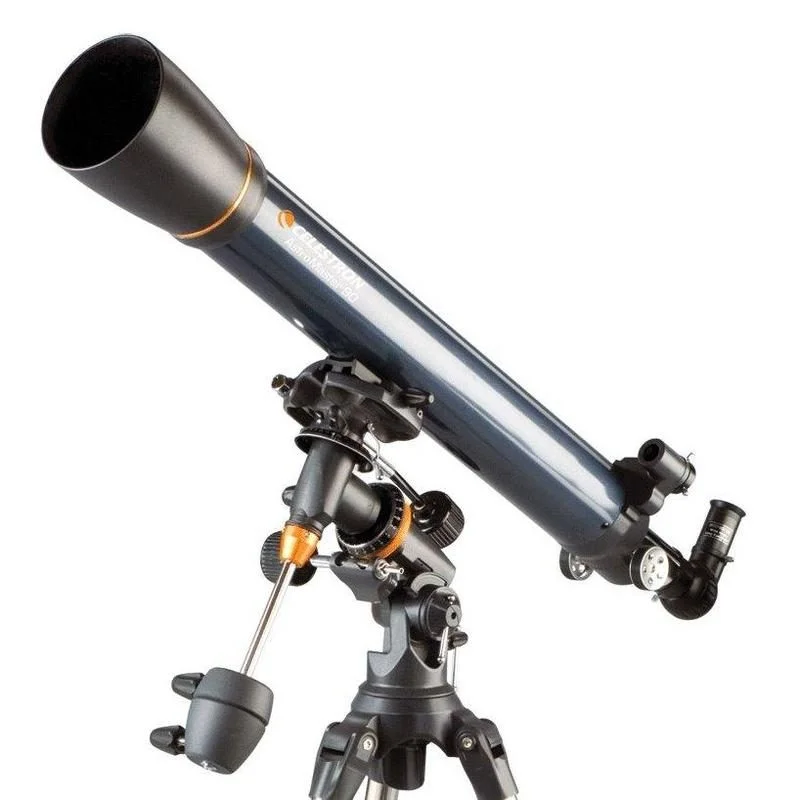
The short-period comet 10P/Tempel travels from the constellation Aquarius to the constellation Capricornus over the course of the month. With an apparent brightness of 11 to 12 magnitudes, it can be detected very low above the horizon in medium-sized telescopes.
The short-period comet 169P/NEAT moves this month from the constellation Aquila into Hercules and thus stands high in our sky. Initially, the comet is very dim with a brightness of 15 magnitudes, but it is expected to exceed 12 magnitudes by the end of the month, making it reachable with medium-sized telescopes. The comet is the parent body of the meteor stream of the Alpha-Capricornids, which are also observable in July.
The asteroid (2) Pallas moves from the constellation Pisces into the constellation Cetus on July 18. At the beginning of the month, it is still 9.9 magnitudes bright and rises at 1:16 AM summer time in the east. By the end of the month, its apparent brightness has already increased to 9.5 magnitudes. On this day, its rise occurs at 11:49 PM. An interesting encounter occurs with the asteroid (4) Vesta in the middle of the month. Pallas will then be only three degrees west-northwest of it.
The asteroid numbered (3) Juno is in opposition to the Sun in the constellation Aquila on July 26, reaching a brightness of 9.1 magnitudes. By the end of the month, this will even increase by 0.1 magnitudes. At the beginning of the month, Juno's brightness is still 9.6 magnitudes. On July 1, the asteroid reaches its highest point in the south at 2:58 AM summer time. By July 31, the meridian passages advance to 0:36 AM.
(4) Vesta is an object for the morning sky and can be located in the constellation Cetus at the border with Pisces. Over the course of the month, the apparent brightness of the asteroid increases significantly – from initially 8.1 to 7.8 magnitudes. Thus, Vesta can already be easily observed in binoculars. Its rise times advance from 1:38 AM to midnight by the end of the month.
The asteroid numbered (8) Flora is exactly opposite the Sun in the constellation Sagittarius on July 9, 2026, reaching a maximum brightness of 8.9 magnitudes. At the beginning of the month, its apparent brightness is still 9.3 magnitudes, and by the end of July, it is again 9.6 magnitudes. At the beginning of the month, Flora stands in the south at 1:54 AM. By the end of the month, its meridian passages advance to 11:19 PM summer time. On July 22, the 6.2 magnitude star SAO 187584 can serve as a locating aid for the asteroid. The mutual distance is only three arc minutes. On July 27, Flora is near SAO 187468 (5.9 magnitudes) at a distance of only 7.5 arc minutes.
(14) Irene will again be fainter than 10 magnitudes on July 3 and can be found in the constellation Ophiuchus. Its meridian passages advance from 11:44 PM to 9:32 PM by the end of July. The encounters of the asteroid with two globular clusters on July 2 (NGC 6325, 10.2 magnitudes) and on the 27th of the month (NGC 6284, 9.0 magnitudes) at distances of 7.0 and 4.5 arc minutes, respectively, are interesting.
The asteroid (18) Melpomene is in opposition to the Sun in the constellation Aquila on July 8, 2026. The celestial body reaches a brightness of 8.9 magnitudes. At the beginning of July, the apparent brightness of the asteroid is still 9.1 magnitudes. On this day, Melpomene stands at its highest position in the south at 1:41 AM summer time. On July 14, it crosses the boundary into the constellation Scutum. By the end of the month...