The Essential Role of the Moon in Life on Earth
Exploring the vital role of the moon in sustaining life on Earth, from its influence on biological rhythms to its stabilizing effect on the planet's climate.
- February 27, 2026
- Reading time: approximately 2 minutes
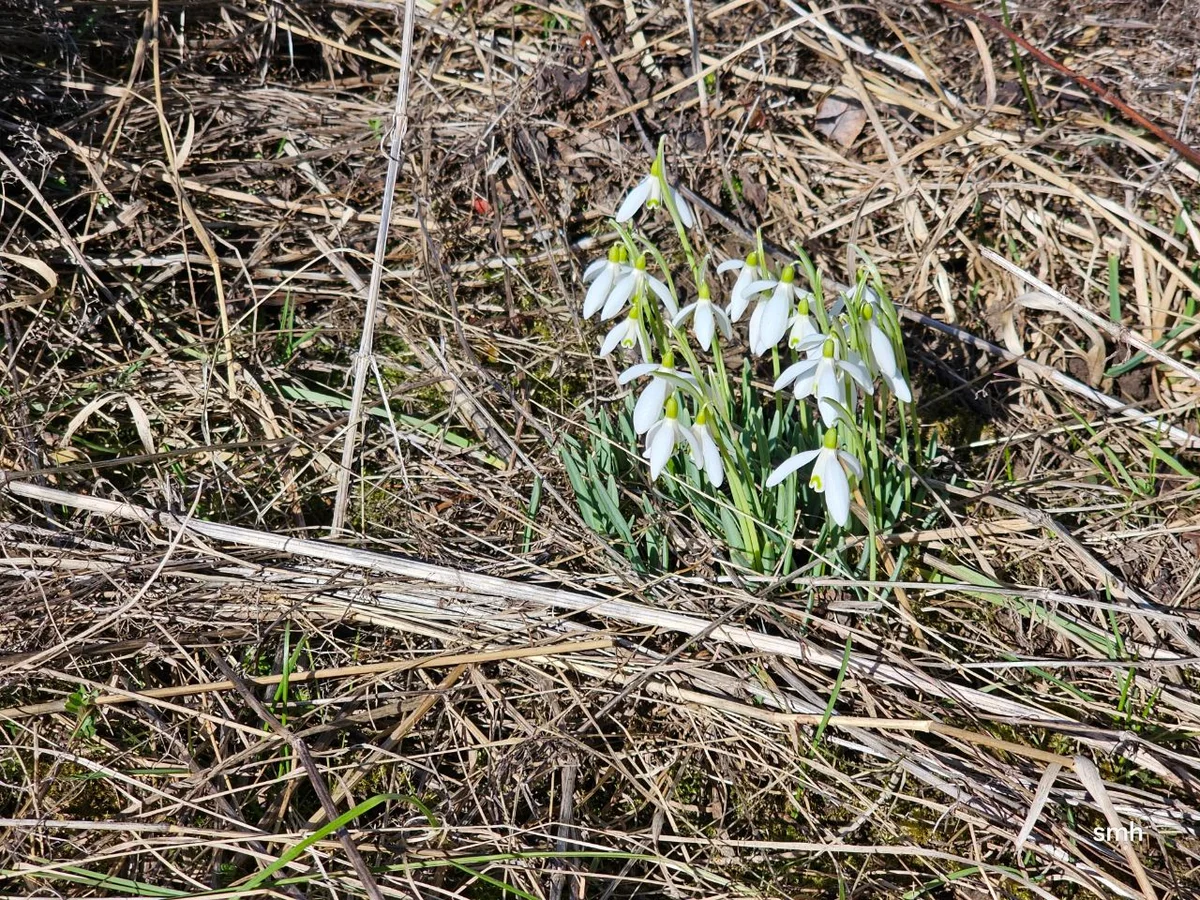
The sun plays a critical role in sustaining life, a fact that is vividly illustrated as the sky brightens and the first snowdrops, winter aconites, and crocuses emerge from the parched grass.
Vom Eise befreit sind Strom und Bäche Durch des Frühlings holden, belebenden Blick; Im Tale grünet Hoffnungsglück; Der alte Winter, in seiner Schwäche, Zog sich in rauhe Berge zurück. Von dort her sendet er, fliehend, nur Ohnmächtige Schauer körnigen Eises In Streifen über die grünende Flur; Aber die Sonne duldet kein Weißes, Überall regt sich Bildung und Streben, Alles will sie mit Farben beleben;
(Johann Wolfgang von Goethe)
The Moon's Importance
Equally vital to life on Earth is the moon. Chronobiologists study the timing and cycles of physiological functions, revealing how these rhythms can be linked to lunar phases. For instance, certain flowers bloom only during a full moon, and fish depend on the spring tides associated with both full and new moons for spawning. As someone who has trekked through deserts until 2008, I can attest that moonlight significantly influences human activities: full moon nights are bright enough for safe travel, while moonless nights can be perilous.
Research has long shown that our moon plays a crucial role in maintaining stable conditions on Earth. Its orbit helps stabilize our planet's rotational axis, as noted by Ward and Browlee in their 2000 publication. This stability prevents the Earth from tipping over in space, ensuring consistent sunlight exposure (except for slight precessional wobble). Such conditions have allowed the climate to remain stable over millions of years, facilitating the evolution from simple single-celled organisms to more complex life forms.
I have previously explored the poetic aspects of the moon in various writings, including:
- Moon – Image Poetry (2019)
- Photos of a Complete Lunation (2019)
- Various images depicting cultural interpretations of lunar spots (2025)
- Klaus-Peter Endres and Wolfgang Schad (1997). Biologie des Mondes. Mondperiodik und Lebensrhythmen: Mondperiodik und Lebensrhythmen, S. Hirzel, Stuttgart/Leipzig
- Peter D. Ward and Donald Browlee, editors (2000). Rare Earth: Why Complex Life is Uncommon in the Universe. Copernicus Books, New York.
Dr. Dr. Susanne M Hoffmann has been working as a cultural astronomer since 1998, engaging with universities, planetariums, and public observatories. Her academic background includes degrees in physics and history of science, along with further qualifications in computer science and educational methods. Growing up in reunified Berlin, she has lived in various locations including Potsdam, Mauritania, Portugal, and Jena, with research collaborations extending to Egypt, Israel, China, and Indonesia. Her introductory verses reflect a foundational belief in physics as a data-driven science aimed at understanding nature, alongside a broader inquiry into humanity's potential for peaceful coexistence. Her expertise lies in celestial maps and globes, focusing on their mathematics, cartography, measurement techniques, historical development, and cultural significance.