Mercury Is Not 'Dead': NASA Unveils Active Geology After Analyzing 100,000 Images
NASA's analysis of over 100,000 images from the MESSENGER spacecraft reveals that Mercury may still exhibit geological activity, challenging the long-held view of the planet as geologically inert.
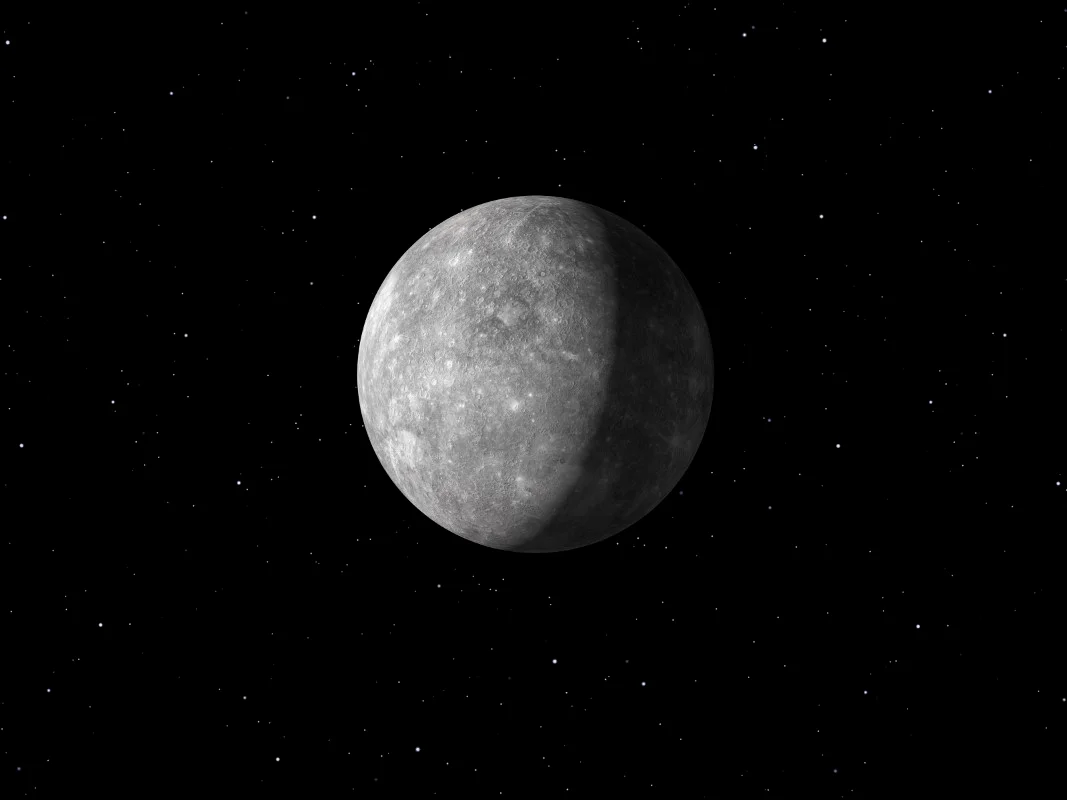
For generations, astronomers have regarded Mercury as the "forgotten" planet of the solar system—small, cratered, scorched by the Sun, and seemingly geologically inactive for billions of years. However, this simplistic view is being challenged. An international research team, after meticulously examining over 100,000 high-resolution images collected by the MESSENGER spacecraft, claims that Mercury exhibits signs of internal activity, almost as if the planet is "sweating" materials from beneath its crust.
A Treasure of Archives Revealed
The MESSENGER spacecraft, which orbited Mercury from 2011 to 2015, amassed a wealth of data about the planet. For a long time, these images were only partially analyzed. However, by methodically scrutinizing the entire collection, the team led by Valentin Bickel from the University of Bern identified around 400 "bright streaks" across the surfaces of the planet's most recent craters.
These are not mere signs of landslides. Scientists believe they are signs of outgassing: volatile materials (such as sulfur or other light elements) escaping from the planet's interior through fissures, carrying dust with them and altering the color of the surface.
A Planet More Alive Than Previously Thought
The term "sweating" is metaphorical, yet it powerfully conveys the idea that Mercury may not be the stagnant rock once imagined. These streaks predominantly form on sun-exposed slopes, suggesting that solar radiation plays an active role in the emission of these volatiles. The energy from the Sun fractures the crust, facilitating the release of these materials and creating the distinctive streaks observed by researchers.
This dynamic reshapes our understanding of Mercury. Rather than being a world frozen in time for billions of years, this small planet, the closest to the Sun, could be the site of ongoing processes, constantly reacting to its extreme spatial environment.
BepiColombo Takes the Stage
This study emerges at a pivotal moment. The BepiColombo mission, a collaboration between the European Space Agency (ESA) and the Japan Aerospace Exploration Agency (JAXA), is en route to Mercury. The two twin spacecraft of the mission are expected to enter orbit around the planet by 2027, equipped with more sensitive instruments than ever before. A key objective will be to directly observe the same formations identified in the MESSENGER archives to determine if they continue to evolve.
If new changes are observed, it would provide direct evidence of ongoing internal activity on Mercury, confirming that even small worlds deemed "dead" can harbor dynamic processes long after their formation.
A New Perspective on Terrestrial Planets
This discovery extends beyond Mercury. It raises fundamental questions about how rocky planets evolve under the combined effects of their internal structure and the extreme conditions of their environment. In a context where thousands of exoplanets are being discovered around other stars, understanding how even the closest planets in our solar system remain active is crucial.