A Cosmic Collision: The Future Encounter Between Andromeda and the Milky Way
In about 4 billion years, the Milky Way will collide with Andromeda. Learn about the implications for our solar system and what astronomers predict will happen during this cosmic event.
A Cosmic Collision: The Future Encounter Between Andromeda and the Milky Way
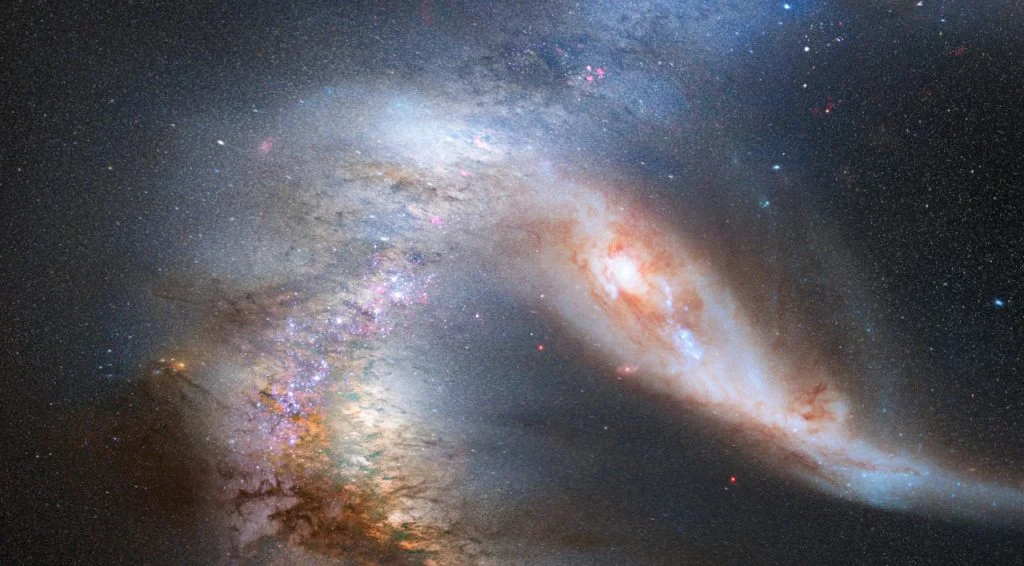
In approximately four billion years, the Milky Way is set to collide with the Andromeda galaxy, a significant event that astronomers are actively studying. While this cosmic encounter is inevitable, the implications for our solar system are intriguing. Experts suggest that our Sun will likely be thrown into a new region of the galaxy, yet there is no immediate danger of destruction for Earth or the solar system as a whole.
Andromeda, located about 2.5 million light-years away, is racing toward the Milky Way, propelled by mutual gravitational attraction and the unseen dark matter enveloping both galaxies. This impending head-on collision is a dramatic chapter in the story of our universe.
Insights from Computer Simulations
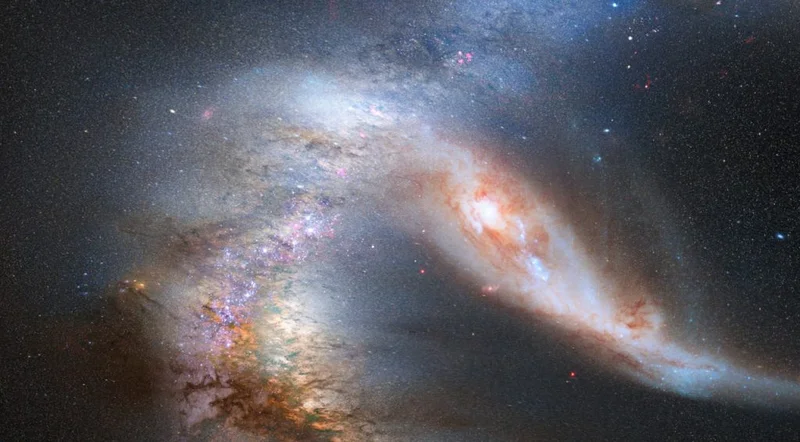
After nearly a century of research and theoretical work, computer simulations have provided clearer insights into how this galactic merger will unfold. The scenario resembles a baseball player watching a fast-approaching pitch. Despite Andromeda’s accelerated approach—moving 2000 times faster than before—it will still take four billion years for the two galaxies to collide. Following this interaction, simulations from the Hubble Space Telescope indicate that it will take an additional two billion years for the galaxies to fully merge. The gravitational forces will reshape them into a single, large elliptical galaxy, akin to those already observed in the universe.
Although there will be a collision, the vast distances between stars mean that actual star-to-star collisions are unlikely. However, many stars will be flung into new orbits around the newly formed galactic center. According to the simulations, our solar system will end up farther from the galactic core than it currently is.
Source: NASA