3I/ATLAS: New Insights into the Most Mysterious Interstellar Comet
3I/ATLAS continues to surprise astronomers with new findings about its composition, brightness, and potential galactic origin, offering insights into the Milky Way's ancient history.
Introduction
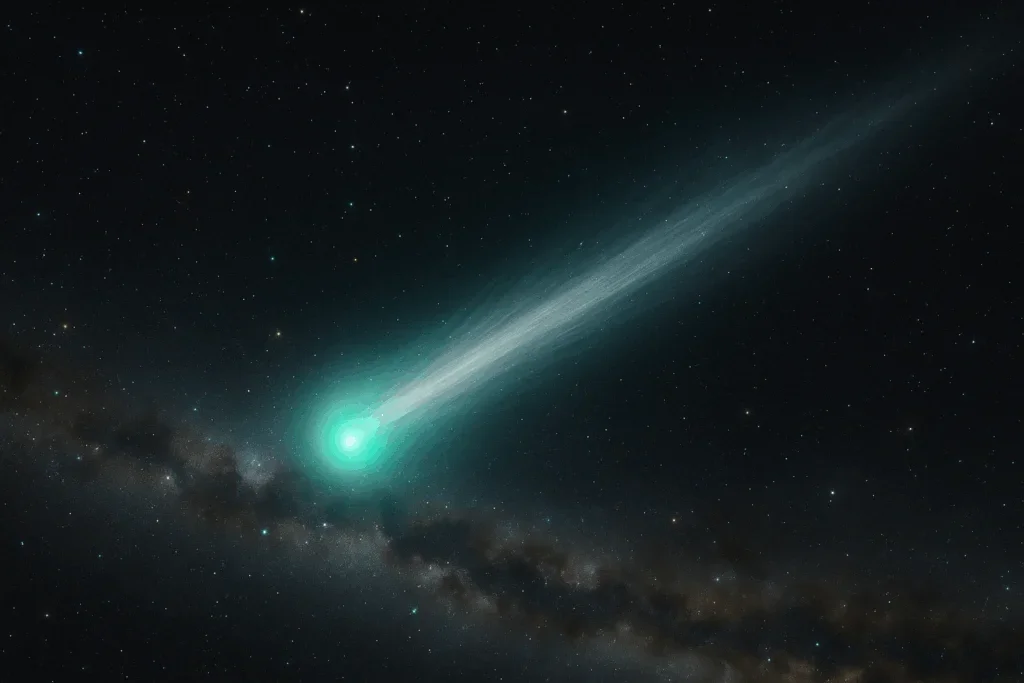
In recent months, 3I/ATLAS (also known as C/2025 N1 ATLAS) has continued to astonish astronomers worldwide. Following initial observations that confirmed its interstellar nature, new research has unveiled unexpected details about its composition, brightness, and even its likely galactic origin. This celestial object not only enhances our understanding but may also serve as a unique window into the ancient history of the Milky Way.
A Comet Dominated by Carbon Dioxide
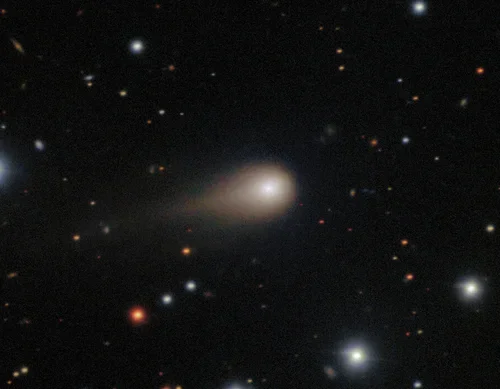
Utilizing the James Webb Space Telescope, scientists discovered that the coma of 3I/ATLAS is primarily composed of carbon dioxide (CO₂), exhibiting one of the highest CO₂ to water ratios ever recorded. This finding suggests that the comet may have formed in an extremely cold region where water ice was scarce, but CO₂ could easily condense.
The Presence of Water and Initial OH Emissions
Despite the dominance of CO₂, observations from the Swift telescope have also detected emissions of OH, indicating water activity. This is particularly surprising, given that the comet was still over 3 astronomical units from the Sun, a distance where water typically struggles to sublimate.
Extreme Polarization: A Unique Case
Polarimetric observations have revealed a deep and narrow negative branch in the polarization of the coma. In simpler terms, the light scattered by the comet's particles behaves radically differently from all previously studied comets in the Solar System. This could imply that the surface and dust grains of 3I/ATLAS possess unprecedented properties.
An Abnormally Massive Object
Astrophysicist Avi Loeb notes that the lack of significant non-gravitational deviations in the motion of 3I/ATLAS indicates that it is a much more massive body than expected. This raises new questions about its density and the actual relationship between its nucleus and the active coma.
The Oldest Comet Ever Observed?
Recent studies suggest that 3I/ATLAS may originate from the thick disk of the Milky Way, which is populated by old stars with low metallic content. If confirmed, this would mean that 3I/ATLAS is likely the oldest comet ever observed, carrying traces of the primordial history of our galaxy.
Evolving Tail and Spectacular New Images
Images collected by both professional and amateur astronomers have shown the evolution of a well-visible tail, confirming the increasing activity of the nucleus as it approaches the Sun. These observations allow us to witness the transformation of an interstellar body like never before.
The Future of 3I/ATLAS
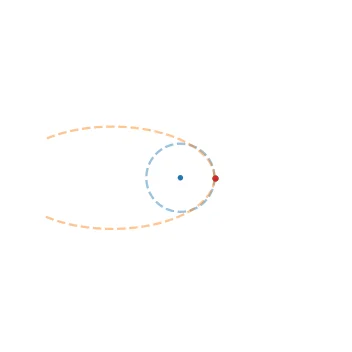
- Perihelion: October 29, 2025, at approximately 1.4 AU from the Sun.
- Closest Distance to Earth: about 1.8 AU (270 million km).
- Observability: In the coming weeks, the comet will be partially obscured by the Sun, but it will return to visibility in late 2025, offering new study opportunities.
After this passage, 3I/ATLAS will permanently depart from the Solar System, taking with it the secrets of its interstellar origin.
Conclusion
3I/ATLAS is not just any comet; it is an interstellar messenger that tells tales of distant worlds and ancient epochs of our galaxy. Its unique properties—from its CO₂-rich composition to its extreme polarization—render it a natural laboratory for science, destined to leave an indelible mark in the history of astronomy.