3I/ATLAS: The Latest Insights on the Interstellar Comet
The interstellar comet 3I/ATLAS, discovered on July 1, 2025, is the third interstellar object observed in the Solar System. This article compiles key images and insights from various telescopes.
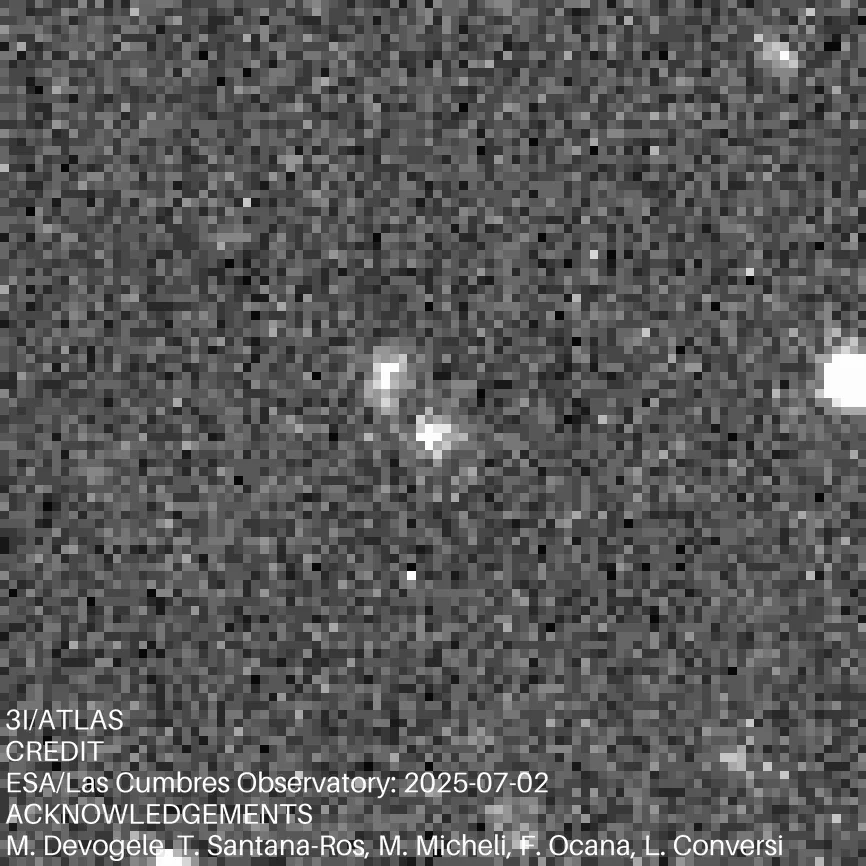
The interstellar comet 3I/ATLAS has become the third known interstellar object to traverse our Solar System, following the notable 1I/ʻOumuamua and 2I/Borisov. Discovered on July 1, 2025, by the ATLAS system in Chile, this comet quickly garnered interest from astronomers due to its hyperbolic orbit and the unique structure of its coma, which sets it apart from the typical comets found in our own system.
In this article, we present a curated collection of the most significant official images of 3I/ATLAS that have been made available so far. These images come from various sources including Hubble, Gemini North and South, ESA missions, professional observatories, and international scientific projects.
Images from Space — Hubble Space Telescope & James Webb Space Telescope
🔹 What These Images Reveal
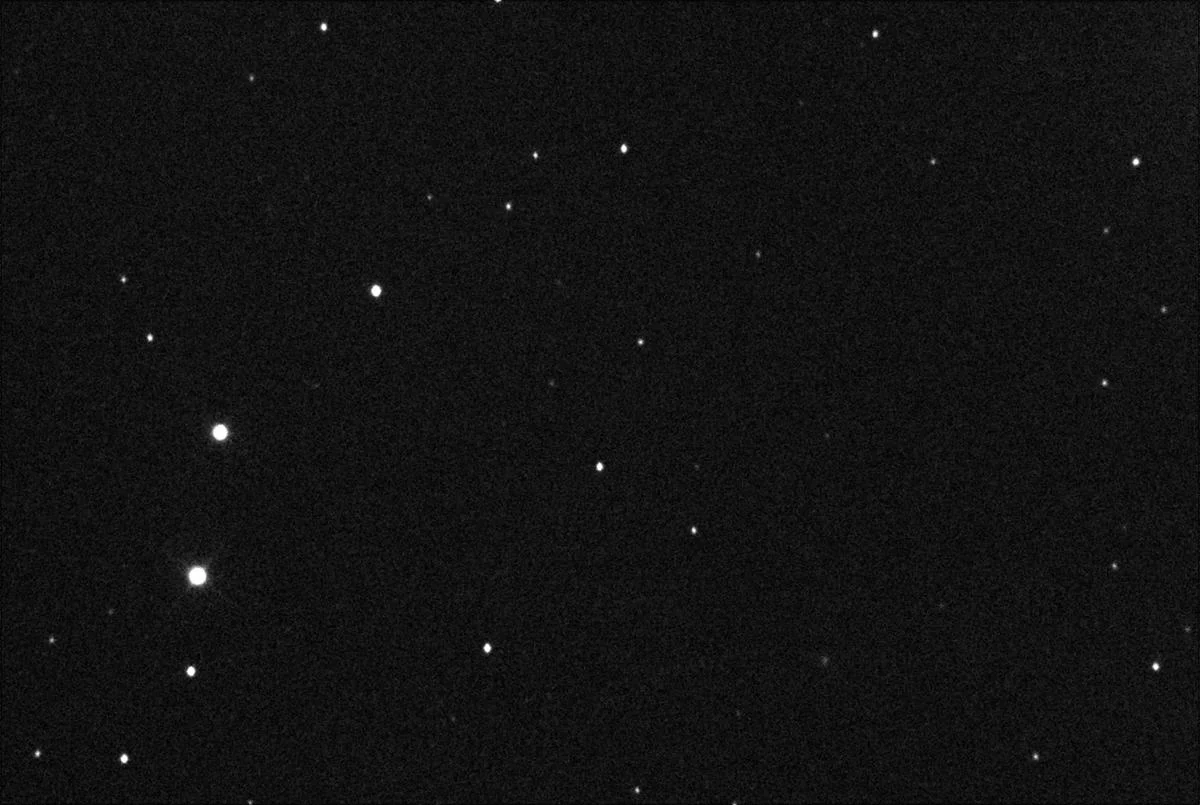
- On July 21, 2025, Hubble captured an image of 3I/ATLAS when it was approximately 277 million miles away from Earth.
- This image shows a “blob” (or halo) of dust emanating from the icy nucleus, confirming the comet's active status. The background stars appear elongated due to Hubble tracking the comet's motion.
- Thanks to these clear images, astronomers have been able to more accurately estimate the size and shape of the comet's nucleus.
- Additionally, the James Webb Space Telescope (JWST) observed the comet in infrared wavelengths, providing valuable data on the composition of its coma.
Observations from Ground-Based Telescopes — Gemini Observatory and Others
🔹 Insights from These Images
- The Gemini North telescope captured images of 3I/ATLAS shortly after its discovery, helping to define its orbit, brightness, and initial characteristics.
- Later observations from telescopes like Gemini South and others documented the growing coma and the tail development as the comet approached the Sun, with increased dust and gas emissions making the tail more visible.
- While some ground-based images may lack the aesthetic appeal of their space counterparts, they are crucial for studying the comet's evolution over time, the tail's direction, and the variability of the coma.
⭐ Latest Updates on 3I/ATLAS – Blog Version
Recent observations of 3I/ATLAS are providing astronomers with new and valuable insights into this rare interstellar visitor.
🔭 Psyche Probe Captures Images of the Comet
The Psyche mission, originally designed for studying a metallic asteroid, redirected its instruments toward 3I/ATLAS and obtained a series of images on the nights of September 8 and 9, 2025. At that time, the comet was about 53 million kilometers from the probe. This unexpected observation allows for a more precise calculation of the comet's trajectory, marking a significant event, as it is uncommon for a spacecraft en route to another celestial body to also study an interstellar object.
🌋 Active Jets Similar to “Cryovolcanoes”
Recent analyses indicate that 3I/ATLAS emits strong jets of gas and dust, a behavior reminiscent of actual cryovolcanic eruptions. This activity suggests that the comet's nucleus is rich in volatile substances such as carbon dioxide, carbon monoxide, and frozen water. The presence and intensity of these “puffs” distinguish 3I/ATLAS from typical comets in our Solar System, hinting at a unique composition likely linked to its origin beyond the Sun.
🌠 A Tail That Divides Scientists
Among the hypotheses currently being debated, one of the most contentious concerns the nature of the comet's tail. Some researchers propose that it may contain not only gas and dust, but also a potential “swarm” of small solid objects traveling alongside the main body. This theory is highly controversial and does not find consensus among the scientific community; the prevailing view remains that 3I/ATLAS is a natural comet, with phenomena explainable through known physical processes.
🌌 Global Observations Ahead of December 19 Passage
The comet is currently being monitored by a wide network of ground-based and space telescopes. A relatively close passage to Earth is anticipated on December 19, 2025 — though still at a significant distance — representing an important opportunity to gather new data. The coming weeks will be crucial for studying the tail's evolution, jet activity, and the composition of the coma as 3I/ATLAS continues its journey outward from the Solar System.