3I/ATLAS: Updates for November 2025 and New Insights
3I/ATLAS (C/2025 N1) continues to intrigue astronomers as it approaches its perihelion. This article discusses recent updates, visibility expectations, and clarifies its nature as an interstellar comet.
Introduction
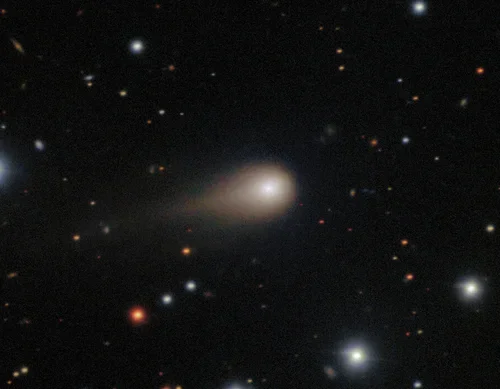
The interstellar object 3I/ATLAS (C/2025 N1) continues to capture the attention of the astronomical community. Having already reached its perihelion, it is now entering a phase of increasing visibility, which will eventually taper off. This article presents the latest updates as of November 2, 2025, outlines what to expect until January 2026, and delves into the ongoing debate surrounding its nature: is it a spacecraft, an asteroid, or a comet? Current analyses strongly suggest that it is an interstellar comet rich in CO₂, propelled by solar radiation and sublimation processes rather than an alien engine.
Recent Updates on 3I/ATLAS (November 2025)
- 3I/ATLAS passed its closest approach to the Sun (perihelion) at the end of October 2025.
- Recent spectroscopic analyses indicate that the comet's coma is predominantly composed of carbon dioxide (CO₂), with water and carbon monoxide present in significantly lower amounts compared to many Solar System comets.
- Observations confirm that its activity is not related to artificial engines; the jets of gas and dust are consistent with normal sublimation of ice.
- Ground-based and space-based observational campaigns are underway to monitor the light curve, the composition of the coma, and the dynamics of the nucleus as it exits the Solar System.
Visibility and Expectations Through January 2026
3I/ATLAS will become observable again, especially in the early morning hours, with a gradual improvement in geometry following perihelion. However, its brightness is not expected to be spectacular, making it a target for medium to large amateur telescopes rather than for naked-eye observation.
From December to January, the closest distance to Earth is anticipated around December 19, 2025, after which the distance will increase, leading to a decrease in brightness throughout January. This winter period is crucial for acquiring scientific data and high-quality images.
Visibility Data
| Date | RA (≈) | Dec (≈) | Elongation (°) | Estimated Magnitude | |---------------------|----------|-----------|----------------|---------------------| | 10 November 2025 | 13h 20m | –06° 20′ | ~14 | ~11.5 | | 19 December 2025 | 10h 46m | +07° 06′ | ~107 | ~13.6 | | 15 January 2026 | 09h 30m | +15° 30′ | ~120 | ~14.5 |
Why 3I/ATLAS is Not a Spacecraft but an Interstellar Comet
- Its trajectory is strongly hyperbolic, characteristic of objects originating from outside the Solar System.
- The composition of the coma, dominated by CO₂, suggests a sublimating icy nucleus rather than an artificial structure with a propulsion system.
- The observed behavior, including jets, dust, and changes in brightness, aligns fully with that of an active comet; there is no credible evidence of artificial propulsion or a rigid non-volatile structure.
- The predicted magnitude and the minimum distance from Earth (~1.8 AU) indicate that there is no risk or scenario of an "incoming spacecraft."
Monitoring and Following the Event
- For amateur astronomers: target the object with telescopes of at least 20 cm aperture in the early morning under clear skies and an unobstructed horizon.
- Follow the light curve measurements and chemical composition published in astronomical bulletins and professional forums.
- Prepare to capture multiple images (stacking) to enhance the signal, as the object will be faint.
- Keep in mind that the best observation opportunities will be around December, while activity will decline in January, making the tail more challenging to detect.
Conclusion
In summary, 3I/ATLAS represents a rare opportunity: an interstellar object entering our Solar System, approaching the Sun, and then heading back into deep space. While it is fascinating, there is no basis for considering it an alien vehicle; the driving forces are solar energy and the physics of ice sublimation. Until January 2026, there will be valuable observational windows for both astrophotography and scientific research. For enthusiasts, this is a cosmic adventure worth following with passion and the right tools.