Weather Tips for the August 12 Eclipse
As the solar eclipse on August 12 approaches, learn how to prepare for optimal viewing conditions in Spain, including weather tips and the best locations to avoid cloud cover.
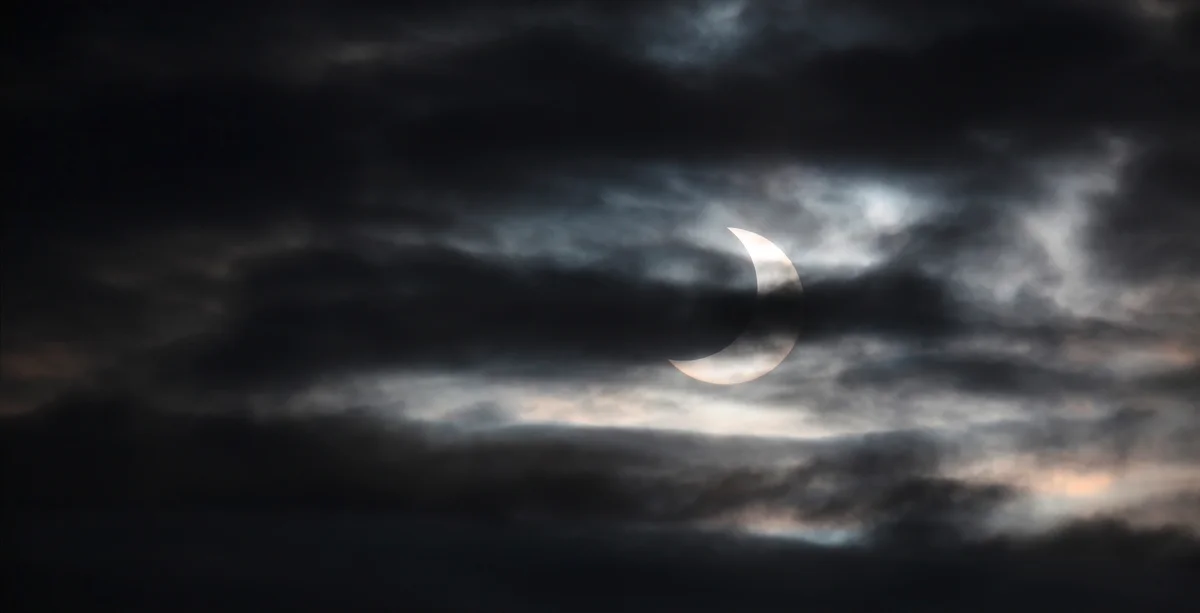
As the date of the solar eclipse approaches on August 12, many in Spain may assume that clear skies are a given. However, it's crucial to be aware that the eclipse will occur low on the horizon. To fully experience the spectacle of the Moon completely obscuring the Sun, one must ensure that clouds do not obstruct the view of the Moon!
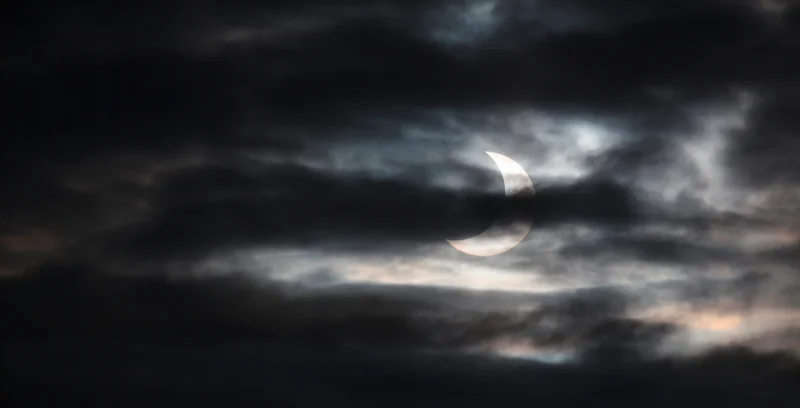
Clouds are the nemesis of astronomers, especially for eclipse chasers. If you plan to witness this celestial event, be prepared for the possibility of needing to relocate to avoid cloud cover. On the day of the eclipse, monitor real-time satellite images from reliable sources (such as www.windy.com). Keep in mind that clouds to the west of your observation point will be particularly critical, as the total eclipse will occur around 8:30 PM, coinciding with sunset and positioned low on the horizon. A cloud directly overhead may not obstruct your view, but a cumulonimbus located 100 kilometers away could block the Sun!
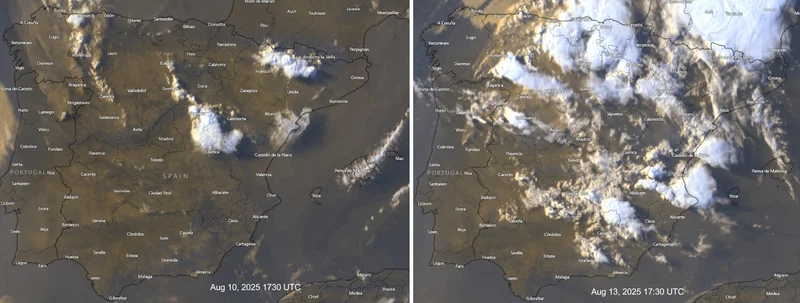
During this season in Spain, thunderstorms pose the greatest threat. If you're in the area a few days before the event, make it a habit to check the weather daily at the time of the eclipse. Are clouds consistently forming in the late afternoon over the mountain range on the horizon? If they regularly obscure the sunset, consider changing your observation site!
To maximize your chances of a clear view, it's advisable to avoid the Atlantic coast (Galicia, Asturias). While it offers stunning views of the western horizon, it is often shrouded in clouds, making it impossible to observe the eclipse amidst poor visibility. The Mediterranean coast may provide better conditions, but the Sun will be even lower there, and to see the eclipse from the beach, you would have to turn your back to the sea—if you can find an unobstructed viewpoint.
Historical data on cloud coverage in Spain from 2000 to 2020 indicates that the most favorable area lies in a broad band stretching between León, Zamora, Cuenca, and Soria, as well as around Zaragoza. The central mountain range northwest of Madrid could also offer excellent views of the sunset. Regardless, it's essential to check daily forecasts from the Spanish meteorological agency to stay updated on conditions (www.aemet.es).
If you plan to observe the eclipse from France, it's also important to check the weather in advance, though conditions are generally less critical. As illustrated at the beginning of this article, a partial eclipse can tolerate some cloud cover. Seek out local astronomy clubs across France that will welcome you to their viewing events!
Not to Miss
A Giant Planet Around the Famous "Tabby's Star"
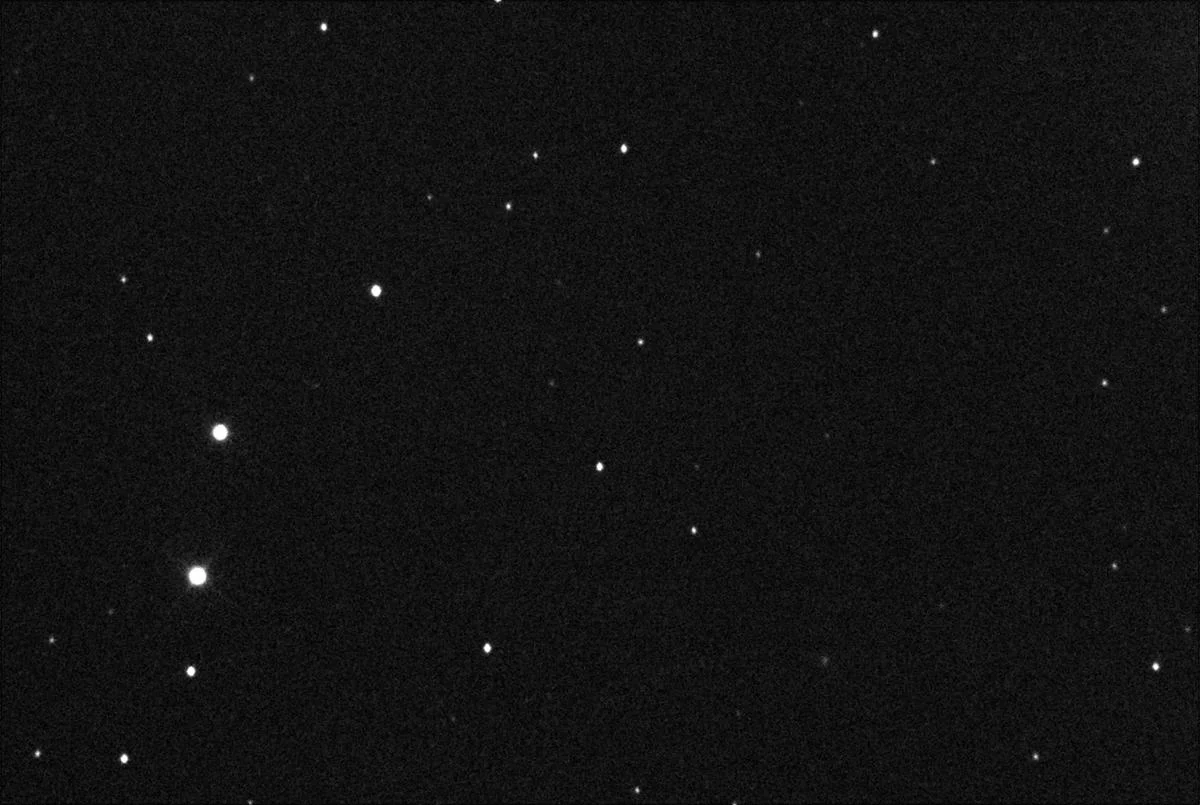
KIC 8462852, known for its extraordinary brightness variations observed over the past decade, has once again shown a slight dimming detected by the TESS space telescope. This phenomenon may be attributed to a large planet orbiting the star.
Landslides on Pluto
Data from the New Horizons spacecraft has revealed, for the first time, evidence of landslides on Pluto.
50 Years Ago, Viking 1 Landed on Mars: Witnesses Recall the First Martian Landscape
On July 20, 1976, the Viking 1 spacecraft made its historic landing on Mars. Fifty years later, those who experienced this event share their memories of the anxiety and euphoria that marked the twenty crucial minutes between landing and confirmation of its success.