Understanding Sidereal Time: Practical Applications in Astrophotography
Just as terrestrial coordinates are based on latitude and longitude, celestial coordinates use declination and right ascension. Discover how a sidereal clock helps in locating celestial objects for astrophotography.
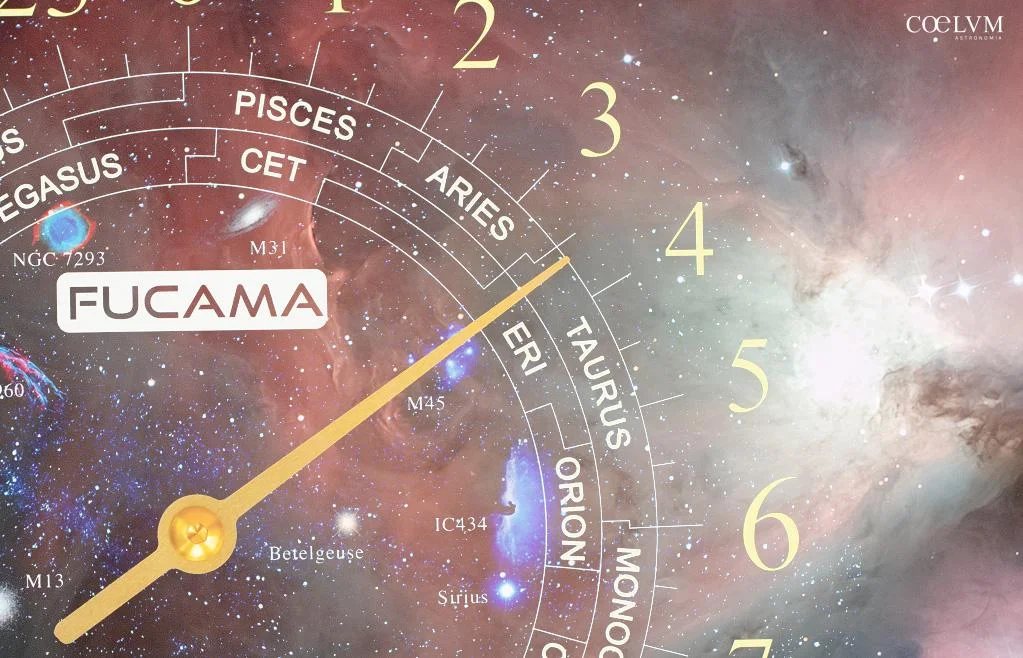
In the realm of astronomy, just as there is a terrestrial coordinate system based on latitude and longitude, the celestial sphere is mapped using what are known as "celestial coordinates." These coordinates, specifically declination and right ascension, are expressed in degrees (relative to the celestial equator) and hours (from the vernal equinox), respectively. They provide the location of celestial objects such as stars, planets, and galaxies across the night sky. However, determining their position from our observational standpoint can often be challenging. Today, we will explore how to navigate this challenge using a sidereal clock.
What is a Sidereal Clock?
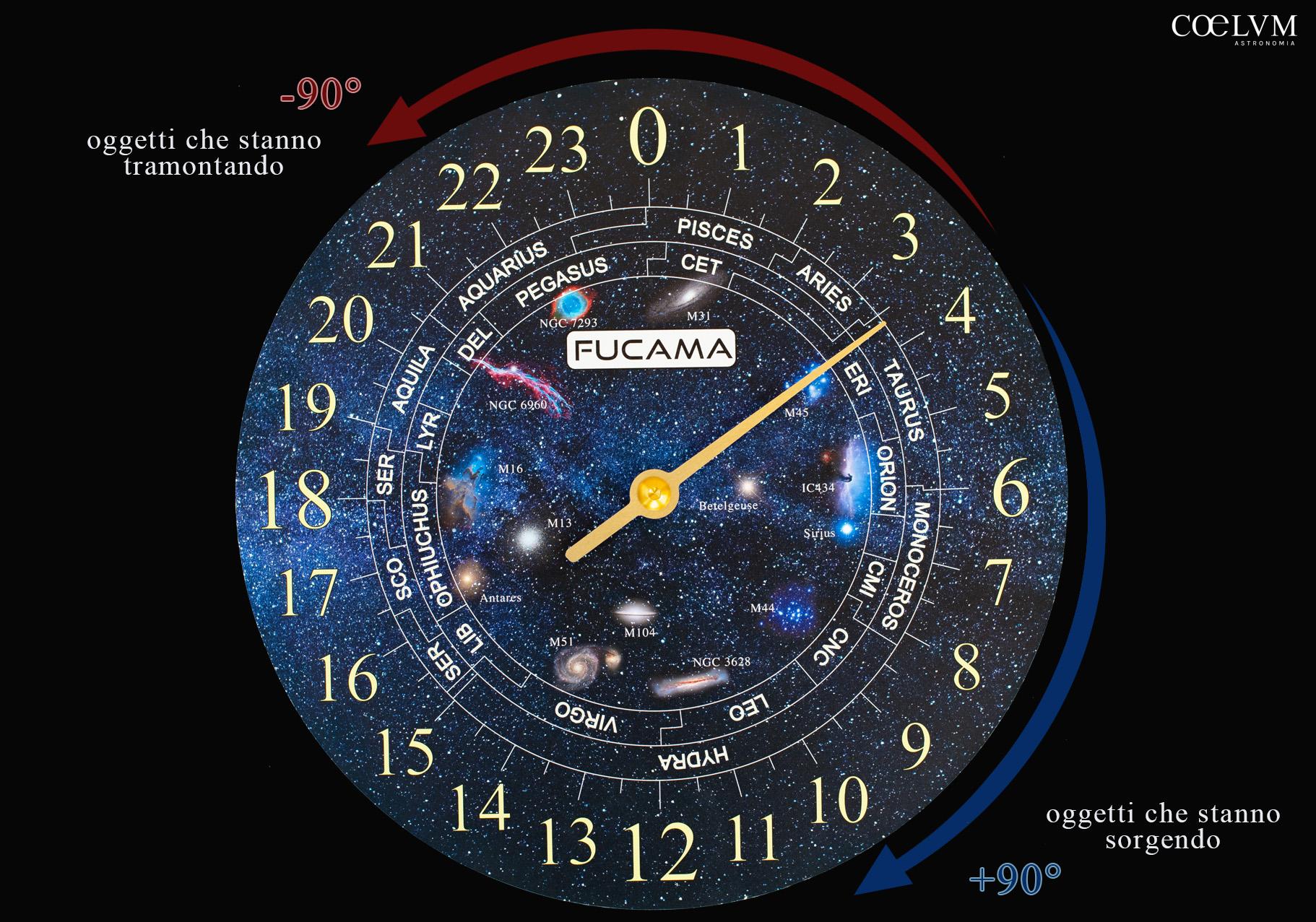
The instrument depicted in the image is a specialized clock that measures local sidereal time rather than solar hours. The term “local” indicates that the clock accounts for the specific position where it is installed, factoring in the site's longitude. The clock's hand serves as the local meridian, while the dial represents the celestial sphere. For instance, when the hand points to 4 o'clock, it signifies that, at that precise moment and longitude, celestial objects with a right ascension of 4 hours are transiting overhead.
Additionally, the sidereal clock provides crucial information: at +90° from the hand's position, one can find the right ascension of rising objects, while at -90°, it indicates the setting objects that have already crossed the local meridian. Essentially, knowing the local sidereal time allows astronomers to track the real-time position of any celestial object relative to the local meridian. This knowledge is invaluable for planning scientific activities focused on observing the sky.
Practical Applications
Understanding the right ascension of the celestial objects we wish to photograph, along with having access to a sidereal clock, enables us to determine the best observational conditions for these targets. It also aids in scheduling tailored observational sessions by assessing and anticipating the most captivating subjects to observe, whether visually or through specialized equipment like telescopes and Electronically Assisted Astronomy (EAA) setups.
For example, during the summer months, the beautiful galaxies in the Virgo constellation become unobservable at night. By consulting the sidereal clock's dial, we can see that the hand passes through the sector occupied by these objects (with right ascensions between 12 and 15 hours) during the afternoon. Conversely, the Veil Nebula (with a right ascension around 20 hours) is a much more suitable astrophotography target, located at +90° (6 hours ahead) from the coordinates of the Virgo galaxies. This simple glance tells us that it will be high in the sky during the dark hours.
In summary, the celestial coordinate system, when combined with the understanding of local sidereal time, not only clarifies how celestial objects are identified and located in the night sky but also allows for advanced planning of which objects are best photographed or observed throughout the year. Tools like a sidereal clock—an accessible and practical alternative to various software that calculates local sidereal time—can support activities aimed at sky studies, public events, summer star parties, and help engage more enthusiasts and curious minds in a straightforward and effective method for navigating the night sky.
For those interested in delving deeper into the topic of different celestial coordinates, the article “A Celestial Coordinate System” by Luigi Civita, published on this website on April 13, 2026, is recommended.