
Exploring the Connection Between X-Ray Dots and Active Galactic Nuclei
Recent studies suggest that _Little Red Dots_ may be primordial active galactic nuclei fueled by supermassive black holes, with the _X-Ray Dot_ serving as a potential bridge between these two phenomena.
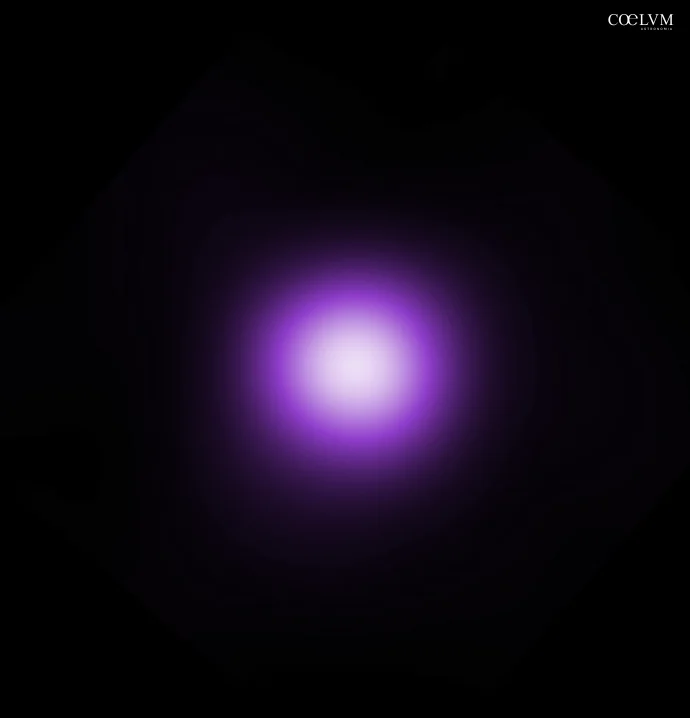
The question of what constitutes Little Red Dots (LRDs) has long puzzled astrophysicists, but recent observational studies have shed light on the possibility that these enigmatic objects may be primordial active galactic nuclei (AGN) powered by supermassive black holes. Central to this investigation is a newly identified entity known as the X-Ray Dot.
Understanding Little Red Dots (LRDs)
Commonly referred to as Little Red Dots (LRDs), these small red points are compact celestial objects with unique spectrophotometric properties, discovered by the James Webb Space Telescope (JWST) at astonishing distances, specifically at z≥4. Most of these objects appear to have emerged approximately 600 million years after the Big Bang. While their nature remains somewhat elusive, the prevailing theory suggests they represent a primordial form of AGN, surrounded by a dust torus that obscures ultraviolet radiation while allowing lower-energy light to pass through, giving them their characteristic red appearance. However, one notable discrepancy is that LRDs emit very little X-ray radiation.
Recent Findings
A new interpretation proposed just a few months ago suggests that rather than being enveloped in dust, LRDs might actually be embedded within a very dense and optically thick gas cloud. This theory not only aligns with their distinctive red color but also accounts for their low high-energy emission, as dense gas tends to suppress X-rays. This model is reminiscent of processes occurring in stellar atmospheres and is referred to as the “black hole star” scenario.
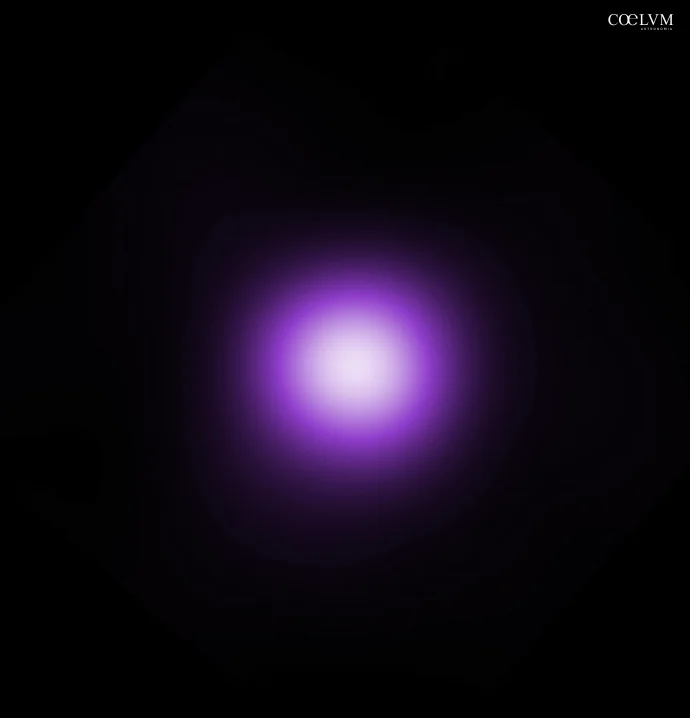
The study presented in March aims to establish a link between the Little Red Dots and AGN. At the core of this analysis is the object designated 3DHST-AEGIS-12014, or the X-Ray Dot (XRD), located in the constellation Ursa Major, approximately 12 billion light-years away (z=3.28). Its significance lies in the fact that JWST observations classify it among the population of small red dots based on its optical emission, while data from the Chandra observatory also reveal strong and potentially variable X-ray emissions, suggesting its classification as an active galactic nucleus.
In merging the observations from both telescopes, researchers concluded that the best explanation for such emissions is indeed the “black hole star” model. Traditional models that rely on a dust torus fail in this instance; the amount of dust present would typically heat up and emit strong infrared light, which has not been detected. Furthermore, the intense and variable high-energy emissions imply that the gas shell surrounding the black hole is not uniform but rather an inhomogeneous envelope with holes and unstable regions created by the central black hole's power, allowing X-ray radiation to escape.
Conclusions
In summary, observational data suggest that the X-Ray Dot may represent an intermediate phase between a Little Red Dot and an active galactic nucleus. If confirmed, this interpretation would position the XRD as a privileged laboratory for understanding this population of objects. Although further observations are necessary to validate this hypothesis, recognizing the XRD as a transitioning LRD would provide compelling evidence of the existence of growing supermassive black holes within at least a subset of the Little Red Dots.
Source: Hviding R.E. et al., The X-Ray Dot: Exotic Dust or a Late-stage Little Red Dot?, The Astrophysical Journal Letters (2026)