Stunning Insights into Active Galaxy Centaurus A from James Webb Space Telescope
New images from the James Webb Space Telescope reveal the active galaxy Centaurus A in unprecedented detail, showcasing its complex structures and dynamic star formation.
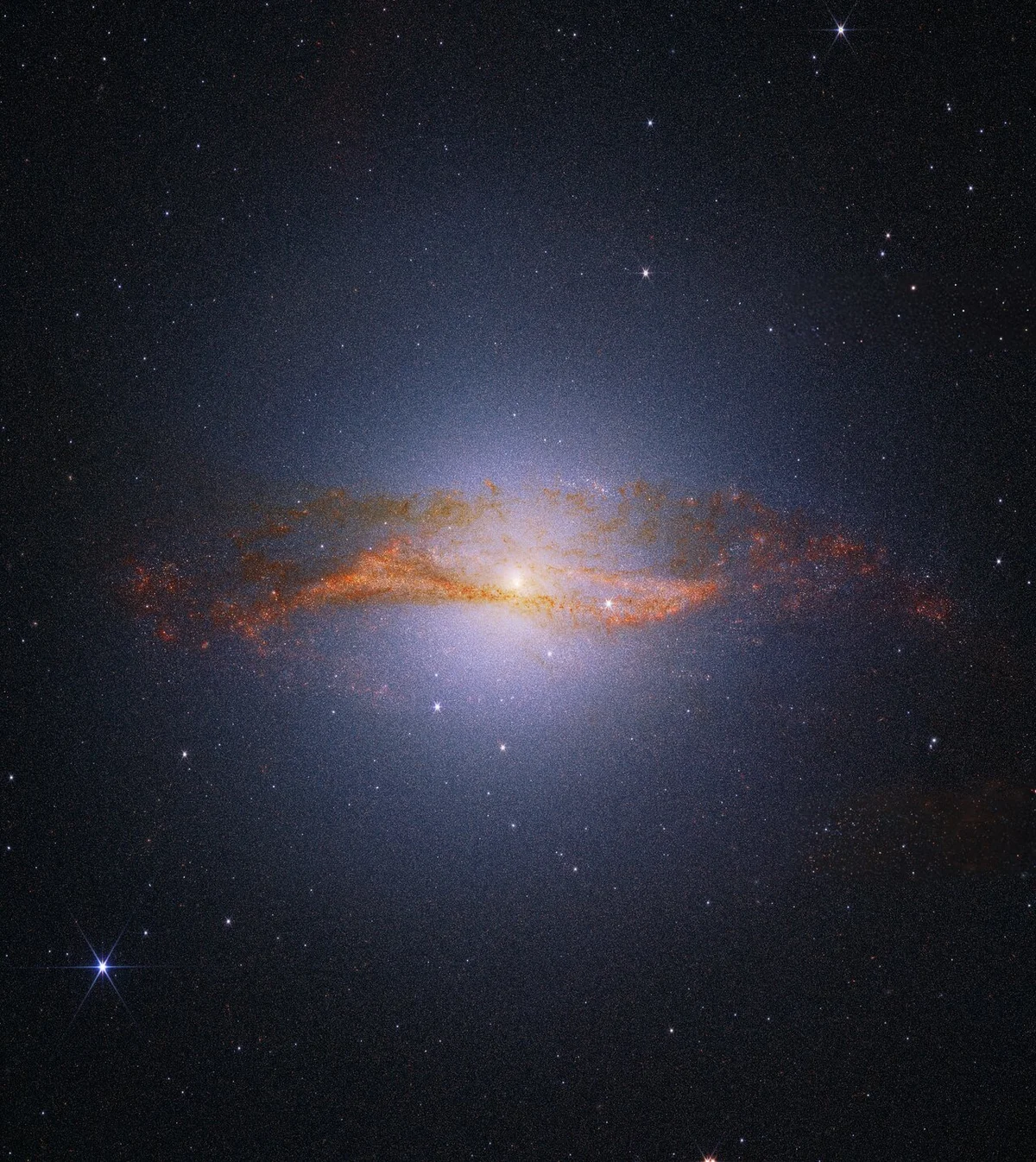
Recent observations from the James Webb Space Telescope (JWST), marking its fourth anniversary of scientific operations, have unveiled the galaxy Centaurus A in unprecedented detail. Webb's exceptional sensitivity in the near and mid-infrared spectrum penetrates the dense dust clouds obscuring the galaxy's center in visible light, revealing a tightly woven tapestry of individual stars and a dynamically evolving galaxy. These images celebrate four years of remarkable achievements and successful scientific endeavors for the most powerful space telescope ever built.
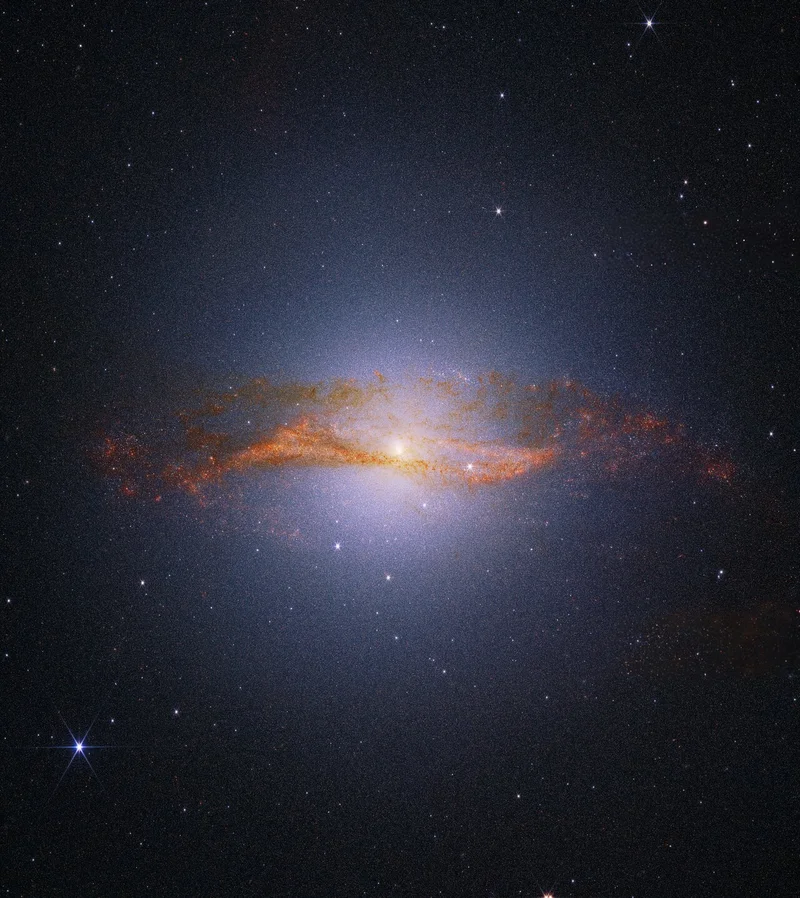
Located approximately 11 million light-years from Earth, Centaurus A, also known as NGC 5128, is relatively close in cosmic terms. Unlike most nearby galaxies, it exhibits significant activity, making it an ideal laboratory for understanding the co-evolution of galaxies and supermassive black holes.
At its core lies a supermassive black hole actively consuming material from its surroundings. This process generates powerful jets and releases vast amounts of energy, shaping the galaxy around it. Centaurus A also bears the scars of a dramatic past, having undergone a massive collision with another galaxy around two billion years ago. The aftermath of this merger is still evident in its unusual structure and ongoing star formation.
Observations made with the Hubble Space Telescope were unable to penetrate the dust that obscured the central region, while the now-retired Spitzer Space Telescope provided insights into large-scale structures without resolving individual stars. In contrast, Webb's capabilities offer clarity and depth, revealing the galaxy's interior star by star.
Awe-Inspiring Dust
Webb's infrared observations highlight the diverse dust structures within the galaxy, which glow in intricate forms that astonish and even perplex astronomers. A curved, parallelogram-like band traverses the galaxy's center, while strands of material extend outward like cosmic clouds.
An S-shaped structure, particularly prominent in the image captured by Webb's Mid-Infrared Instrument (MIRI), raises intriguing questions that require further investigation. How was this shape formed? What influence does the black hole exert on it? Is it affected by star formation resulting from the merger?
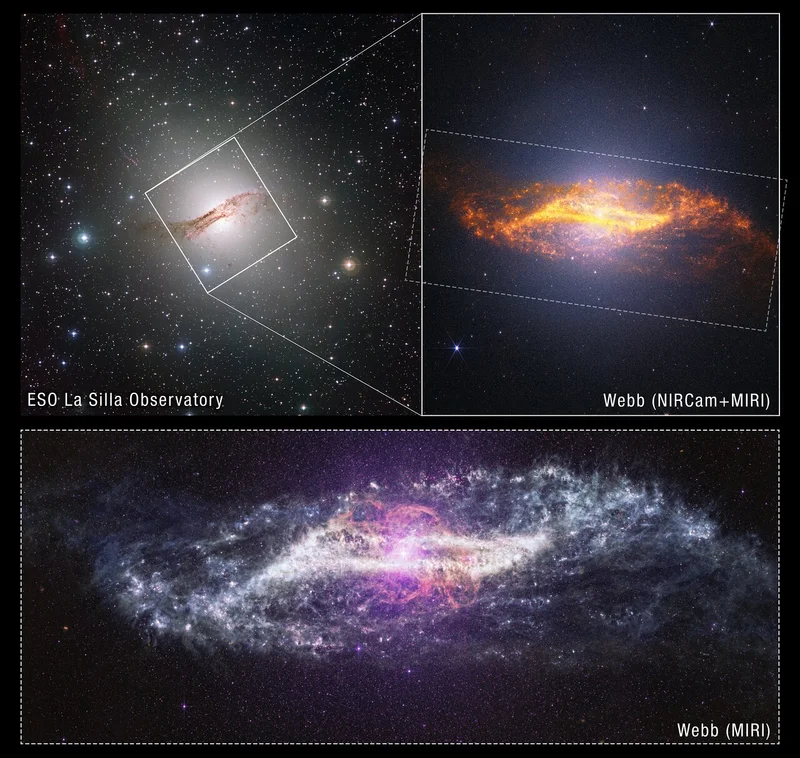
Many of the bright red points in the MIRI image are dust-rich stars or regions of star formation, where aging stars release material into space or new stars are born. This dust serves as the raw material for future generations of stars and planets, playing a crucial role in the ongoing lifecycle of the galaxy.
Written in the Stars
Thanks to Webb's high resolution, astronomers can now study Centaurus A star by star, even in its long-obscured central region. What appears "grainy" in Webb's image—most notably in the combined view from MIRI and NIRCam (Near Infrared Camera)—is actually a densely packed field of individual stars, each carrying information about the galaxy's history.
Webb's observations of Centaurus A transform the galaxy into a form of galactic archaeology. Each revealed star aids in reconstructing the timeline of various events: the formation of older stars, the slowdown of activity, the surge in star formation during the collision, and the stars that emerged from the turbulent gas post-collision. Together, they create a timeline of galactic evolution.
Dynamic Black Hole
Webb's capabilities extend beyond imaging; through spectroscopic analysis of light, astronomers can measure how gas moves within the galaxy.
Initial findings from the Webb Telescope reveal rapidly flowing ionized gas likely propelled outward by the black hole's activity, along with warmer molecular hydrogen in a distorted, rotating disk near the center. These observations contribute to addressing one of astronomy's greatest questions: How does a black hole influence an entire galaxy?
The answer appears to be complex. The black hole may stimulate star formation by compressing gas but can also inhibit it by pushing material away. Centaurus A offers a rare, close-up glimpse into this cosmic interplay.
By tracking dust in unprecedented detail, resolving millions of stars, and uncovering the movement of gas near a supermassive black hole, Webb transforms Centaurus A into a living testament to cosmic history.
Another Incredible Year of Scientific Discoveries and Stunning Images
In its fourth year of scientific operations, the Webb Telescope has produced groundbreaking discoveries and insights from across the universe. Astronomers have found new hints of a planet orbiting Alpha Centauri, just four light-years from our Sun. Webb showcased eight spectacular gravitational lenses in a comprehensive survey, identifying hundreds of candidates. In studying star clusters in nearby galaxies, scientists discovered that more massive clusters form more rapidly, while Webb also mapped the upper atmosphere and auroras of Uranus within our solar system.
In the early universe, Webb uncovered a black hole that formed before its galaxy, providing new clues about the formation of supermassive black holes. It also identified a supernova that occurred just 730 million years after the Big Bang—the earliest recorded to date. Researchers presented the strongest evidence yet that some of the "small red dots" discovered by Webb in 2022 are indeed "black hole stars." Additionally, Webb provided a new perspective on the Hubble Ultra Deep Field, revealing thousands of distant galaxies from the earliest epochs of cosmic history.
Among the unique images captured by Webb last year were the delicate nebulae surrounding a planet-forming disk, intricate details at the edge of the Helix Nebula, the complex heart of a cosmic butterfly, and young stars in all stages of their formation. Webb illuminated a beacon of light in the spirals of galaxy Messier 77 and showcased details of the stellar lifecycle in galaxy NGC 5134. Together with Hubble, Webb delivered the most comprehensive view of Saturn to date, revealing layers and storms in its atmosphere.
Background Information
The Webb Telescope is the largest and most powerful telescope ever launched into space. Under an international cooperation agreement, the European Space Agency (ESA) provided the launch service for the telescope using the Ariane 5 rocket. In collaboration with partners, the ESA was responsible for the development and qualification of modifications to the Ariane 5 for the Webb mission, as well as for securing the launch service through Arianespace. The ESA also provided the primary spectrograph NIRSpec and 50% of the Mid-Infrared Instrument MIRI, which was developed and built by a consortium of publicly funded European institutes (the MIRI European Consortium) in collaboration with JPL and the University of Arizona.
Webb is a partnership between NASA, ESA, and the Canadian Space Agency (CSA).
Image credits: NASA, ESA, CSA, STScI. Image processing: A. Pagan (STScI), J. Depasquale (STScI), M. Garcia Marin (ESA Office at STScI)