Webb Investigates the Surface of a Rocky Planet - Spreewald-Spechtler
Using the MIRI instrument aboard the James Webb Space Telescope, a research team investigated the surface composition of the rocky planet LHS 3844 b, revealing insights into its geological properties.
Using the MIRI (Mid-Infrared Instrument) onboard the James Webb Space Telescope (JWST), a research team examined the surface composition of the rocky planet LHS 3844 b. The group was led by Sebastian Zieba (Center for Astrophysics | Harvard & Smithsonian, Cambridge, USA), a former PhD student at the Max Planck Institute for Astronomy (MPIA) in Heidelberg, along with Laura Kreidberg, director at MPIA and principal investigator of the study. Beyond determining exoplanet atmospheres, deciphering geological properties of planets orbiting distant stars represents the next step in fundamentally understanding their nature. The results of this investigation were published in the journal Nature Astronomy.
A Dark Rocky World Without an Atmosphere
LHS 3844 b is a rocky planet that is about 30% larger than Earth and is located 48.5 light-years away from Earth in the constellation Indus. It orbits a cool red dwarf star in just about eleven hours at a distance of only three stellar diameters above the star's surface. It exhibits a tidally locked rotation, meaning its own rotation takes as long as its orbit around the star. Consequently, the planet always shows the same face to the star. On this permanent day side, the average temperature is about 1000 Kelvin (approximately 725 degrees Celsius).
"Thanks to the extraordinary sensitivity of the JWST, we can capture light that originates directly from the surface of this distant rocky planet. We determine that it is a dark, hot, and barren rocky world without any atmosphere," says Laura Kreidberg.
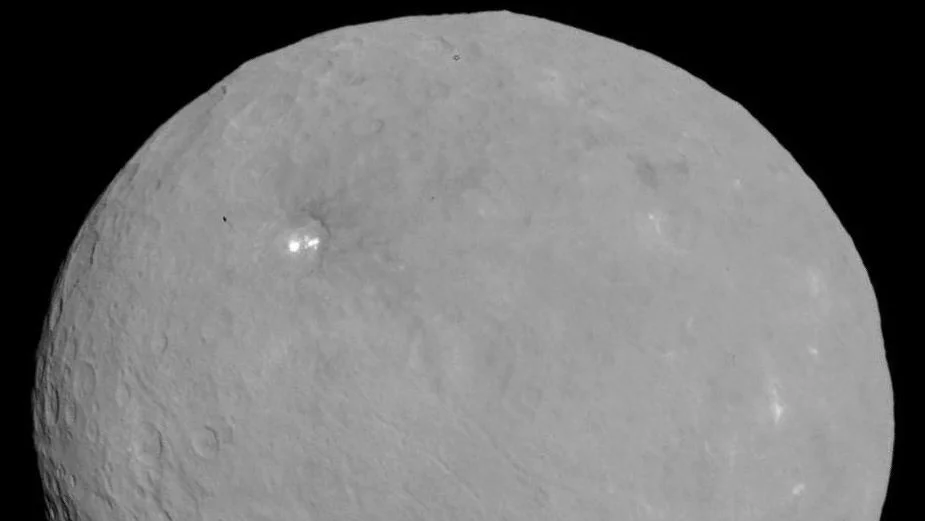
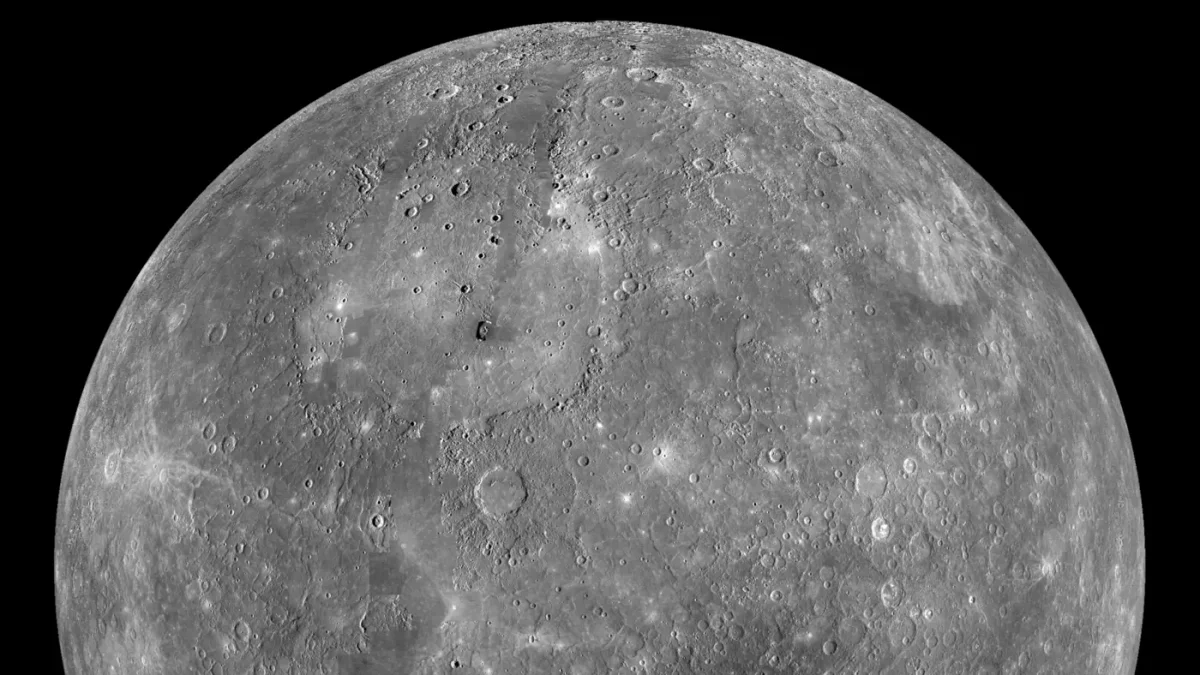
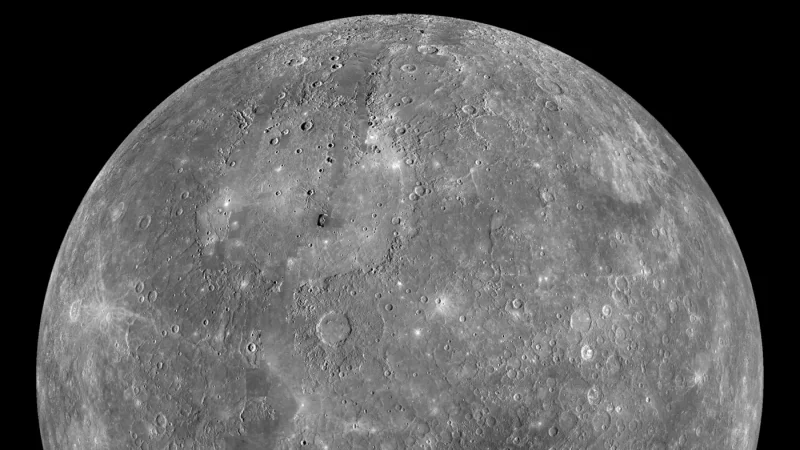
LHS 3844 b, with its dark surface, essentially resembles a larger version of the Moon or the planet Mercury. This conclusion is based on the analysis of the infrared radiation emitted from the hot day side of the planet. However, the planet cannot be directly imaged during this measurement; instead, researchers only register the periodic brightness fluctuations of the combined light from the star and the planet during its orbit.
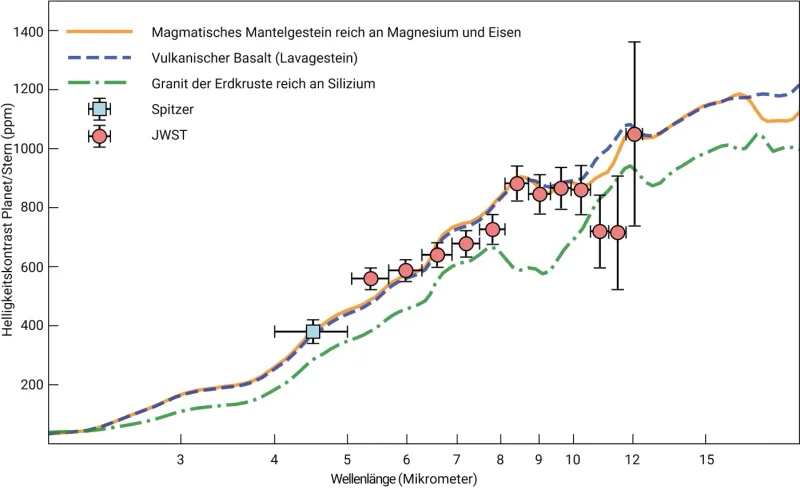
MIRI decomposed a portion of the planet's infrared radiation in the range of 5 to 12 micrometers into smaller wavelength segments and measured the brightness for each of these intervals. Astronomers refer to this as a spectrum—a rainbow-like distribution of the individual components of light. An additional data point from observations with the Spitzer Space Telescope, published a few years ago, supplemented the analysis.
Estimating Geological Activity
Just as the exploration of exoplanet atmospheres has benefited from climate science, the emerging field of exoplanet geology draws on geological insights from Earth. Sebastian Zieba, Laura Kreidberg, and their team utilized models and databases with reference spectra of rocks and minerals known from Earth, the Moon, and Mars. They investigated which infrared signatures these would produce under the conditions on LHS 3844 b. The comparison of the observational data with these calculations ruled out a composition resembling Earth's crust—composed of typical silica-rich rocks such as granite.
Although this result is not particularly surprising—only Earth possesses such a crust even in the solar system—it provides insights into the geological history of LHS 3844 b. It is assumed that Earth-like, silica-rich crusts form through a lengthy accumulation that requires tectonic activity and typically needs water as a lubricant. In this process, the rock material melts and solidifies repeatedly while mixing with mantle material, causing the lighter minerals to remain on the surface.
"Since LHS 3844 b lacks such a silica crust, it can be concluded that Earth-like plate tectonics either do not exist on this planet or are ineffective," says Sebastian Zieba. "This planet likely contains very little water."
What Can We Learn About the Rocky Surface of the Exoplanet?
Instead, the dark surface suggests a composition reminiscent of terrestrial or lunar basalt or terrestrial mantle material. However, the astronomers aimed for an even more detailed characterization.
A statistical analysis of how well the measured spectrum matches various mineral mixtures and surface structures revealed that extensive, solid plains of basalt or magmatic rock best explain the observations. Such rocks are rich in magnesium and iron and may contain the mineral olivine. Crushed material such as rock fragments or gravel also fits the data quite well. In contrast, fine grains or powdery material are inconsistent with the observations, as they would—at least at first glance—exhibit a brighter appearance.
Without a protective atmosphere, planets are exposed to what is known as space weathering. This is primarily driven by the harsh, high-energy radiation from the central star as well as impacts from meteoroids of various sizes.
"It turns out that these processes not only slowly break down the hard rock into regolith—a layer of fine grains, as seen on the Moon— but they also darken this layer by enriching it with iron and carbon. As a result, the properties of the weathered, powdery regolith correspond more closely to the observations," explains Sebastian Zieba.
Geologically Young or Weathered? Two Possible Scenarios
This analysis leads astronomers to two scenarios for the planetary surface, both of which align well with the data. The first scenario describes a surface characterized by dark, solid rock composed of basaltic or magmatic minerals. Since space weathering alters the properties of such rocks relatively quickly on geological timescales, the researchers conclude that the surface in this case must be relatively young—formed by recent geological activities such as widespread volcanism.
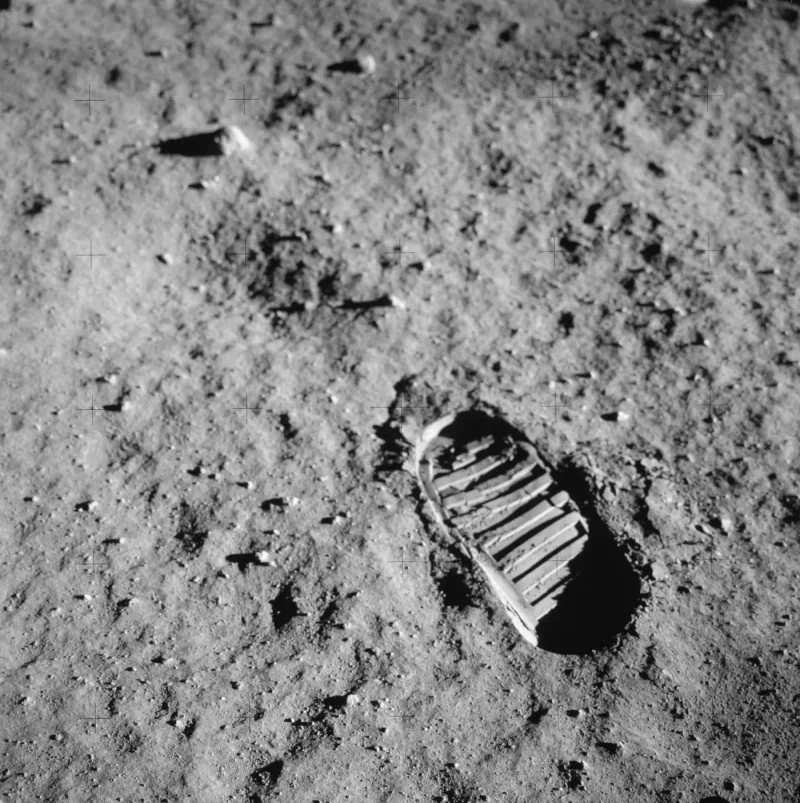
The second scenario also assumes a dark surface, comparable to that of the Moon or Mercury. However, it considers prolonged space weathering that leads to the formation of extensive regions covered by a dark regolith layer. This fine powder is also present on the Moon, as evidenced by the legendary images of astronauts' footprints. This alternative assumes longer periods of geological inactivity and thus requires conditions that contradict the first scenario.
Clarifying Geological Conditions
The two scenarios differ significantly in the intensity of geological activity that would be required for the respective surface characteristics. On Earth and other active celestial bodies in the solar system, volcanic eruptions are a typical accompanying feature of such processes. Sulfur dioxide (SO₂) is a gas that is often directly associated with volcanism. If it were present on LHS 3844 b in significant amounts, MIRI should have detected it. However, since no corresponding traces were found, a phase of recent volcanic activity is considered unlikely. This leads astronomers to favor the second scenario. If this is the case, LHS 3844 b could indeed resemble the planet Mercury quite closely.
To test this hypothesis, Sebastian Zieba, Laura Kreidberg, and their team are already analyzing further observational data from the JWST. These will allow for a more precise determination of surface conditions by analyzing subtle differences in light emission and reflection from massive rock compared to fine sand or powder. The distribution of emission angles depends on surface roughness, which in turn affects the observed brightness at a specific viewing angle. This method is already successfully employed to characterize asteroids in the solar system. "We are confident that the same technique will allow us to clarify the nature of the crust of LHS 3844 b and, in the future, other rocky exoplanets," concludes Kreidberg.