The Enigmatic Haumea: A Closer Look at 2003 EL61
Exploring the fascinating story of Haumea, the dwarf planet discovered amid a scientific dispute, its unique characteristics, and the mysteries it holds.
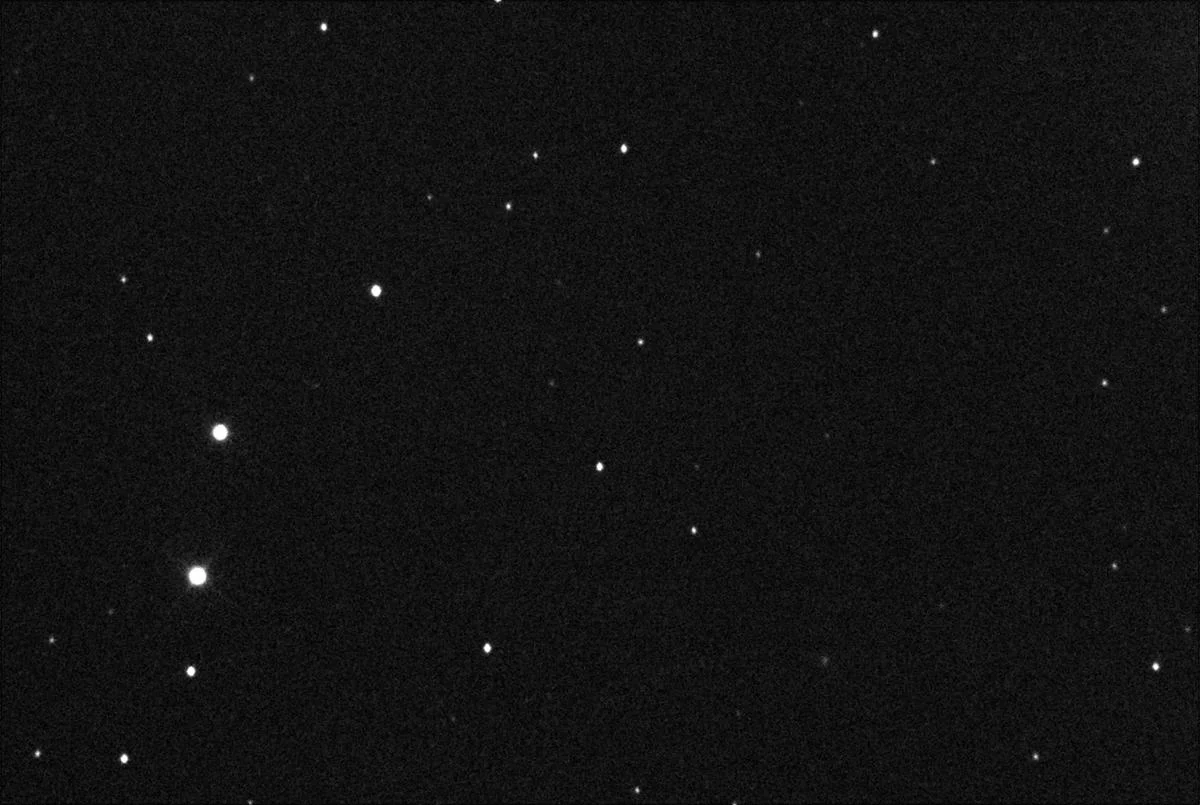
The Disputed Discovery of Haumea In 2004, a significant controversy arose in the astronomical community surrounding the icy celestial body known as 2003 EL61, later nicknamed 'Santa.' This dispute involved astronomers Michael Brown and José Luis Ortiz from the Instituto Astrofísico de Andalucía (IAA). Ortiz announced the discovery of this large icy mass on July 28, 2004, which is located beyond Neptune and is estimated to have a diameter of up to 1,500 kilometers. Brown, however, claimed that his team had discovered the object earlier, on December 28, 2003, and had provisionally named it 'Santa.' The announcement from Ortiz caught Brown and his team off guard, as they had been tracking the object in secrecy for months. Ultimately, they acknowledged that they had been outpaced just before reaching the finish line.
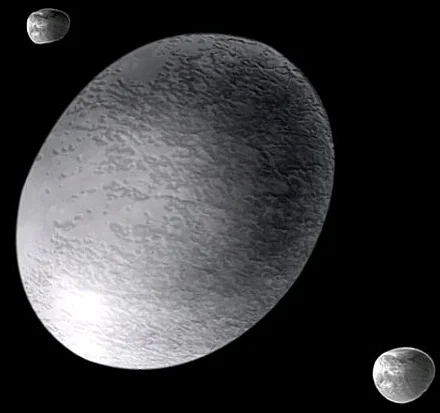
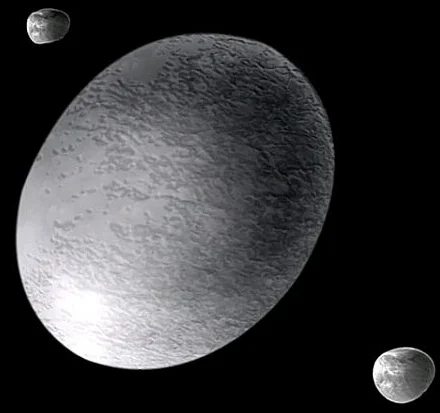
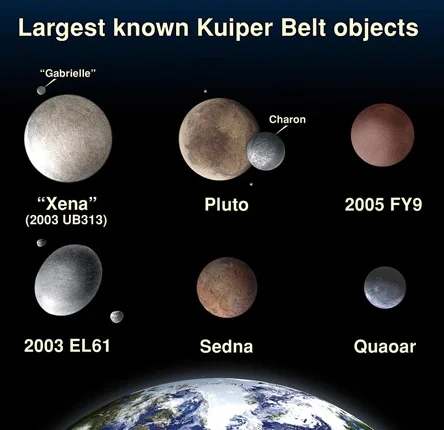
A Unique Object in the Solar System After its discovery on December 28, 2004, 2003 EL61 was reclassified as a dwarf planet and given the name Haumea, in tribute to its Hawaiian discoverers. Haumea is comparable in size to Pluto but possesses only a third of its mass. Its unusual shape, described as resembling a flattened cigar, has intrigued astronomers. Mike Brown, who studies Haumea, noted that its distinctive form and its moons could provide insights into the history of collisions within the Solar System, as well as the primordial environment of the Kuiper Belt, which lies beyond Neptune's orbit.
The Fastest Rotating Object When astronomers first observed Haumea, they noted a significant fluctuation in brightness, varying by 25 percent approximately every two hours. If Haumea were spherical, this observation would suggest an astonishing rotation period of just two hours, a speed that could potentially tear it apart. Brown confirmed that Haumea holds the record for the fastest rotation in the Solar System. Its rugby ball-like shape results from this rapid spin, which causes the equator to bulge outward due to centrifugal force.
An Unexpected Moon Many Kuiper Belt objects have moons that are thought to be smaller bodies captured by their gravity. However, Haumea's moon, Hi’iaka, does not fit this pattern. Brown explained that Hi’iaka is too small to have been captured and is composed of water ice, ruling out the possibility that it was formed from debris generated by a collision with Haumea. Further observations revealed a second moon, Namaka, which is also believed to have originated from the same cataclysmic event that shattered Haumea in the early history of the Solar System. Remarkably, Haumea is unique in the Kuiper Belt for having more than one moon. Both Hi’iaka and Namaka, along with smaller fragments, are remnants of the collision that likely involved a similarly massive object.
Scattered Ice Fragments Brown and his team have identified ten of the largest fragments of Haumea scattered throughout the Kuiper Belt, with the potential for more to be discovered. Studying these pieces and their distribution can illuminate not only the catastrophic event that broke apart Haumea but also provide insights into other significant collisions, such as the one that formed the Moon from a young Earth. This implies that when observing the surfaces of other Kuiper Belt objects, astronomers may be analyzing the actual surface of the original body rather than mere debris.
Lingering Mysteries Despite what is known, Haumea remains shrouded in mysteries. Its precise shape and internal structure are still not well understood. While astronomers have confirmed that it possesses a rocky core, the presence of a dense iron core remains uncertain. Observations of eclipses involving Haumea's moons could help clarify this, as a heavier iron core would influence the gravitational pull and thus the timing of these eclipses. Future observations using ground-based telescopes are planned to explore these eclipses. Additionally, the study of Haumea's moons will assist in determining the dwarf planet's overall mass. The Hubble Space Telescope has already observed an occultation involving Haumea's two moons, a rare event that occurs only twice every 300 years. Brown emphasized that Haumea is unique in this respect: “Haumea is the only one out there where we can do this.”
Personal Reflection Writing about Haumea has been an engaging experience, particularly given its discovery by a Spanish astronomer, even though Michael Brown was aware of it beforehand. While many details about this celestial body remain elusive, its unusual shape and rapid rotation make it a fascinating subject. I look forward to the emergence of new data regarding this intriguing object.