The Eclipse That Confirmed Einstein's Theory of Relativity
In 1919, two expeditions in a remote African island and Brazil confirmed Einstein's relativity by observing a spectacular event: a total solar eclipse.
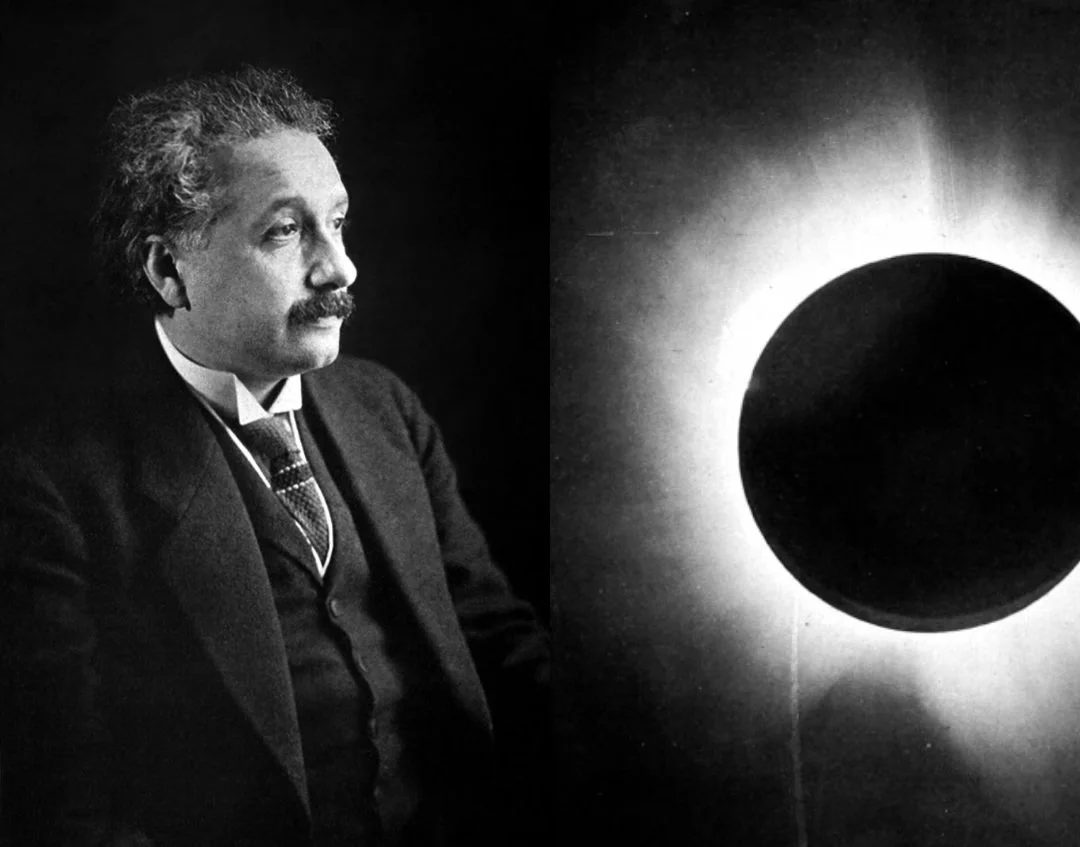
The Year Was 1919: Astronomers in Two Expeditions Proved Einstein's Relativity by Observing a Total Solar Eclipse
The early years of the 20th century were pivotal for science, fundamentally reshaping humanity's understanding of reality. Albert Einstein developed his theories of special relativity and later general relativity, which revolutionized concepts of space and time. However, validating such groundbreaking theories is often a complex task. This challenge was met by two British astronomers, who managed to demonstrate the effects of relativity during a remarkable event: a total solar eclipse.
The Sun and Relativity
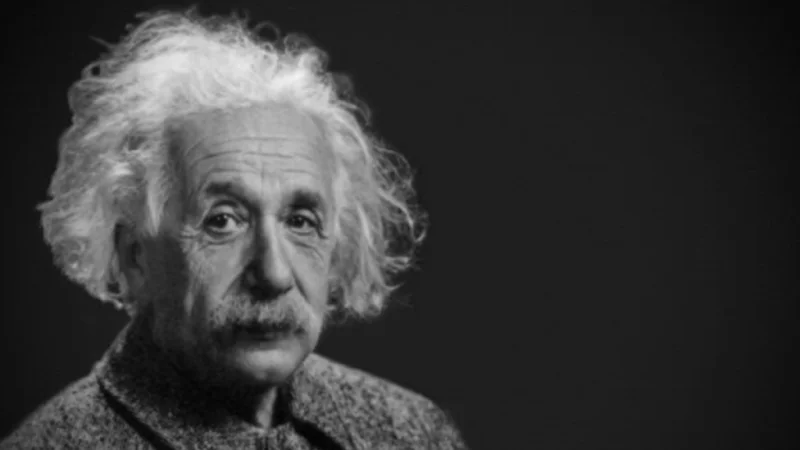
The principle was straightforward: in our daily experiences, we observe that light travels in straight lines; sunlight streaming through our windows appears direct and linear. However, Einstein's theory of relativity proposed a different notion: light can be bent due to the gravitational influence of massive bodies that warp spacetime, consequently altering the path of light. On Earth, observing such effects is virtually impossible since we lack sufficiently massive objects to illustrate this phenomenon. The astronomers' insight was to utilize our very own Sun.
Utilizing Stars to Prove Relativity
It was a bold yet brilliant idea: the Sun, being immense, has the theoretical capacity to “bend” spacetime through its gravitational force. If spacetime is curved, then light traveling towards us would experience a deflection due to this curvature. The astronomers decided to observe the light from distant stars, which, traveling at incredible speeds, would likely be forced to deviate when passing near the Sun. While the concept was simple, the challenge lay in observing these stars since they are not visible when the Sun shines.
The Eclipse Experiment
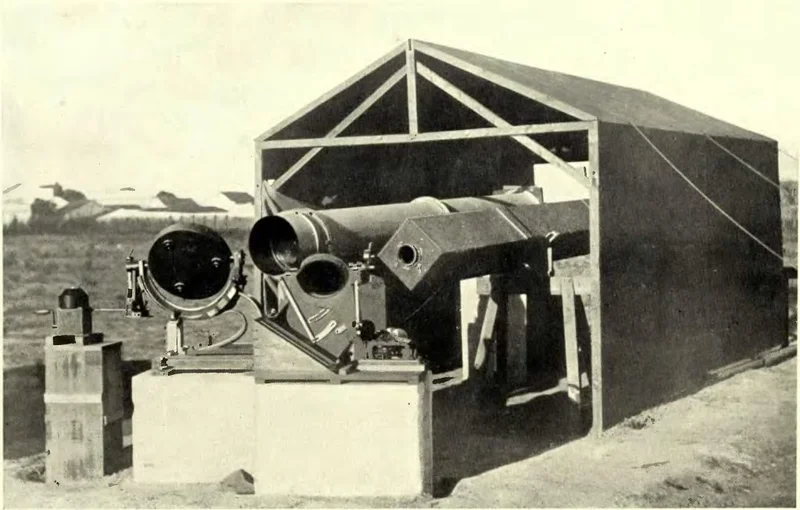
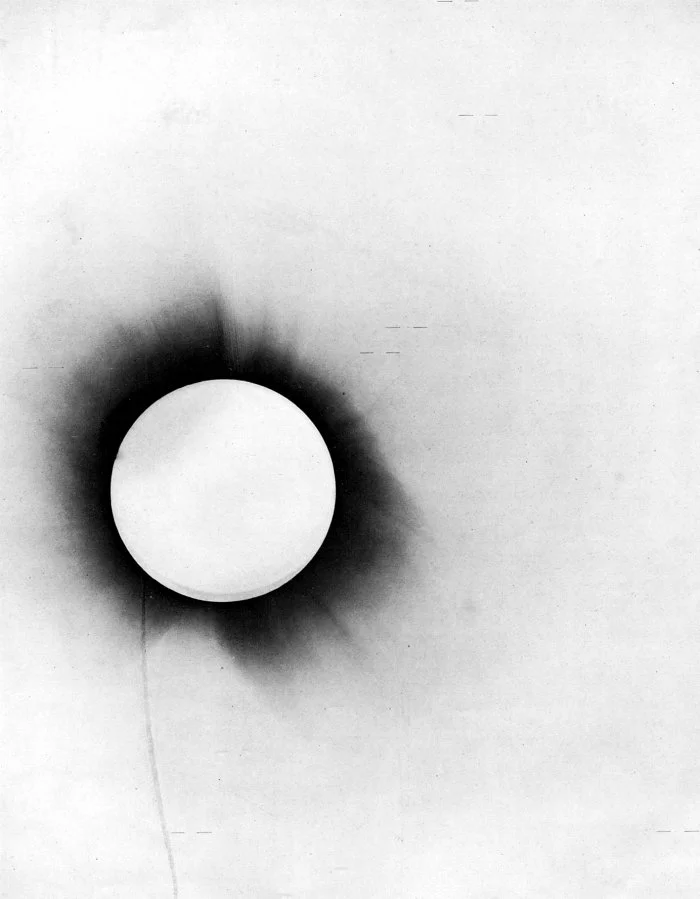
This is where the eclipse comes into play: when the Sun is completely obscured by the Moon, stars become visible even during the day. The plan required observations from two distant locations on Earth. The key figures in this endeavor were astronomers Arthur Eddington and Frank Dyson: Eddington traveled to Príncipe Island in Africa, while Dyson went to Sobral, Brazil. Both astronomers took photographs of the stars, which were “magically” visible once the Sun was eclipsed. Given that the Earth's movements cause the apparent shifting of the night sky, the stars visible during the eclipse could be compared to their positions seen previously at night. The critical task was to determine if the Sun indeed altered the path of their light. Surprisingly, the answer was affirmative: Einstein was correct.
The Dawn of the Relativity Era
The efforts of Eddington and Dyson, which bestowed monumental significance on the eclipse of May 29, 1919, would not have been possible without a crucial invention we often take for granted: photography. The combination of theory (Einstein's relativity), technology (the use of telescopes), and innovative photographic techniques made a significant impact. Nature, with its extraordinary phenomena, played its part as well. Additionally, journalism played a vital role in disseminating the results of this experiment, allowing Einstein's complex theory to reach a vast audience worldwide. Among the many eclipses in history, the one in 1919 stands out as particularly significant; through it, humanity not only glimpsed the stars but also witnessed the dawn of a new era: the era of relativity.