Rethinking Astrophotography Exposure Times: Are Five-Minute Exposures Still Necessary?
This article examines how modern astrophotography technology has shifted the optimal exposure time for capturing celestial images, emphasizing shorter exposures for better results.
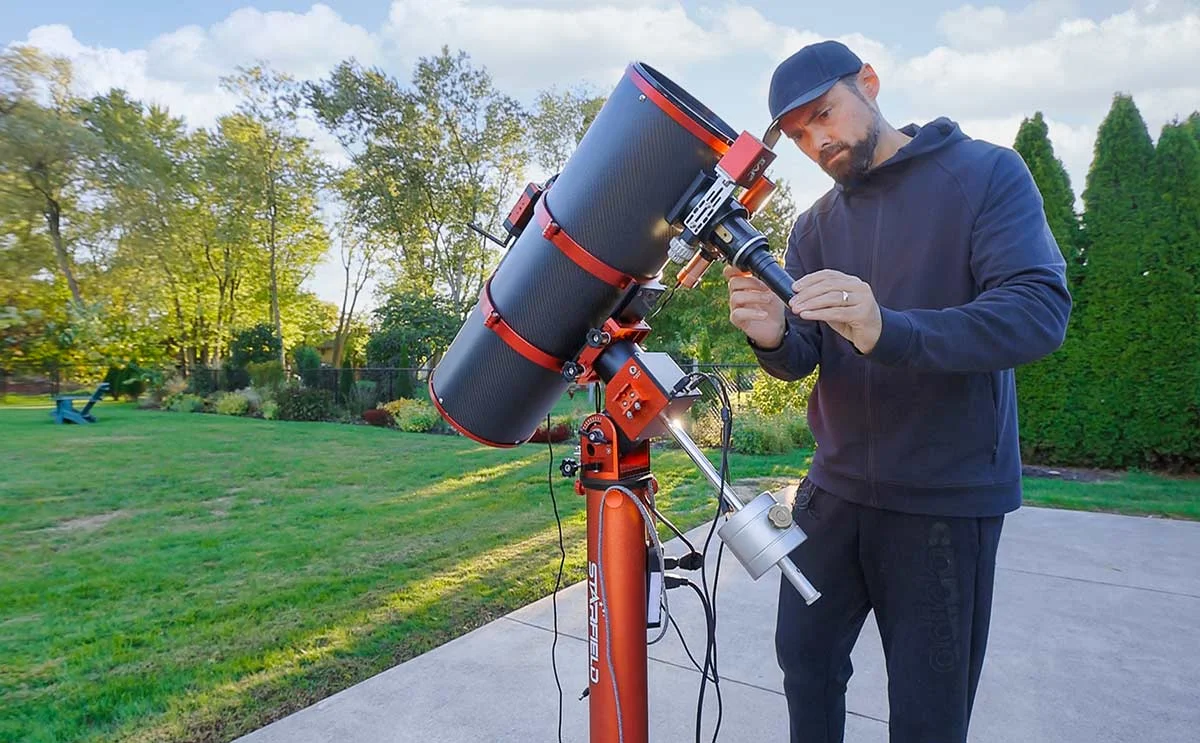
The landscape of astrophotography has evolved significantly with the advent of modern cameras and processing techniques, prompting a reevaluation of traditional exposure times. This article explores how these advancements have altered the necessity of long exposures in capturing celestial images.
Modern Exposure Insights
Current trends indicate that five-minute exposures are no longer essential for most broadband astrophotography projects when utilizing modern CMOS cameras. Instead, the focus should be on achieving the shortest exposure that allows the sky background to be comfortably above the camera’s read noise without excessively clipping stars. In many cases, prioritizing total integration time over individual exposure length yields better results.
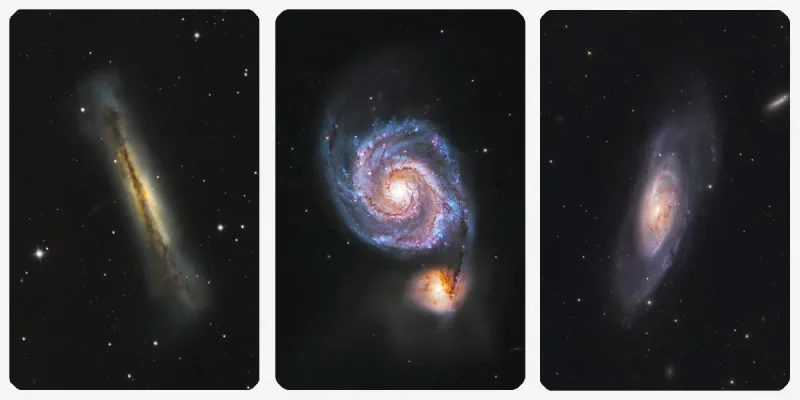
Historically, a five-minute exposure was considered a benchmark for serious deep-sky astrophotography. A clean 300-second exposure with well-rounded stars signified success in the field. However, the necessity for such lengthy exposures is being questioned. With the sensitivity and low read noise of contemporary CMOS cameras, much shorter exposures can yield impressive results.
In practice, I have found that 60-second broadband exposures, especially with the ZWO ASI585MC Air, can produce excellent images. While I do not advocate for a strict one-minute exposure as the ideal, the age-old belief that longer exposures are inherently better is increasingly challenged.
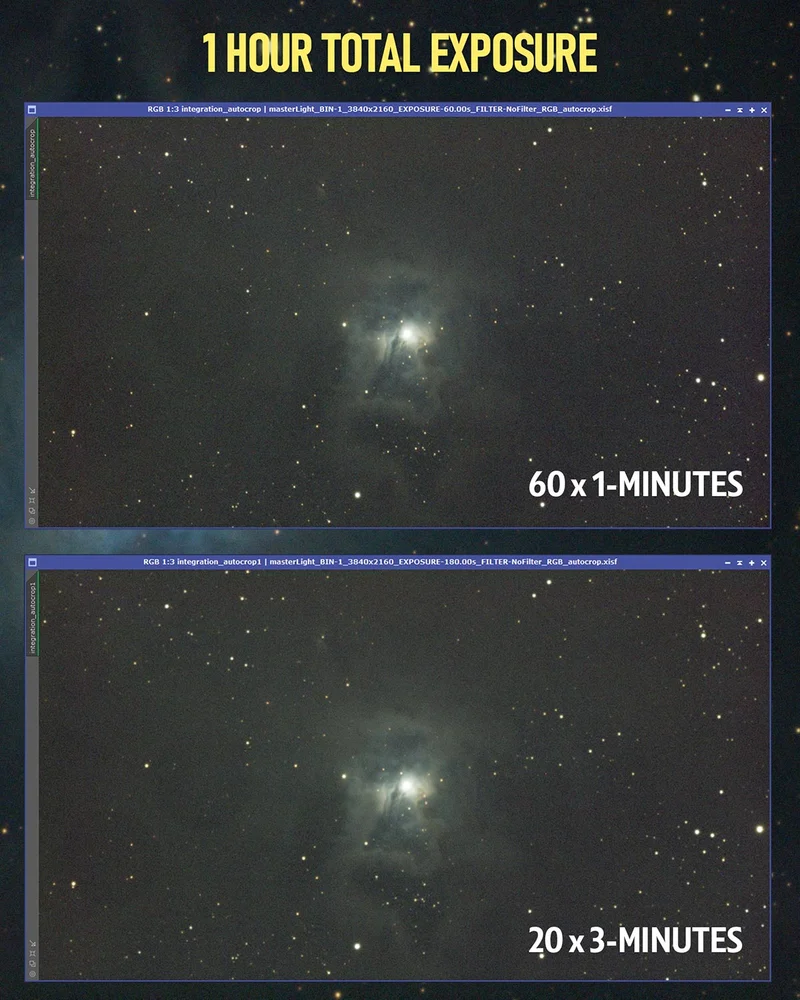
Examining Exposure Times: Iris Nebula (1 minute vs 3 minutes)
Both sets of images, totaling one hour of exposure time, illustrate a crucial point: it is not the duration of each individual exposure that matters, but rather the total time spent capturing photons. The comparison of 60 one-minute exposures versus 20 three-minute exposures shows that despite differences in readouts, the overall results are strikingly similar. While one version may have slight advantages in certain areas, there is no significant enhancement in capturing faint details simply due to longer individual subs.
Determining the optimal exposure time is contingent upon various factors, including equipment consistency, environmental conditions, and processing techniques. The question should shift from “How long can my mount track?” to “What duration is necessary for this specific sub?”
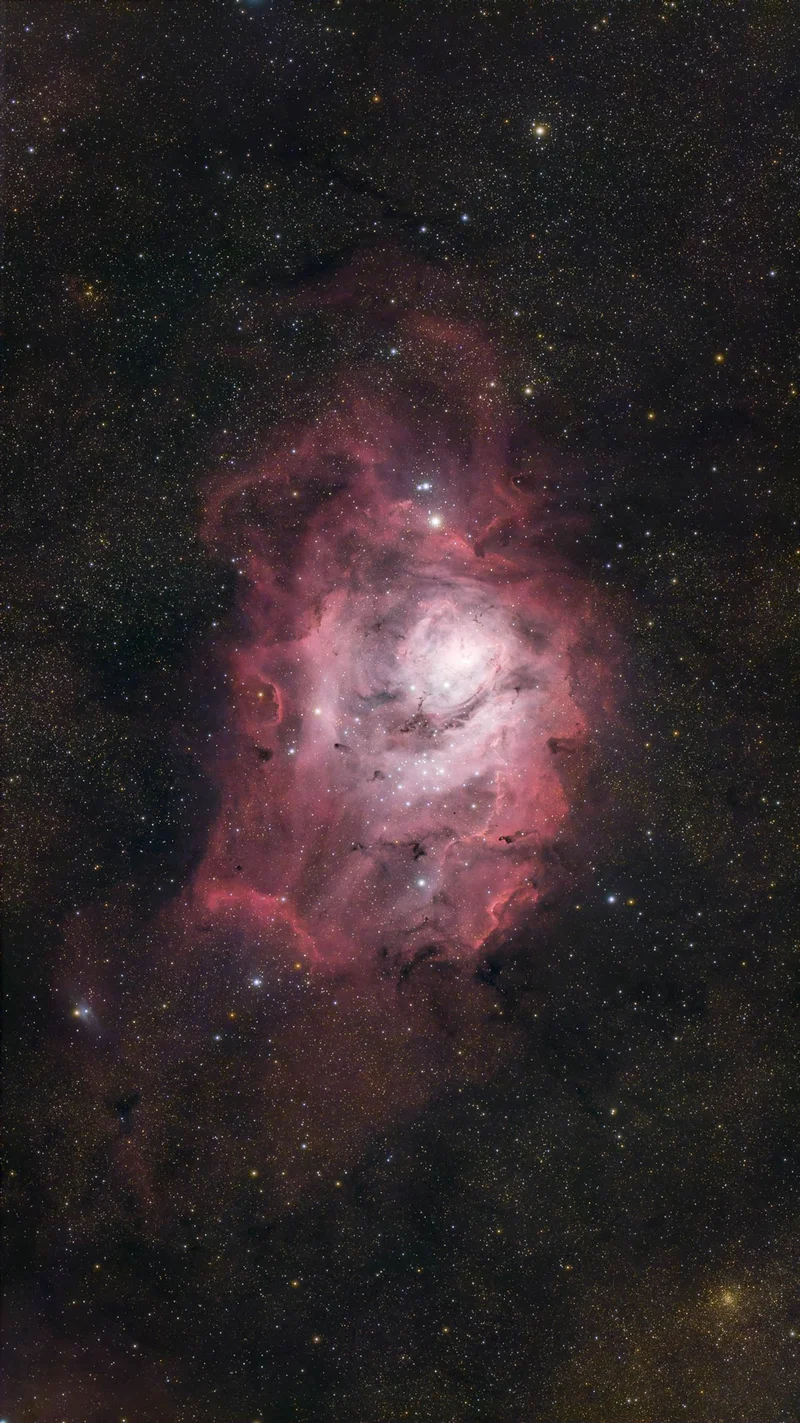
Captured Image of the Lagoon Nebula: 60-Second Exposures with ZWO ASI585MC Air
Understanding Subexposure Goals
The primary function of a single subexposure is to gather a useful signal while preserving crucial highlight information. Each exposure captures a mix of target signal, background light pollution, and various noise sources, including read noise introduced by the camera during sensor readouts.
Shorter subexposures lead to more readouts for the same total integration time, which can increase the impact of read noise on the final image. Therefore, while it is tempting to minimize exposure length indefinitely, this approach can backfire, especially for faint targets where the signal may be too weak relative to the noise.
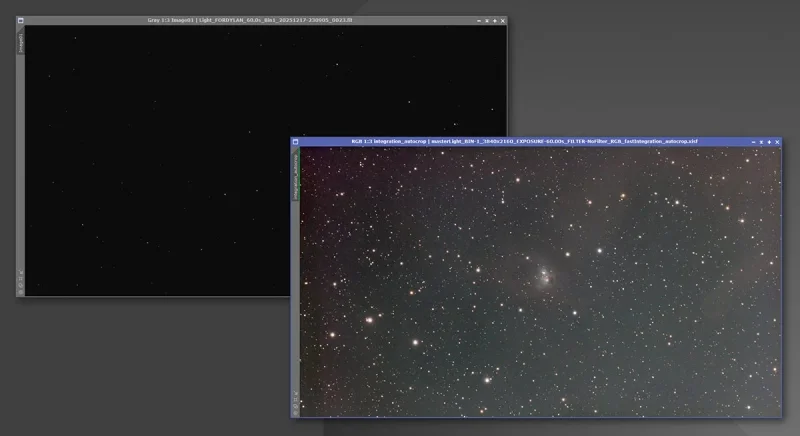
Comparison of Stacking Techniques: Fox Face Nebula
Once an exposure reaches a sufficient length where the noise from the sky background exceeds the camera's read noise, extending the exposure further results in diminishing returns. Astrophotographers often describe this phenomenon as becoming sky-noise limited, where total integration time outweighs the significance of individual exposure lengths.
The SharpCap Smart Histogram is a useful tool for estimating the optimal gain and exposure settings that will enhance the final stacked image, rather than focusing solely on the aesthetics of a single subframe.
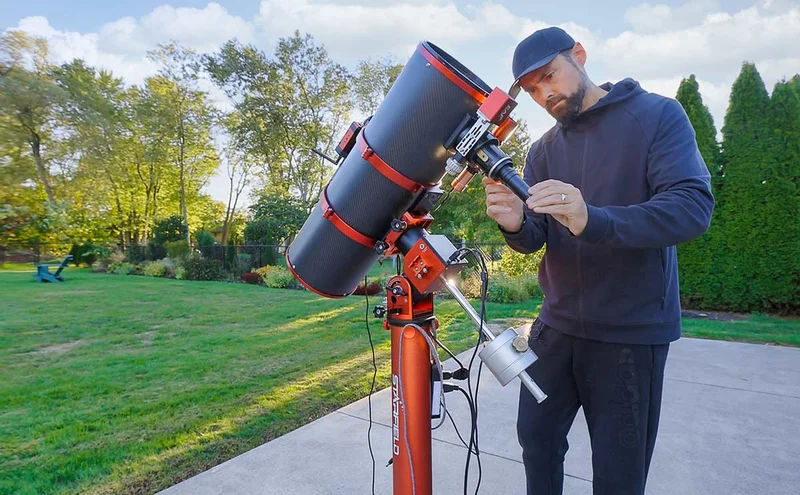
Using a Fast Reflector Telescope: Apertura CarbonStar 200
The Noise Reduction Myth
A common misconception is that increasing the number of shorter subframes automatically leads to a reduction in noise. While a stack of 60 frames provides more data points than 20 frames, this does not guarantee a proportional advantage in signal-to-noise ratio, particularly if both stacks share the same total exposure time.
The statistical nature of noise means that simply increasing the number of shorter frames does not translate to a straightforward cancellation of noise. Each longer frame captures more target signal, but if the shorter frames are already sufficient for sky noise to dominate, the difference may be negligible in the final output.
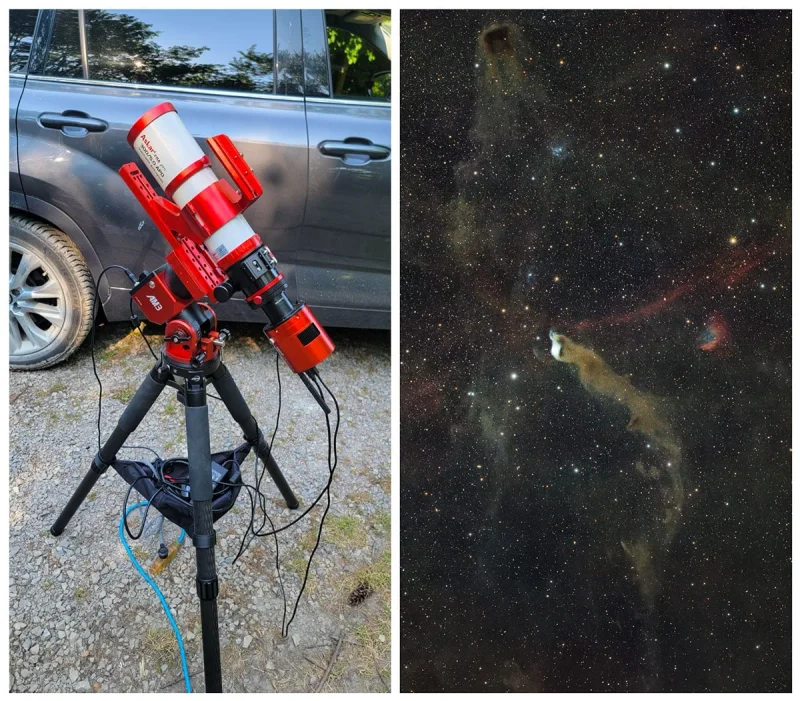
Capturing the Wolf's Cave Nebula: 3-Minute Sub Exposures
While having more frames can aid in identifying and rejecting outliers like satellite trails and cosmic-ray hits, it is important to recognize that the effectiveness of noise reduction is contingent on various factors, including the total integration time and the quality of the incoming signal.
Impact of Modern CMOS Technology
The shift away from long subexposures is largely attributed to the advancements in CMOS sensor technology. Unlike older CCD cameras that had high read noise, modern back-illuminated CMOS sensors, such as the ZWO ASI585MC Air, offer high quantum efficiency with minimal read noise and dark current.
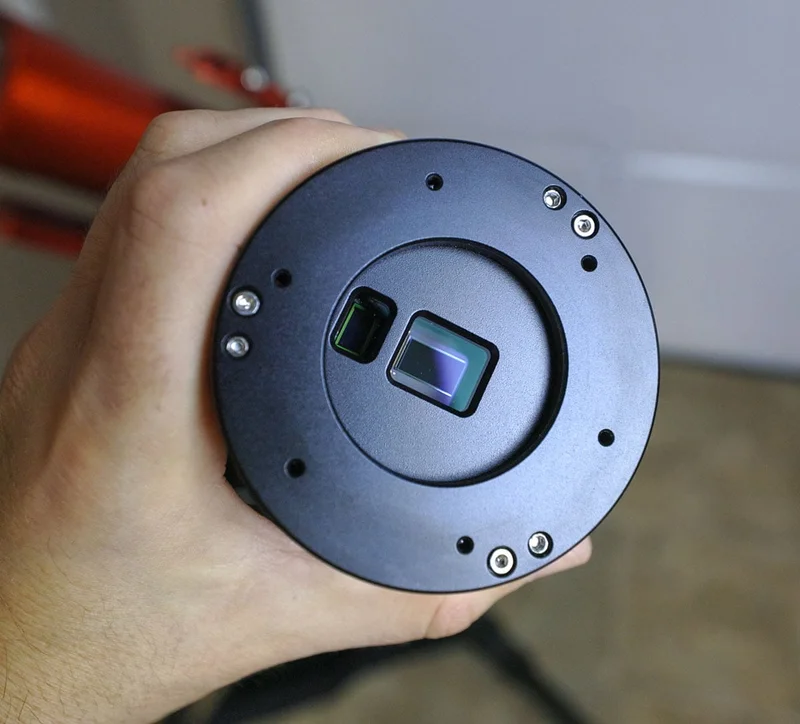
ZWO ASI585MC Air Smart Camera Specifications
A 60-second exposure from such a camera might appear noisy when viewed individually, but when stacked with numerous other calibrated frames, the consistent target signal emerges while random noise averages out. Shorter exposures also help preserve highlight details, reducing the risk of saturation in bright stars and galaxy cores, which is particularly advantageous in regions with intense stellar activity.
Additionally, shorter exposures mitigate the risk of losing significant data due to environmental factors such as wind or passing clouds. The loss of one minute in a 60-second exposure is less impactful than losing a full five-minute frame.
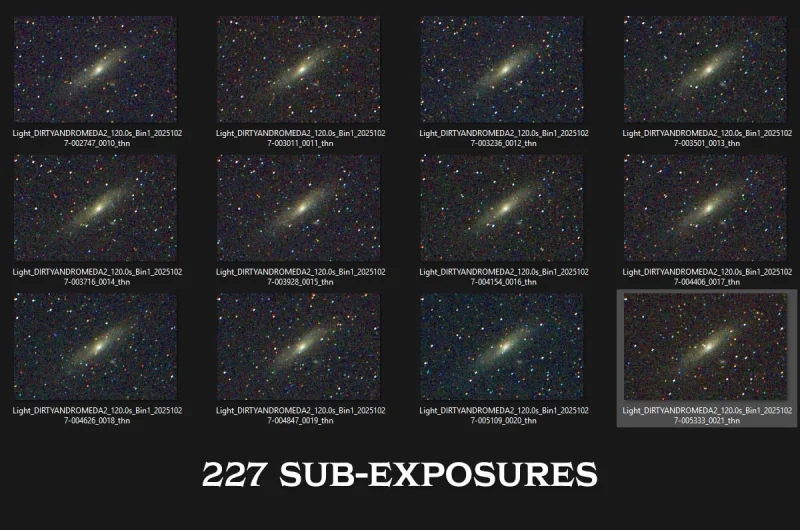
Navigating Gain and Dynamic Range
The relationship between gain and exposure length is nuanced. While the common advice is to use longer exposures at lower gain, this is not universally applicable. Increasing gain can lower read noise but may also limit the number of electrons captured before clipping occurs.
Modern cameras often feature a high-conversion-gain mode that reduces read noise at specific gain settings. Therefore, it is essential to optimize gain settings based on the unique characteristics of each sensor rather than adhering to a one-size-fits-all rule.
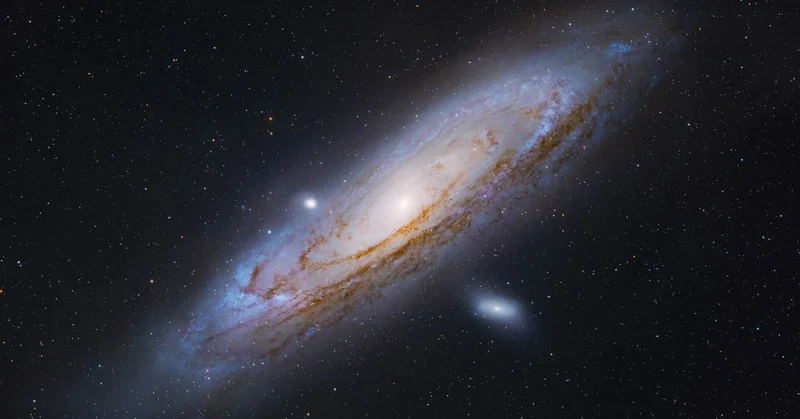
Astrophotography Image of the Andromeda Galaxy at 180-Second Exposures
Conclusion: Why 60 Seconds Works for Broadband Imaging
In broadband imaging, particularly without filters, capturing light from both the target and the surrounding sky background is vital. In suburban environments, the background light can quickly saturate longer exposures. Transitioning from 180-second to 60-second exposures allows for a healthier balance of background signal while protecting brighter areas of the image.
Ultimately, the focus should be on accumulating more total integration time rather than extending individual frame lengths unnecessarily. The specific threshold for optimal exposure will vary based on factors such as camera gain, focal ratio, sky brightness, and target altitude, making it essential for astrophotographers to tailor their approach to their unique circumstances.
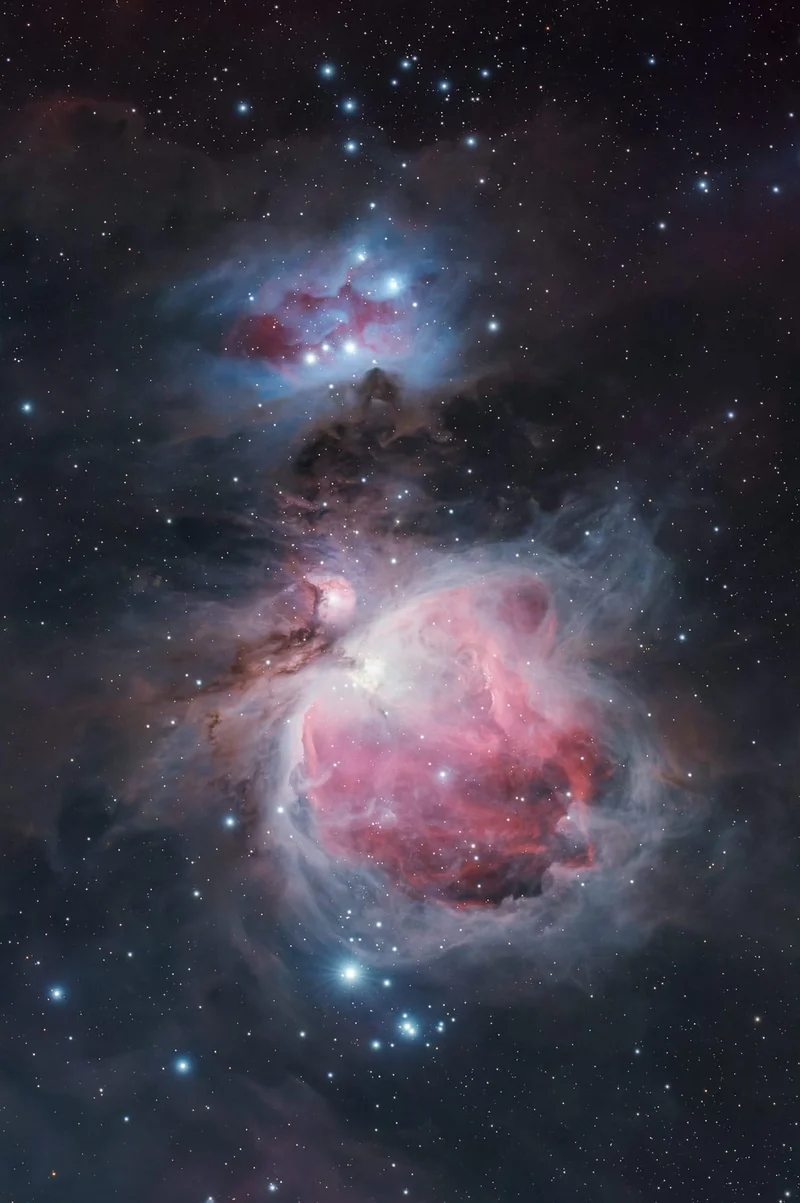
The Orion Nebula Captured with 60-Second Exposures