Exploring the Universe with Telescope Live: A New Approach to Astrophotography
Discover Telescope Live, an online platform for astrophotography that allows users to process professional datasets from robotic telescopes. Learn about its features, plans, and how it can enhance your astrophotography experience.
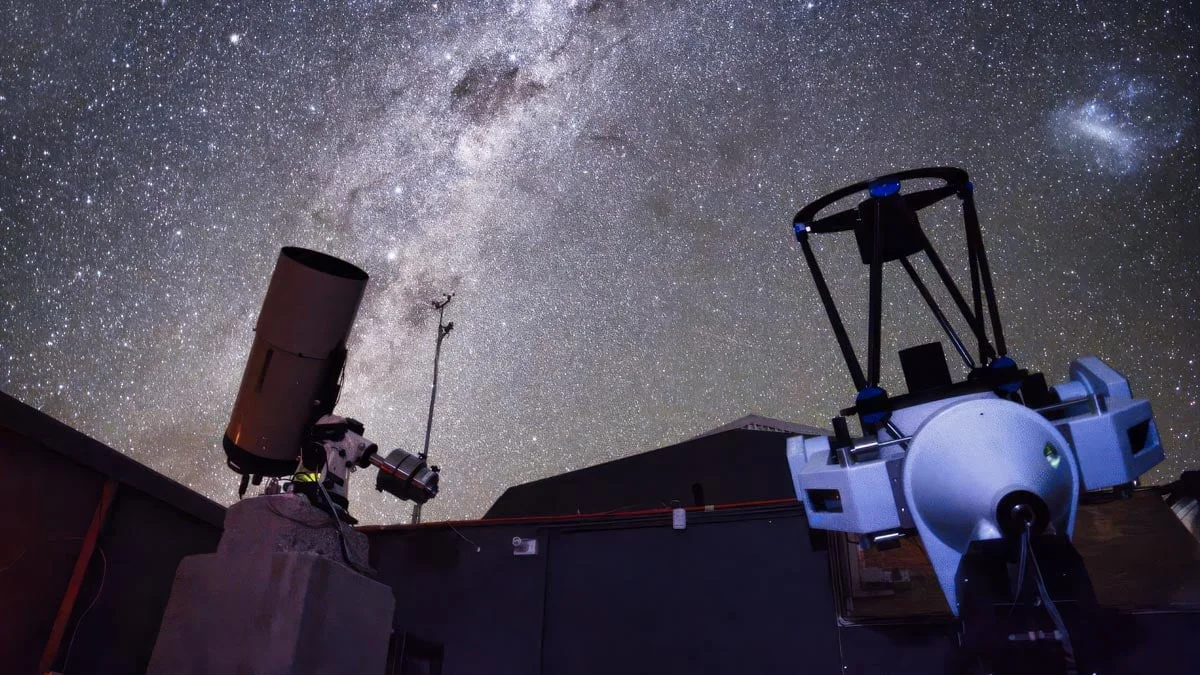
Disclosure: This article accompanies a video produced in paid collaboration with Telescope Live. If you subscribe through one of them, I may earn a commission at no additional cost to you.
What is Telescope Live? Telescope Live is an innovative online platform that allows users to engage in astrophotography by accessing professional FITS datasets captured by robotic telescopes located in optimal dark-sky sites. The service provides a vast archive that includes both broadband and narrowband data from observatories situated in various hemispheres, enabling users to process images of deep-sky objects that may be challenging to capture from their own locations.
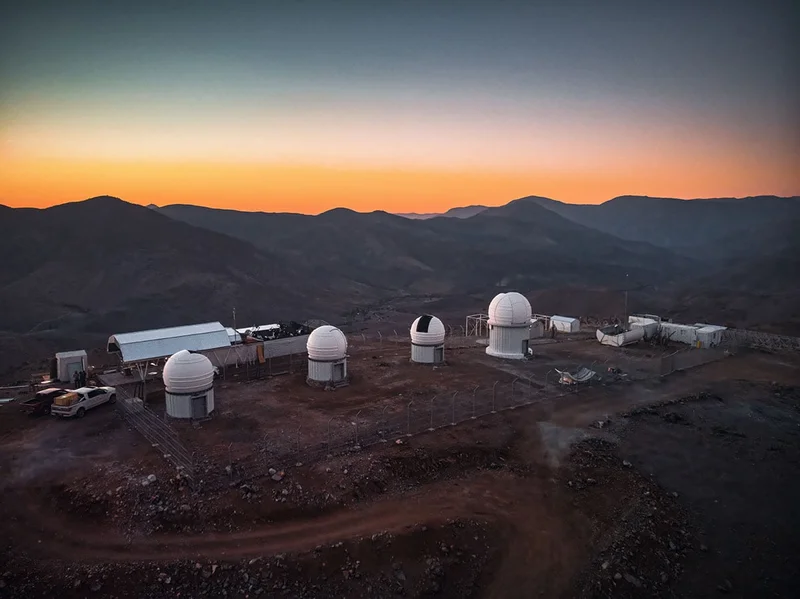
For those seeking a Telescope Live review, it’s important to note that this article is based on a sponsored experience. Rather than approaching it as an anonymous subscriber, my aim was to share my journey of processing astrophotography data that was not captured by my own equipment, a significant shift after years of hands-on experience in the field.
My first endeavor with Telescope Live involved selecting the Sculptor Galaxy (NGC 253), a target that is difficult to photograph from my home in Canada due to its low position in the sky. The data I utilized was gathered under the pristine skies of Chile by the CHI-1 telescope, a PlaneWave CDK24 with a substantial 24-inch (61-centimeter) aperture and a focal length nearing 4,000 millimeters.
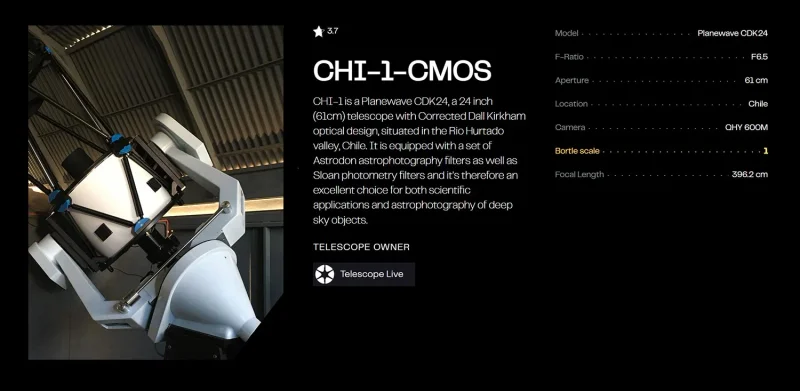
The CDK24 telescope represents a level of equipment that most amateur astrophotographers may never own, with the optical tube alone costing around $73,000 USD, not including the additional expenses for the mount, camera, filters, and travel to Chile. Consequently, working with this data presents a unique opportunity compared to acquiring new equipment for personal use.
Upon downloading the files, I began processing the luminance exposures using PixInsight, applying an automatic stretch to reveal the galaxy in its full glory. The initial results were breathtaking, showcasing the galaxy's intricate dust lanes and vibrant star-forming regions, all enhanced by the telescope's long focal length and excellent seeing conditions.
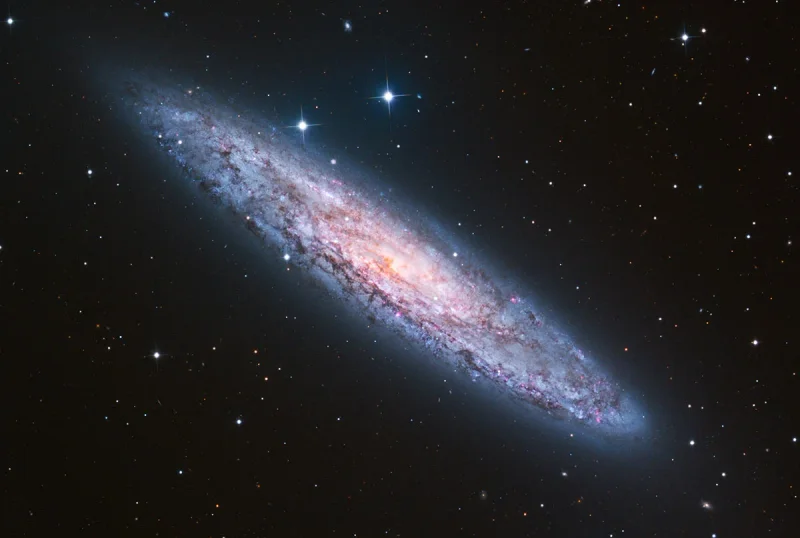
The Sculptor Galaxy. Data: Telescope Live (Planewave CDK24), Processing: Trevor Jones
Understanding Telescope Live's Functionality
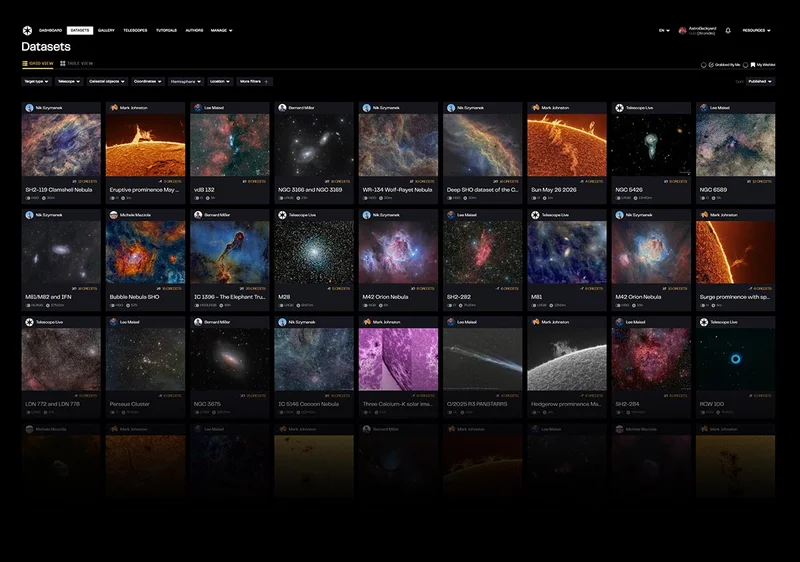
Telescope Live operates as a comprehensive, searchable library of astronomical image data. Users can browse through various projects captured by a network of robotic telescopes, examining details such as object type, location, telescope specifications, filters, field of view, integration time, and credit costs prior to downloading the desired dataset.
The archive can be filtered based on specific criteria, allowing users to search for particular types of celestial objects, whether they be small galaxies, wide nebulae, or Southern Hemisphere targets that are otherwise inaccessible from their location.
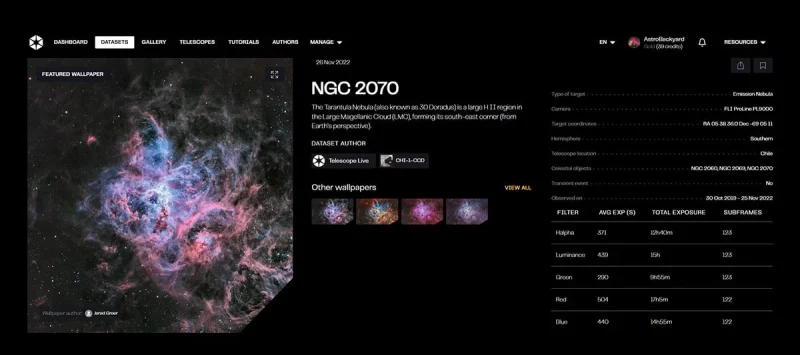
This distinction is important: during my experience, I was not remotely controlling a telescope in Chile or submitting requests for custom captures. Instead, I selected from already acquired data. Although Telescope Live previously offered a custom “Advanced Requests” option, this feature is no longer available, so it’s essential to be aware of this when exploring the platform.
The current functionality resembles entering a well-stocked library of processed data rather than renting a telescope for personal use. While it may lack the romanticism of capturing images yourself, it offers a straightforward and efficient path to processing high-quality data.
The Largest Telescopes in the Telescope Live Network
The Telescope Live network features a range of telescopes, from small wide-field instruments to large reflectors designed for capturing intricate details of distant galaxies. Here are the five largest telescopes currently available on the platform, listed by aperture size:
| Telescope | Photo | Aperture | Focal Length | Location |
|-----------|-------|----------|--------------|----------|
| CHI-3 | 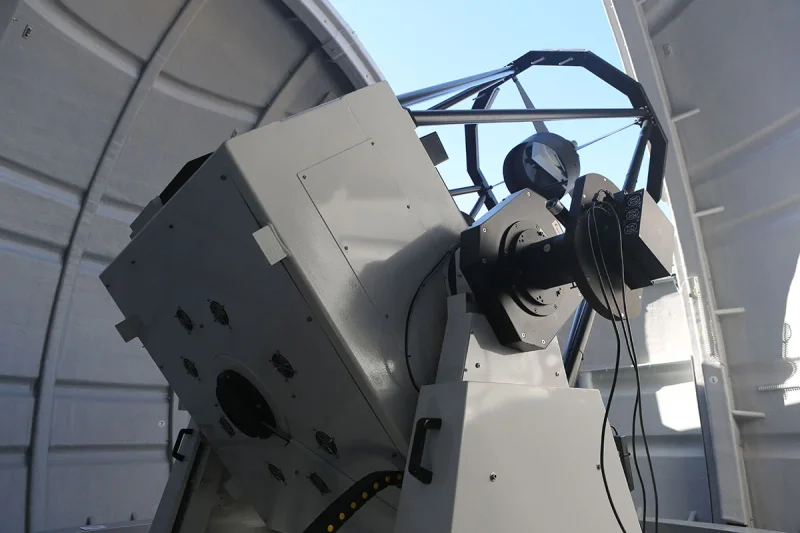 | 100 cm (39 inches) | 6,800 mm | Chile |
| SPA-2 |
| 100 cm (39 inches) | 6,800 mm | Chile |
| SPA-2 | 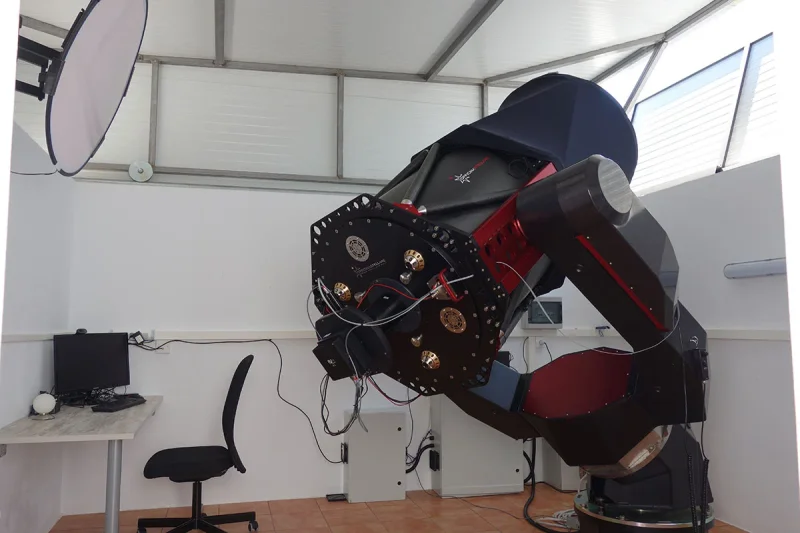 | 71 cm (27.5 inches) | 5,600 mm | Spain |
| CHI-1 |
| 71 cm (27.5 inches) | 5,600 mm | Spain |
| CHI-1 | 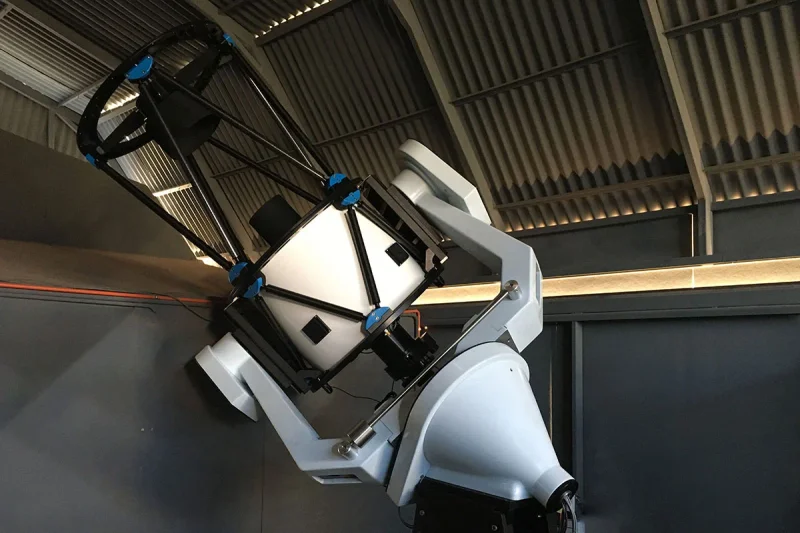 | 61 cm (24 inches) | 3,962 mm | Chile |
| CHI-2 |
| 61 cm (24 inches) | 3,962 mm | Chile |
| CHI-2 | 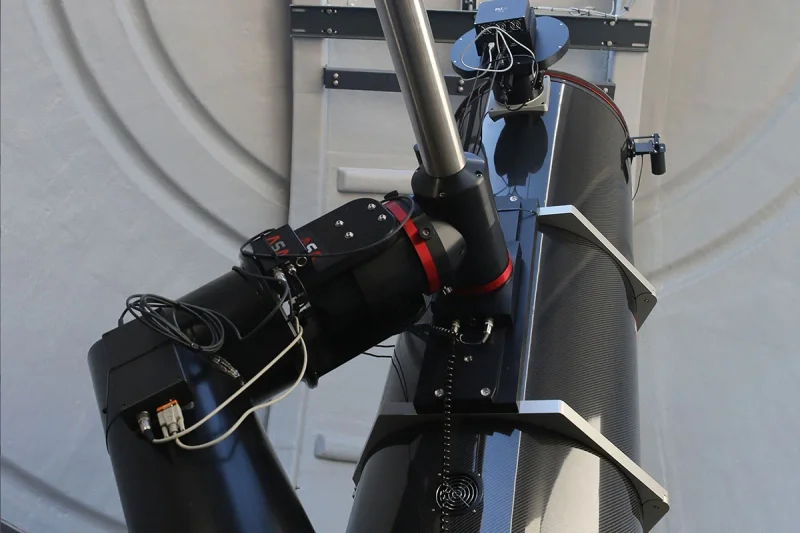 | 50 cm (19.6 inches) | 1,900 mm | Chile |
| CHI-4 | | 50 cm (19.6 inches) | 1,900 mm | Chile |
| 50 cm (19.6 inches) | 1,900 mm | Chile |
| CHI-4 | | 50 cm (19.6 inches) | 1,900 mm | Chile |
While larger telescopes are often assumed to be the best choice for all targets, the effectiveness can vary based on the object being observed. For instance, CHI-3’s one-meter aperture is ideal for small objects, whereas a compact refractor might be more suitable for capturing expansive nebulae. Factors such as field of view, filter selection, and total exposure time can be more critical than aperture size alone.
Plans and Credits for Telescope Live
Instead of charging per download, Telescope Live operates on a credit system. Subscribers receive a set number of credits monthly, which can be used to access datasets that display their credit costs. Unused credits can roll over as long as the subscription remains active.
The pricing structure at the time of writing is as follows, displayed in British pounds, though local currency and final prices may vary:
| Plan | Monthly Price* | Monthly Credits | Dataset Discount | Best For | |-----------|----------------|-----------------|------------------|----------| | Bronze | $6 | 5 | — | Trying occasional datasets on a small budget | | Silver | $24 | 20 | — | Regular processing practice and access to all tutorial levels | | Gold | $59 | 50 | 20% | Frequent downloads and larger, deeper projects | | Platinum| $119 | 100 | 25% | High-volume processors | | Diamond | $299 | 250 | 30% | Very heavy use and maximum archive discounts |
*Prices and features are subject to change, so always verify the live pricing page before subscribing.
Does Telescope Live Replace Backyard Astrophotography?
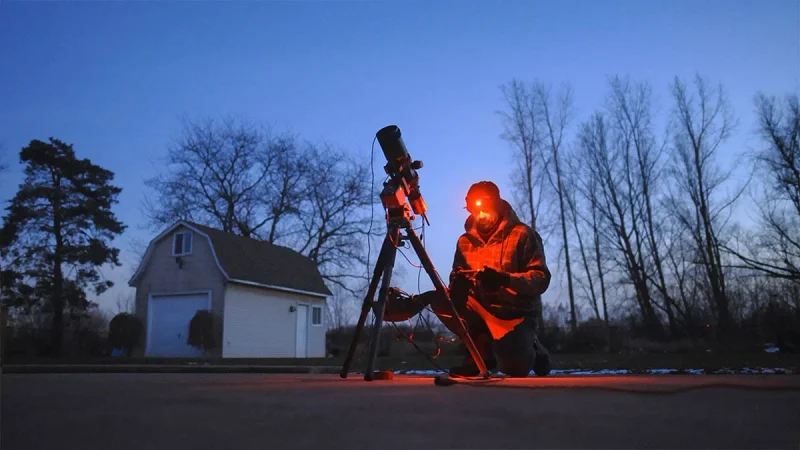
For me, the answer is no. The process of setting up equipment, troubleshooting issues, and witnessing the results of my own efforts is central to my passion for astrophotography. The emotional connection to an image, forged through personal investment, is irreplaceable.
Telescope Live, however, offers a different kind of experience. It streamlines the path to processing, making it especially useful during unfavorable weather conditions or when experimenting with unfamiliar filters. It also provides access to celestial objects that are otherwise challenging to capture from my geographic location.
Beginners can utilize clean data to learn about the behavior of astronomical channels without the concern of equipment-related errors. Meanwhile, seasoned astrophotographers can take on the challenge of processing intricate datasets featuring small galaxies, expansive mosaics, and unique filter combinations that may be beyond the capabilities of their own setups.
Strengths and Considerations of Telescope Live
The primary advantage of Telescope Live lies in the inspiration it provides. Browsing through the extensive archive feels like opening a treasure trove of potential projects. Rather than worrying about weather conditions, users can focus on selecting which object, telescope, and color palette to explore next.
The platform's quality and variety of data are significant benefits, and the user-friendly interface allows for easy comparison of projects before committing credits. However, it’s essential to recognize that this experience may not appeal to those who derive joy from the planning and execution of capturing images themselves, as users are processing data collected by others.
When publishing images processed using Telescope Live data, attribution to the original source is required. For example, a credit like “Image processed by Trevor Jones; original data from Telescope Live” ensures transparency and acknowledges the contributions of the observatory network.
Frequently Asked Questions About Telescope Live
Is Telescope Live really remote astrophotography?
While it can be considered remote astrophotography since the data originates from remote observatories, the current experience focuses on processing existing datasets rather than operating telescopes directly.
Can I choose an object for a Telescope Live telescope to capture?
The option to select specific targets is not available through the retired Advanced Requests system. Users can only choose from datasets that have already been captured.
Do I need to own a telescope?
No, a telescope is not required. Users need only a computer with sufficient storage for downloaded files and software capable of processing FITS data.
What software can process Telescope Live data?
I utilized PixInsight, but various other FITS-compatible programs are suitable, including Astro Pixel Processor, Siril, and compatible Adobe Photoshop workflows. The platform also offers processing tutorials, accessible based on the subscription plan.
Are the files raw or already processed?
The archive provides raw astronomical FITS files rather than finished images. Calibrated data is available for integration and processing, with original or uncalibrated files also accessible for those seeking more control.
Do Telescope Live credits expire?
Unused credits roll over as long as the subscription is active. If canceled, the balance is frozen and expires after three months without a subscription. Credits are non-refundable, so users should be mindful of their balance before accumulating a large amount.
Who owns images made from Telescope Live data?
While users own the final artwork created through processing, Telescope Live retains ownership of the original FITS files and prohibits redistribution. Published images should credit Telescope Live as the data source.
Can I sell an image I processed using Telescope Live data?
Yes, Telescope Live’s policy permits the sale of finished artwork, provided that appropriate attribution is included where feasible.