Observing the Night Sky: A Clear Evening in Weibersbrunn
A clear night in Weibersbrunn offered a rare opportunity for stargazing despite the challenges faced this year. Observations included galaxies, star clusters, and the moon.
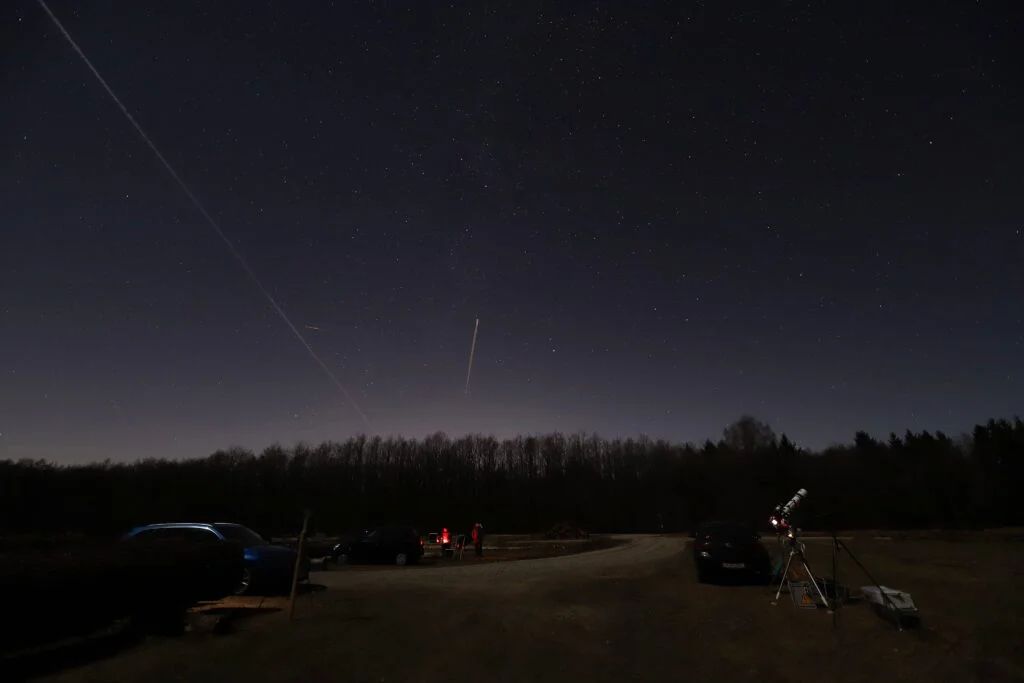
This year has proven to be challenging for stargazing, with poor weather and health issues frequently interrupting planned observation nights. However, a clear night recently provided a welcome opportunity to venture out. Despite a bright moon illuminating the sky, I decided to pack my equipment and head to Weibersbrunn around 5 PM.
Arrival in Weibersbrunn
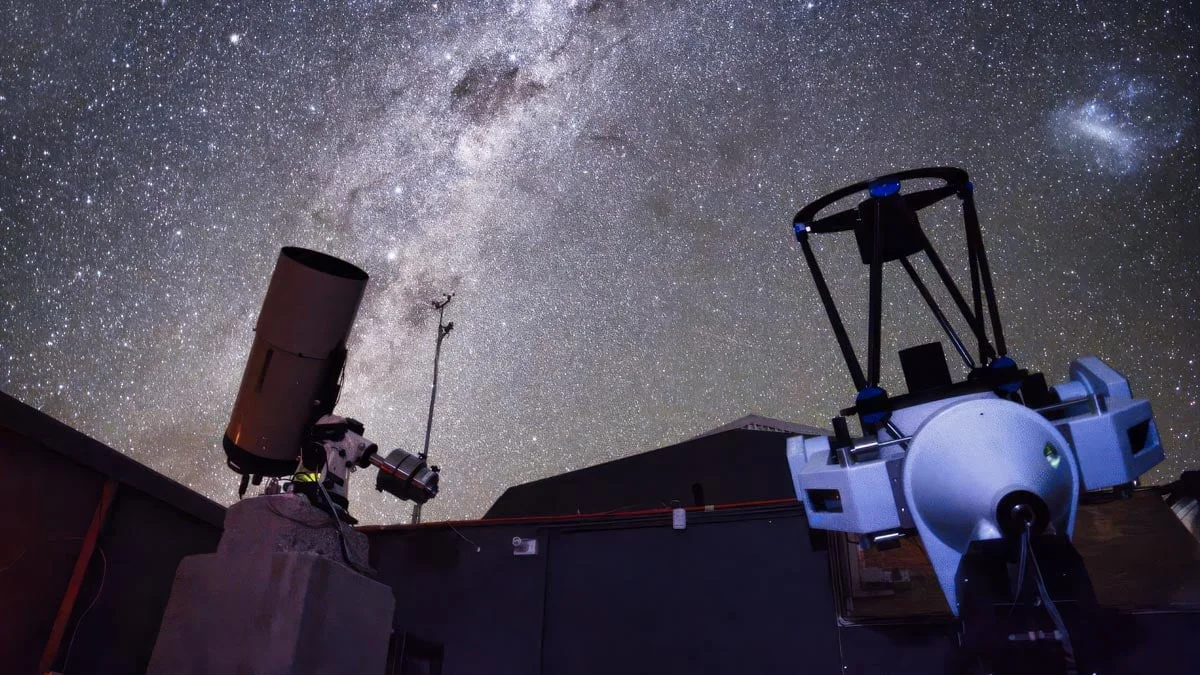
Upon my arrival at the observation site, I found Andi and Roland already set up and ready. Both are members of a photography group, and since Roland also has a keen interest in astrophotography, he joined us for the evening. He brought along his 76mm APO telescope and Canon camera, capturing moon photos and some night landscapes.
After a brief introduction and greeting, I began unloading and setting up my own equipment. I was excited to finally test my new optical finder during this session.
Beginning the Observation
Inspired by an article in an astronomy magazine, I planned to observe several galaxies in the constellation Camelopardalis. Typically, galaxies are not the best targets with the moon's bright light, but I recalled a previous night where I successfully spotted the Firewheel Galaxy under similar conditions. Thus, I thought it was worth a try.
The first galaxy on my list was NGC 2403 in Camelopardalis. However, I quickly realized that locating the galaxy would be a challenge. While the stars of Ursa Major were still visible, the stars in Camelopardalis were barely discernible. Despite several attempts, I was unsuccessful in finding it. At least I managed to capture some images with the Seestar. I decided to postpone my attempts to observe the other galaxies in that constellation, hoping that more stars would become visible as the night progressed.
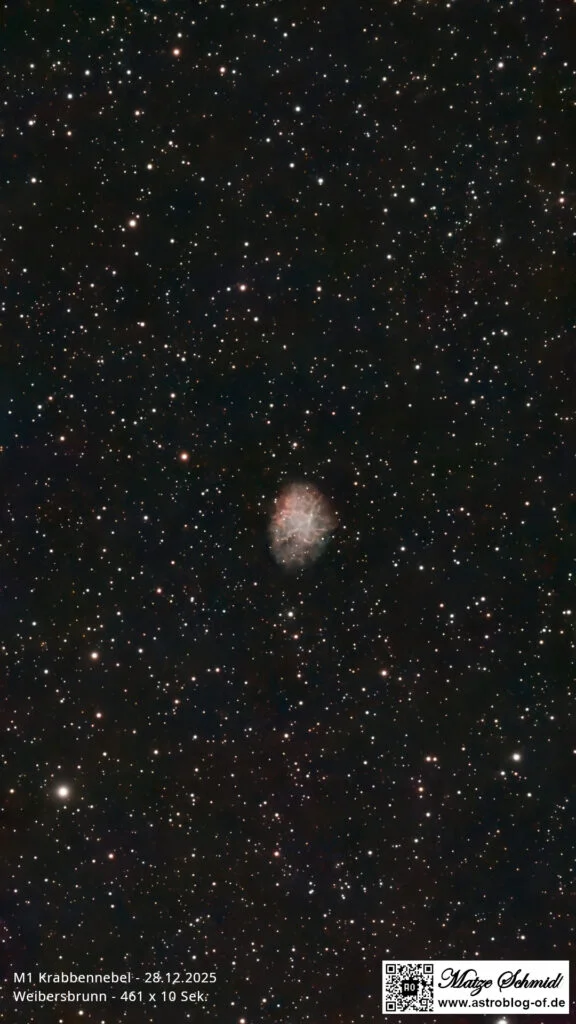
The first successful observation of the evening was the Crab Nebula M1 in the constellation Taurus. This nebula is the remnant of a supernova explosion that occurred in 1054. However, the visual conditions were not particularly favorable, and only a diffuse spot was visible in the eyepiece, which an untrained observer might easily overlook. A later visit to the nebula did not yield significant improvements. Perhaps I will have another opportunity to observe during a new moon this winter.
Open Star Clusters
After my rather disappointing view of M1, I turned my attention to some open star clusters. I began with M37 in the constellation Auriga, which was well-defined against the background. Open clusters tend to be visible under most conditions and are always worth visiting.
I then observed the two other clusters, M36 and M38, also in Auriga. Both were quite beautiful. I took the opportunity to use my new optical finder, which proved to be a worthwhile investment as the clusters appeared as small star clouds in the finder.
Next, I observed the Pleiades. In the large Dobson telescope, the cluster did not appear as striking as it does in smaller instruments or binoculars. However, a look through the optical finder was still rewarding. In the Dobson, the star chain known as "Ally's Braid" was prominently visible, stretching away from the brightest star of the Pleiades, Alcyone (Ally). Anyone who has not consciously observed this star chain should definitely do so.
The next open star cluster was Mel 25, located near Aldebaran, the main star of Taurus. During this observation, I noticed for the first time that the stars in this cluster were arranged somewhat like a small house.
Galaxies in Between
I still wanted to catch a glimpse of a few galaxies. The galaxies M81 and M82 in Ursa Major are typically observable even under these conditions. I swung my Dobson towards Ursa Major, and soon both galaxies were visible in the eyepiece. However, not many details could be seen that night; the central dust lane of the cigar-shaped galaxy M82 was barely discernible.
A side note: I had never been able to remember the number of the cigar galaxy. However, I finally came up with a mnemonic. Since the cigar appears to be split into two parts by the dust lane, the number 82 fits perfectly—the "2" in "82" describes that quite well.
Back to the Star Clusters
After viewing the two galaxies in Ursa Major, I returned to the open star clusters. I started with one of my favorite objects, the Owl Cluster NGC457 in Cassiopeia. I then revisited Taurus to observe the open star cluster NGC1647, which, while not very conspicuous, was still quite lovely.
I also made sure to include a globular cluster in my observations. Since Hercules was not available that evening, I observed the globular cluster M15 in Pegasus. Although it was significantly dimmer due to the moon's proximity, it was still a wonderful sight. I capped off my observations with the open star cluster M35 in Gemini, which is very bright and not particularly compact but also a fantastic object.
Moon and Jupiter
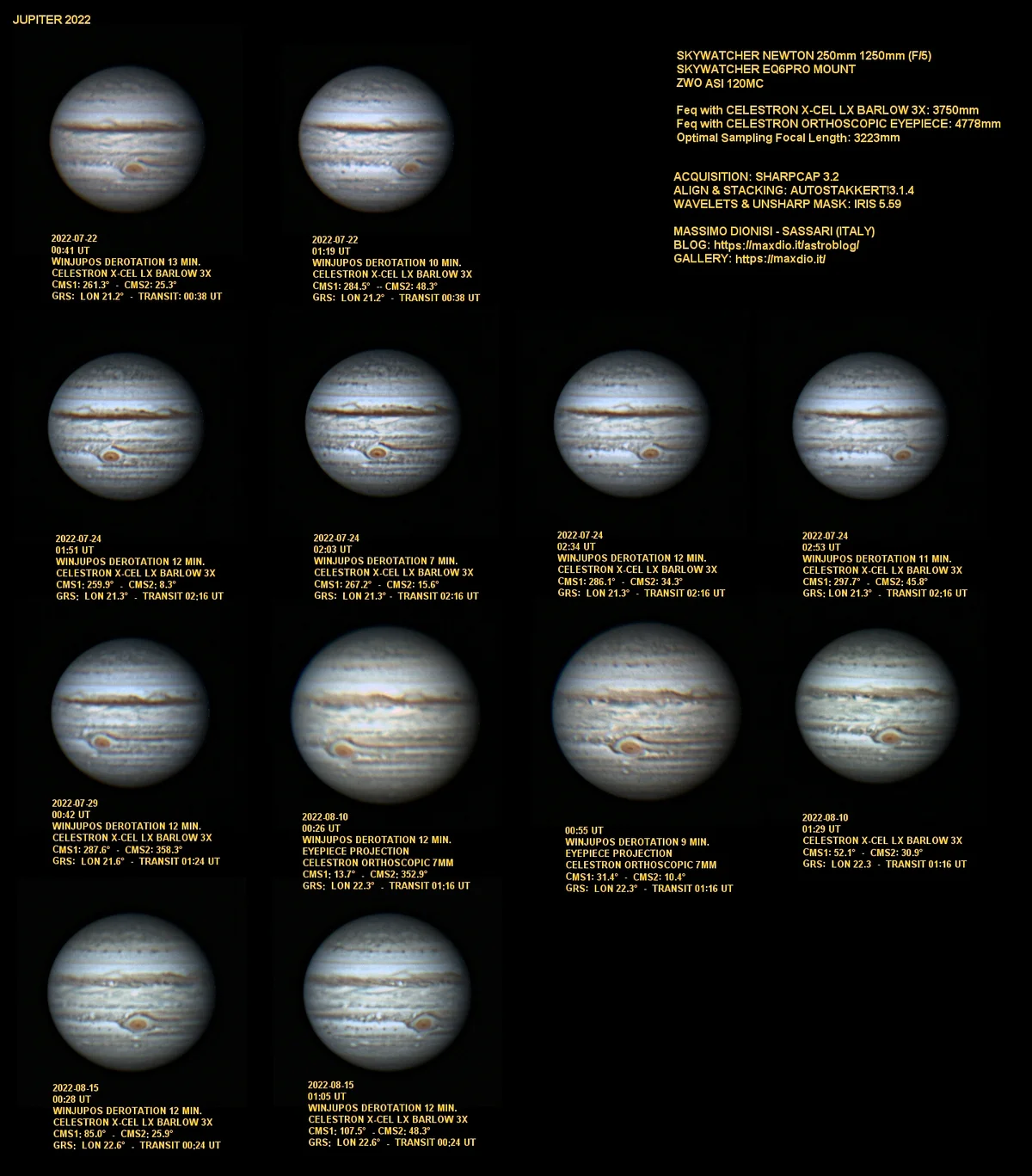
By this time, Jupiter had risen to a good height for observation. However, I needed to use my polarizing filter to reduce its brightness. The cloud bands were remarkably visible, and overall, the seeing conditions that night were quite good.
With the polarizing filter attached, I then turned my attention to the moon. At low magnification (42×), the craters at the terminator were already impressive. The view became even more stunning at 127x magnification, with no flickering visible, allowing for a completely undisturbed view of the crater rims.
Orion to Conclude
After observing the moon and Jupiter, I took a short break to allow my eyes to readjust to the darkness. Once enough time had passed, I moved on to the final object of the evening—the Orion Nebula M42 in the constellation Orion. Despite the bright moonlight, it revealed fine structures and was truly beautiful to behold.
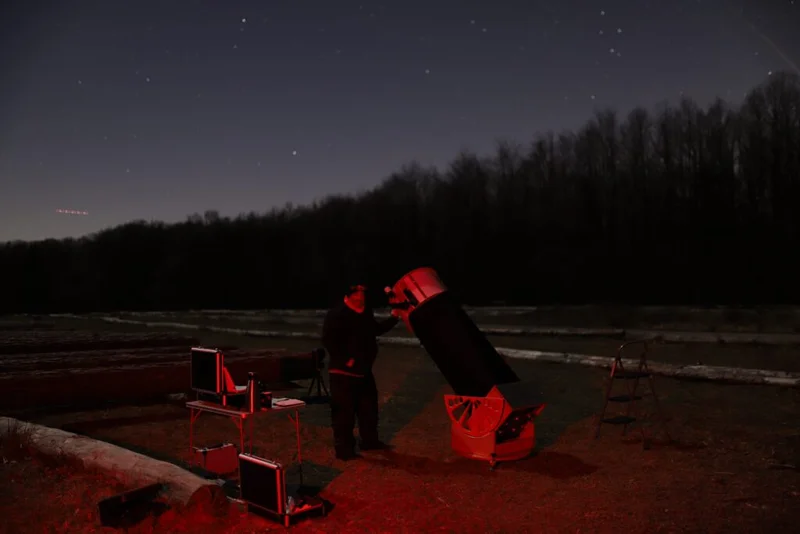
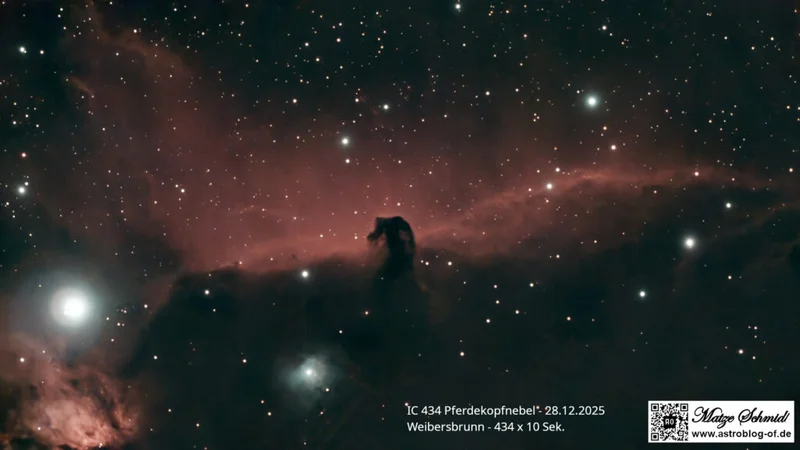
While observing the last few objects, I also set up the Seestar to capture the Horsehead Nebula. Since Andi's photos were not yet finished, I kept him company while the Seestar continued its exposure. I periodically checked back on the Dobson to revisit M1 and M81/M82.
Around 12:30 AM, we finally made our way home. Despite the intrusive moonlight, it was an enjoyable evening of observation. Now, I can only hope for more opportunities in the coming year.
To conclude, here is the final image of the Horsehead Nebula. Unfortunately, I only managed to capture 434 × 10 seconds of exposure time—something I definitely need to increase next time.