Observations from the Solar Eclipse on August 12
Germany witnessed a deep partial solar eclipse on August 12, with observers sharing their experiences and preparations for the event.
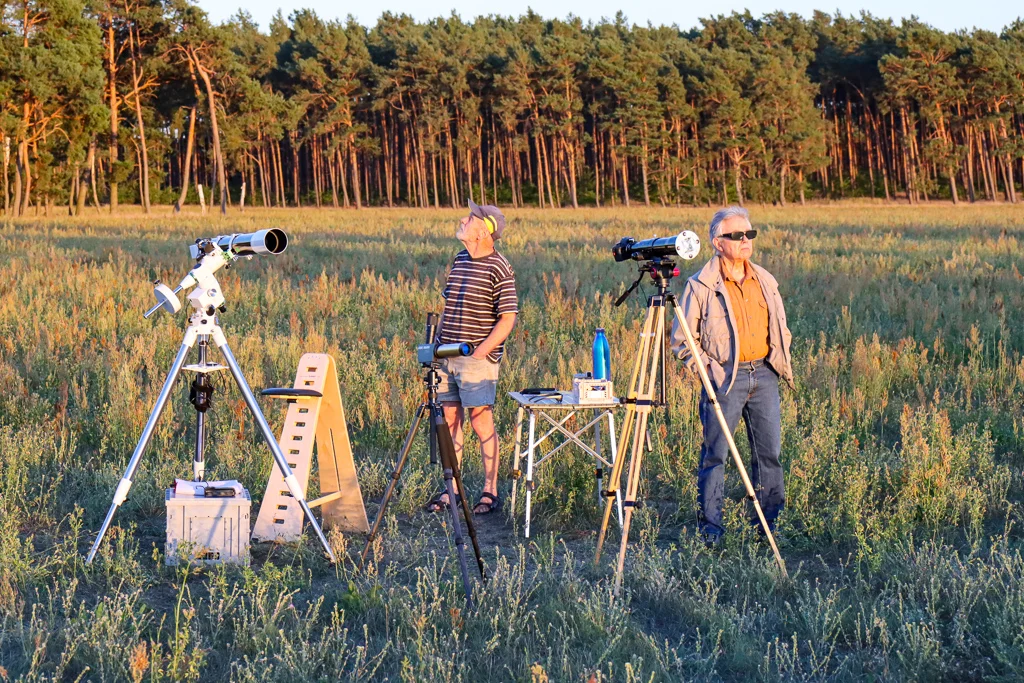
On August 12, Germany experienced a deep partial solar eclipse, marking the first such event in over eleven years. While vacationers in central Spain and the Balearic Islands witnessed a total eclipse at sunset, I took the day off to observe this natural spectacle from my usual spot in Radensdorf. This location offers a clear horizon view, just one to two degrees above the horizon.
I equipped myself with a 4-inch Skywatcher apochromatic refractor fitted with a Herschel wedge from APM, mounted on a compatible tracking system. Additionally, I had a 2-inch apochromatic telescope from Omegon with Baader solar film, as well as a Coronado PST H-alpha telescope.
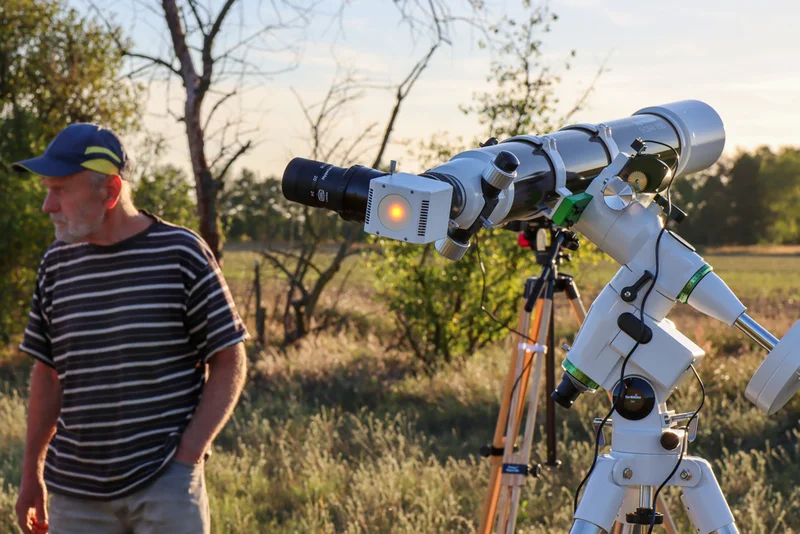
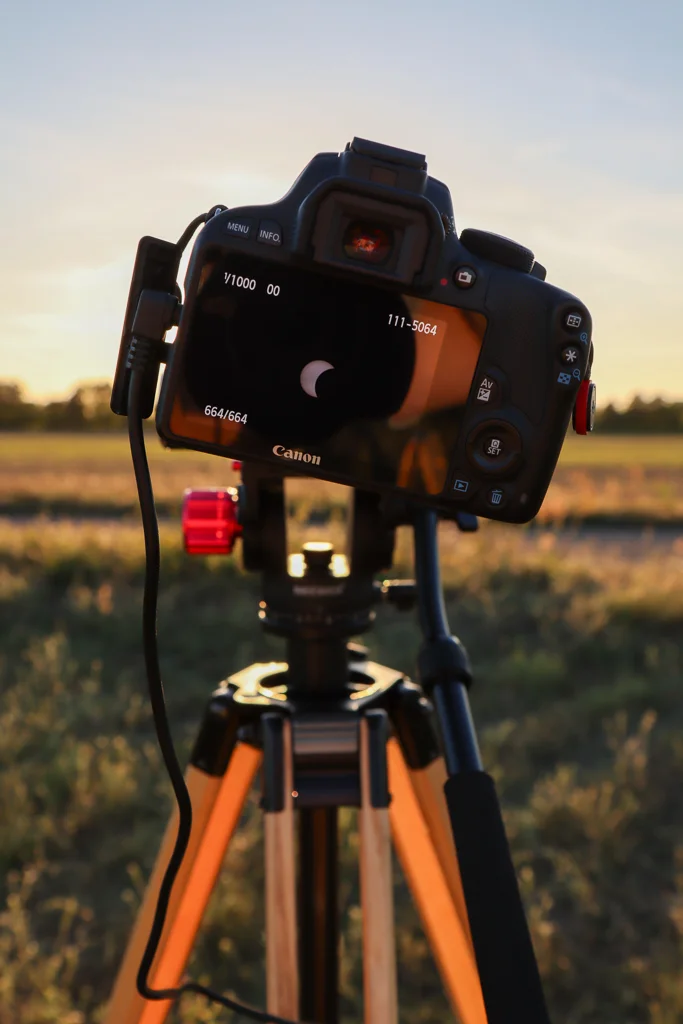
Arriving at the observation site shortly after 5 PM, I set up my equipment and attempted to capture the still-uncovered sun using the Herschel wedge on my Canon EOS 100D sensor. Unfortunately, I was unsuccessful. Even with ocular projection and the Hyperion zoom eyepiece, I couldn't achieve focus due to the short focal path. As a workaround, I employed the smaller apo telescope, initially intended for visual observation, which fortunately yielded satisfactory images despite the sun appearing small on the camera screen with only a few sunspot groups visible.
Shortly thereafter, my fellow observers arrived: my father and my longtime astronomy buddy, Horst. We began viewing the sun through the Skywatcher apo using the Herschel wedge, where we could see several solar prominences and the granulation of the sun. The seeing conditions were mediocre, likely due to the sun being only 12 degrees above the horizon. Unfortunately, we missed the first contact at 7:16 PM summer time, as we were captivated by an interesting prominence observed in the PST at around the 2 o'clock position, which visibly changed during our observation.
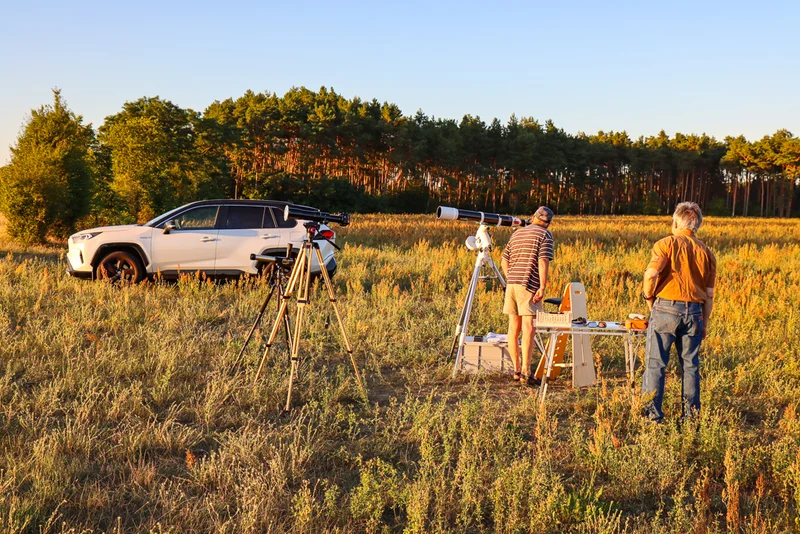
Meanwhile, about 400 meters from our observation site, more visitors gathered, likely attracted by the excellent western view. It was interesting to note the unusually high number of cars passing by without stopping to join us. After a brief drone flight, we noticed the temperature dropping and a pale, almost bluish light beginning to settle in, which was not due to the impending sunset. The speed at which the moon moved in front of the sun was astonishing, and soon, crescent-shaped sunlight appeared through the branches of nearby shrubs. At 8:09 PM, the eclipse reached its peak with a coverage of 87.6 percent for my hometown of Lübben, with the sun only three degrees above the west-northwest horizon.
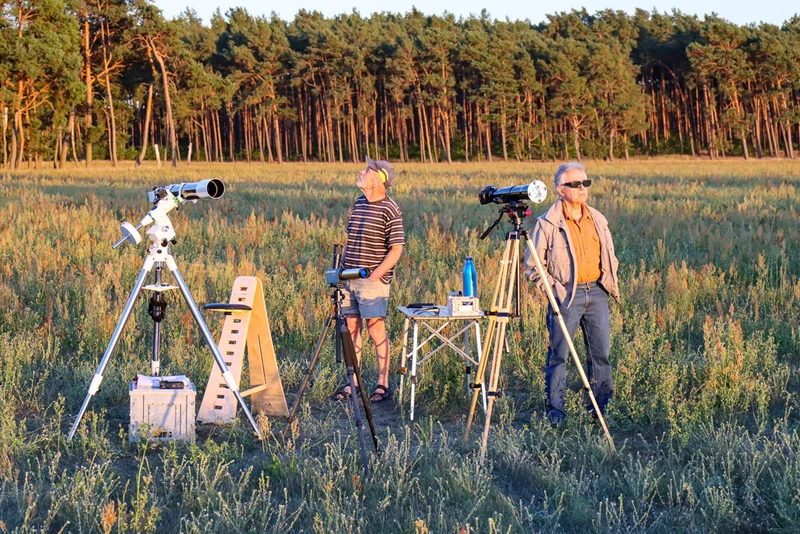
From that point on, we observed only with our eclipse glasses. The small H-alpha telescope was quickly relocated to another spot, allowing us to catch some remaining light between the trees. Finally, at 8:34 PM, the sun disappeared completely below the horizon, still partially eclipsed. After bidding farewell to my fellow observers, I packed my solar observation gear back into the car and prepared for a night of stargazing under the summer sky, coinciding with the Perseid meteor shower. Indeed, the night turned out to be clear and dry, with plenty of shooting stars gracing the sky.

P.S.: We won't have to wait long for the next partial solar eclipse visible from Germany. On August 2, 2027, another eclipse will occur, this time at midday and significantly higher in the sky. Our team member Stephan from the HTT-Südkurve was on the central line in Spain during this event and has already shared interesting results from his eclipse journey in our WhatsApp group.