NASA's Artemis II: Paving the Way for Human Return to Lunar Orbit
NASA's Artemis II mission marks the return of humans to deep space, testing vital systems for future lunar and Mars exploration. With a focus on reliability and long-term goals, the mission prepares for a new era of space exploration.
For over fifty years, no human has ventured beyond low Earth orbit. Since Apollo 17 in 1972, manned exploration has been limited to a few hundred kilometers above Earth, primarily around the International Space Station. With Artemis II, NASA is set to break this orbital confinement and reconnect with deep space.
The upcoming mission is not merely symbolic. It represents the first real-world test of a space system designed to take humans far beyond Earth’s protective embrace, towards the Moon and beyond. Beyond the stunning visuals, Artemis II poses significant engineering, reliability, and long-duration challenges.
Why Artemis II is a Pivotal Mission
Artemis II is neither a trivial test flight nor a landing mission. It occupies a crucial middle ground in the U.S. lunar strategy. Following Artemis I, an uncrewed mission that validated the Orion spacecraft and its high-speed atmospheric re-entry, Artemis II marks the return of humans to deep space.
The crew will embark on a multi-day journey around the Moon, intentionally avoiding a landing. This decision prioritizes the validation of vital systems: autonomous navigation, long-distance communications, energy management, radiation protection, and the crew's ability to operate far from immediate assistance.
Leaving Low Earth Orbit: An Underestimated Technological Leap
For the past two decades, astronauts have operated in a relatively sheltered environment. In low Earth orbit, Earth remains close, communications are nearly instantaneous, and emergency returns are feasible within hours. Beyond this boundary, everything changes.
Once astronauts cross the threshold of low Earth orbit, they leave behind the protective shield of Earth’s magnetic field. Exposure to cosmic radiation significantly increases, communication delays lengthen, and systems must function much more autonomously, without the possibility of rapid intervention from the ground.
This is precisely what Artemis II is set to test—not in a laboratory, but under real conditions.
Orion and SLS: Deliberate Choices for Robustness
Central to this mission is the Orion spacecraft. Designed to withstand re-entry speeds exceeding 39,000 km/h, it features redundant survival systems and enhanced radiation protection. Every component is engineered to endure long-duration flights in a hostile environment.
To launch Orion, NASA relies on the Space Launch System (SLS), one of the most powerful rockets ever built. Often criticized for its cost, the SLS is grounded in a clear philosophy: prioritize reliability over cadence. In human spaceflight, errors are not an option.
The Crew: Test, Observe, Learn
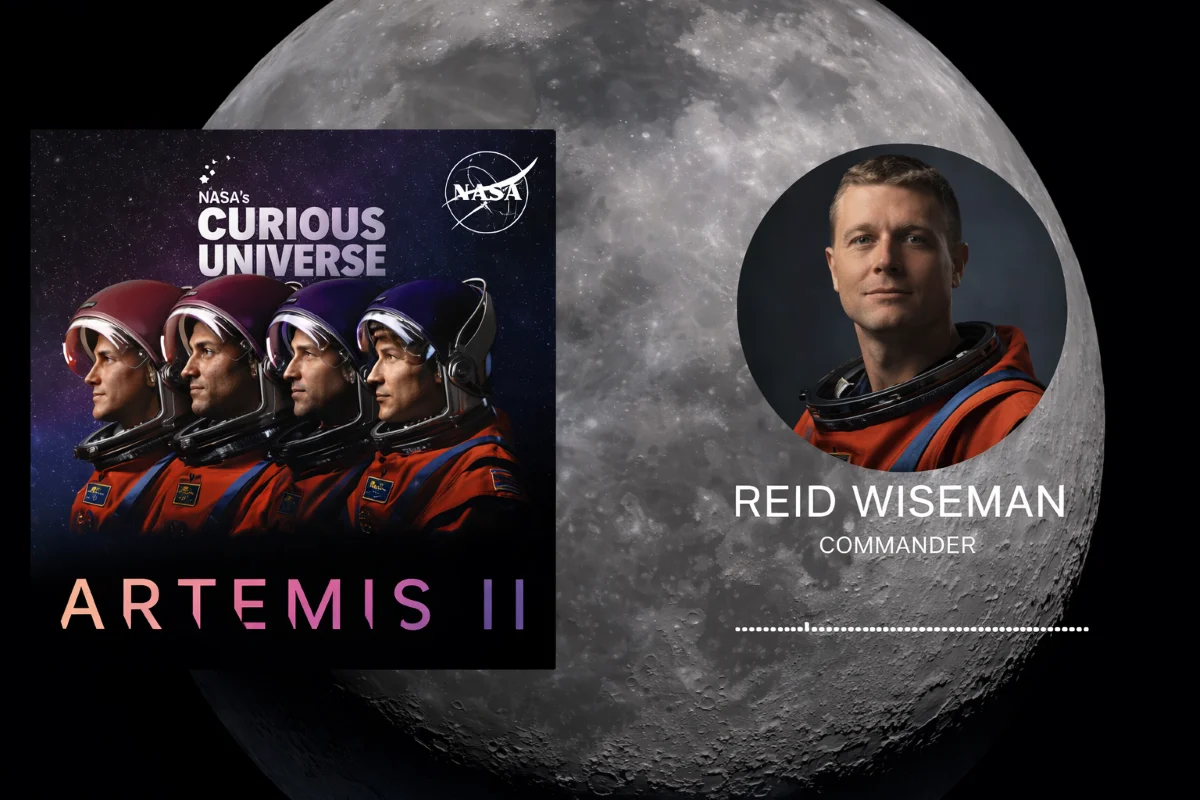
Commanded by astronaut Reid Wiseman, the Artemis II mission will include an international crew. Their role extends far beyond mere human presence. They will assess in real-time the spacecraft's ergonomics, mental load, coordination with mission control, and their ability to manage unforeseen situations.
Every piece of feedback will be invaluable. Artemis II is not an end in itself; it is a learning mission designed to prepare for Artemis III, which aims to land astronauts on the lunar surface for the first time in over fifty years.
The Moon as a Stepping Stone, Not a Final Destination
Why invest so much effort in a simple flight around the Moon? Because the Moon has become a strategic training ground. Close enough to Earth yet distant enough to test the constraints of interplanetary travel, it allows for the validation of technologies and procedures before embarking on much more ambitious missions.
Through Artemis, NASA is already laying the groundwork for the next step: Mars. Autonomous navigation, habitats, resource management, and human resilience to isolation—everything learned around the Moon will be crucial for future Martian missions.
A Return to Deep Space with a New Philosophy
Unlike the Apollo program, Artemis does not aim for a one-time achievement. It is part of a long-term vision. Space exploration is no longer a race but an industrial, scientific, and human project designed for sustainability.
By highlighting the engineering behind Artemis II, NASA underscores a reality often overlooked: modern space exploration relies less on heroism and more on rigor. It is the technical choices, redundancies, and invisible compromises that make possible the return of humans beyond Earth.
With Artemis II, humanity is not merely returning to the Moon. It is learning once again how to venture beyond.