Maximizing Your Chances of Observing the Eclipse
Observing an eclipse requires careful site selection. Wildfires, weather, and terrain can affect visibility. Here are tips and tools to enhance your viewing experience.
Observing an eclipse requires careful planning, especially when it comes to selecting the right viewing location. Factors such as wildfires, weather conditions, and geographical features can significantly affect your experience. Here are key considerations and tools to enhance your chances of witnessing this celestial event under optimal conditions.
The looming threat of wildfires is a pressing concern for sky enthusiasts, particularly following the devastating fires that occurred in July 2026, especially in regions like Gironde and northern Madrid. Those who have long awaited this astronomical event must take this reality into account when finalizing their observation site. It is crucial to avoid areas at risk of wildfires.
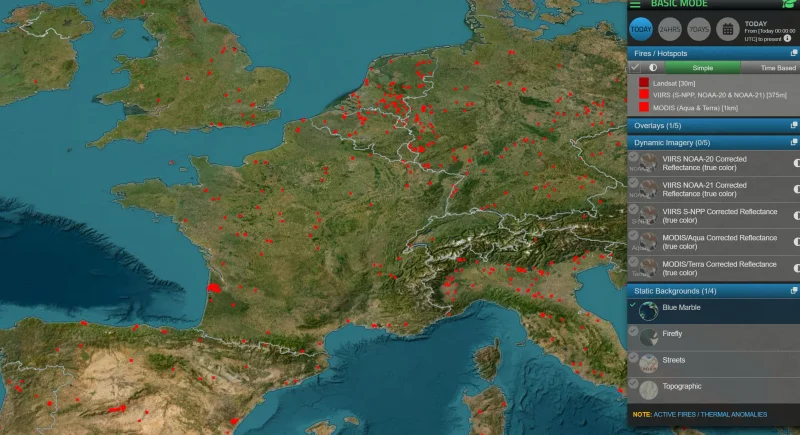
One useful resource is NASA's publicly accessible map, which displays active fires in real time, as well as those detected in the past 24 hours or the last seven days. You can explore this tool at the following link: https://firms.modaps.eosdis.nasa.gov/map/#d:today;@-1.1,45.6,6.3z.
Be Cautious of Smoke!
Where there is fire, smoke often follows. While fires tend to be localized, smoke can affect a much broader area, as evidenced by the smoke plumes from the Gironde fires that covered extensive regions. To monitor smoke dispersion, Ventusky.com is a valuable tool. This weather-focused site provides maps that forecast the spread of various pollutants. By selecting the "Air Quality" section and choosing the PM2.5 indicator, which represents fine particulate matter with a diameter of 2.5 µm or less, you can visualize smoke presence and its movement direction.
However, it's important to note that these maps do not predict the evolution of fires themselves, so they cannot accurately forecast the future impact of smoke.
In the event of a south wind, it is advisable to cross-reference this information with carbon monoxide (CO) maps. This helps ensure that observed PM2.5 concentrations are indeed due to smoke rather than desert dust from the Sahara. When both indicators align, it is more likely that you are dealing with a smoke plume.
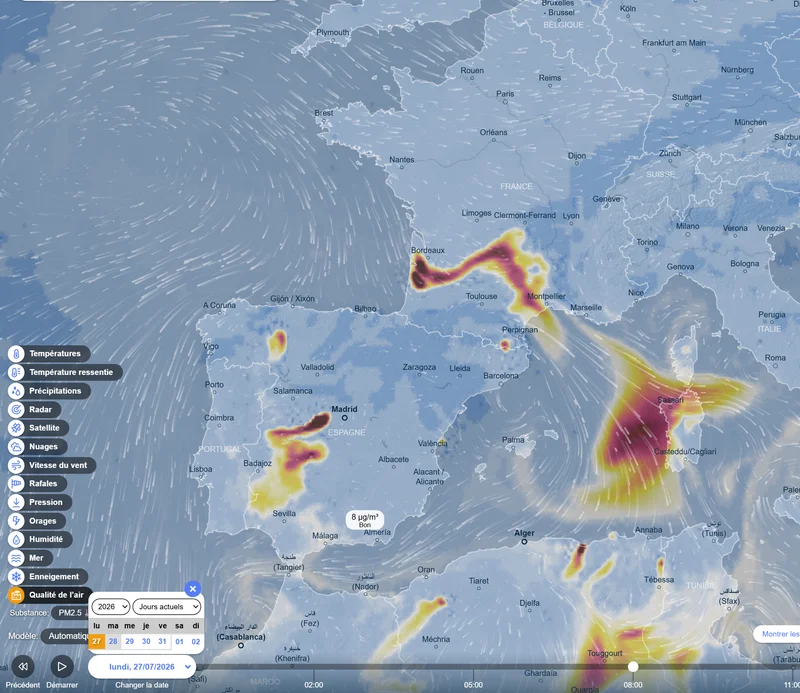
Particular caution should be exercised if smoke is detected to the northwest, even at a considerable distance. The Sun will be low in that direction during the eclipse, and these particulates can obstruct visibility over vast distances, potentially affecting observations up to hundreds of kilometers away. To maintain a safe distance, try to position yourself at least 100 km away from any smoke plumes: https://www.ventusky.com/fr/pollution-de-lair-carte/pm25#p=43.0;11.4;5&t=20260727/0600.
Beware of Storms
While on Ventusky, this tool can also assist in anticipating weather conditions. The approach is similar: avoid being under cloud cover and, as much as possible, steer clear of storms in the direction of the Sun. Storms pose the most significant meteorological risk during this season. A safety distance of about 100 kilometers is recommended to avoid storm clouds, which can expand rapidly and cover large areas.
For more detailed insights on the best regions in Spain for eclipse viewing, refer to our special edition dedicated to the eclipse.
Check the Horizon Line
Given the possibility of needing to change your observation site at the last minute, we recommend using a map produced by the Spanish National Geographic Institute. This well-designed tool allows you to verify whether a specific observation point will be clear during the eclipse.
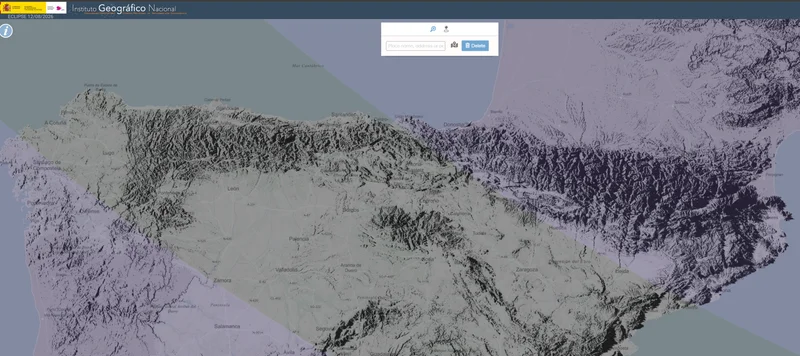
When searching for a location, be cautious of areas marked in black on the map after zooming in on your chosen site: https://visualizadores.ign.es/eclipses/2026.
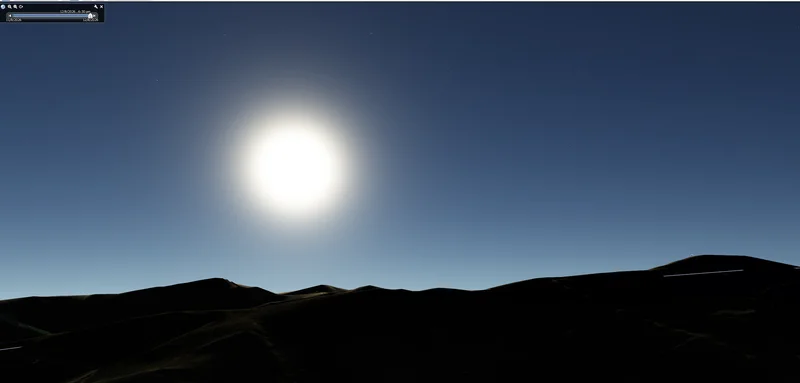
Additionally, be mindful of trees that could obstruct your view. Google Street View, available through Google Maps and Google Earth, can help with this. Simply drag the yellow figure to your desired location (note that this only works on roads, and some secondary routes may not be available). You can also visualize the Sun in the sky by selecting the Sun option in the View menu. To adjust the time, click the wrench icon in the upper left corner.
Organized Viewing Sites
For those seeking guaranteed observation sites, consider participating in organized events in Spain. A map of these locations is available on the RTVE website.
In many cases, prior registration is necessary to secure a spot. If you opt for a different site, be sure to check local restrictions. In Aragon, for example, driving on forest tracks is prohibited, while in La Rioja, driving on tracks is banned from 12 PM to 3 PM and from 7 PM to 7 AM. In Catalonia, protected natural areas will be closed. Similar restrictions are in place in the Balearic Islands. Generally, any behavior that could potentially ignite a fire may result in fines of up to €100,000 for the most severe infractions.
Good luck and enjoy your observations!