Jupiter: A Gateway to Understanding Our Solar System
Jupiter is the largest planet in the Solar System, containing more mass than all other planets combined and featuring a complex atmosphere with storms, rings, and 16 moons.
Jupiter
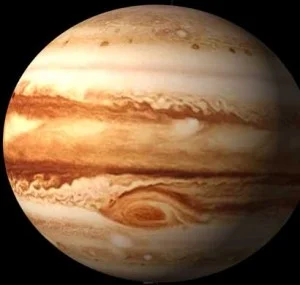
Jupiter stands as the largest planet in our Solar System, boasting more mass than all the other planets combined. Its volume is an astonishing one thousand times that of Earth.
This gas giant features a faint ring system that remains invisible from our planet. Additionally, it is orbited by 16 moons, four of which were first observed by Galileo in 1610, marking a significant moment in the history of astronomy as it was the first time anyone used a telescope to observe celestial bodies.
The planet's composition is similar to that of the Sun, primarily made up of hydrogen and helium, with trace amounts of ammonia, methane, water vapor, and other compounds.
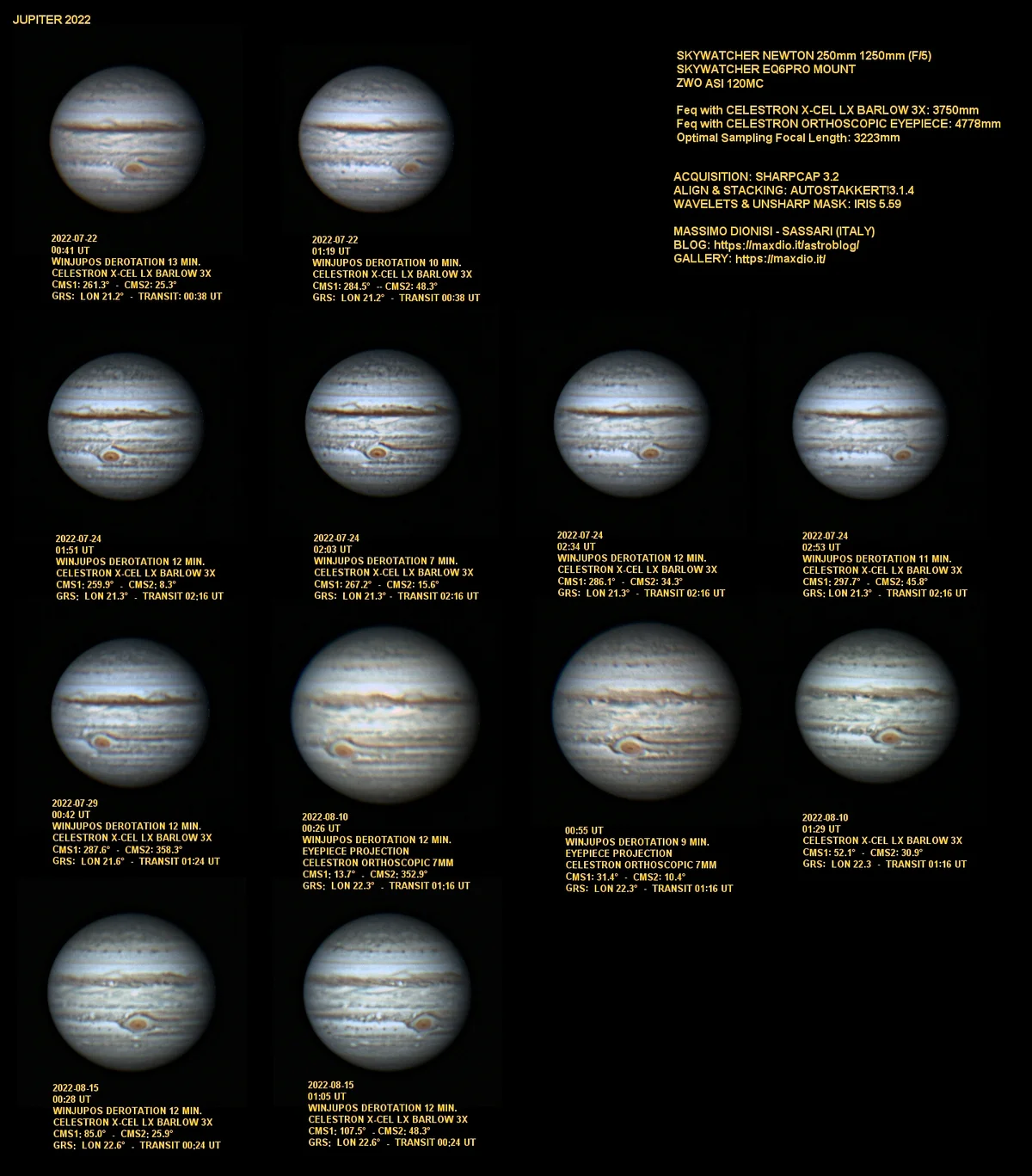
Jupiter exhibits the fastest rotation among all planets, resulting in a complex atmosphere filled with clouds and storms. This dynamic environment gives rise to its distinctive colorful bands and various spots.
Among its most notable features is the Great Red Spot, a colossal storm larger than Earth itself, which has been raging for over 300 years and generates winds reaching speeds of 400 km/h.
Jupiter's rings are simpler compared to those of Saturn, consisting mainly of dust particles ejected into space when meteoroids collide with its inner moons.
Both the rings and moons of Jupiter are ensconced within a vast radiation bubble, trapped in the planet's magnetosphere. This immense magnetic field extends between 3 and 7 million kilometers toward the Sun and stretches over 750 million kilometers in the opposite direction, reaching the orbit of Saturn.
The Moons of Jupiter
Four centuries ago, Galileo pointed his rudimentary telescope at Jupiter and discovered three tiny points of light nearby. A few days later, he identified a fourth moon. These could not be stars, as they were observed orbiting the planet, revealing them to be satellites—an unprecedented finding in the history of planetary observation.
Since then, an additional 12 smaller moons have been identified, bringing the total to 16. The Voyager spacecraft provided a detailed study and imaging of Jupiter's system in 1979, and in 1996, a new project named after Galileo was initiated to observe Jupiter and its moons over an extended period.
Ganymede
Ganymede is the largest moon of Jupiter and the entire Solar System, with a diameter of 5,262 kilometers, surpassing that of both Pluto and Mercury. It orbits Jupiter at a distance of approximately 1,070,000 kilometers, completing a revolution in just over seven days. Ganymede appears to have a rocky core, an icy mantle, and a crust composed of rock and ice, featuring mountains, valleys, craters, and lava rivers.
Callisto
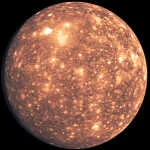
With a diameter of 4,800 kilometers, nearly the same as Mercury, Callisto orbits at a distance of 1,883,000 kilometers from Jupiter, taking 17 days to complete one orbit. It is recognized as the most heavily cratered moon in the Solar System, composed of roughly equal parts rock and water ice. Its icy ocean camouflages many of its craters, and it has the lowest density among Galileo's four largest moons.
Io
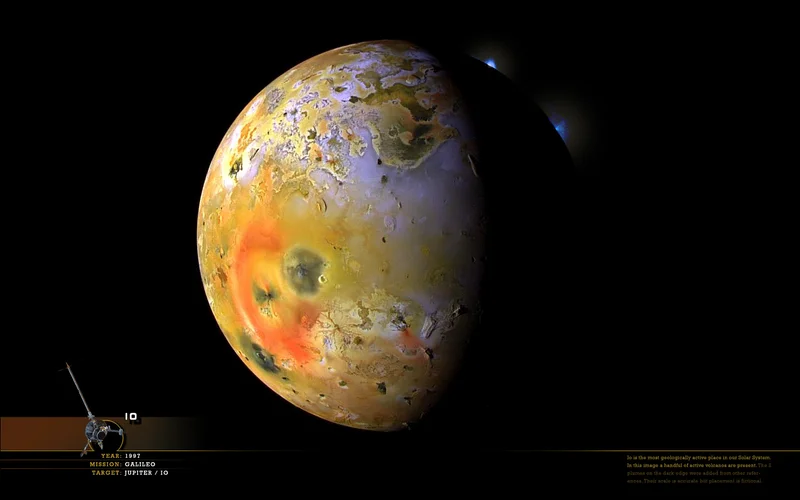
Io, with a diameter of 3,630 kilometers, orbits Jupiter at a distance of 421,000 kilometers, completing its revolution in just over a day and a half. Its orbit is influenced by Jupiter's magnetic field and the gravitational pull from nearby Europa and Ganymede. Io is a rocky moon characterized by intense volcanic activity. While its average temperature hovers around -143°C, a specific region, a lava lake, reaches temperatures of 17°C.
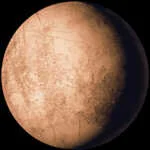
Europa
Europa has a diameter of 3,138 kilometers and orbits between Io and Ganymede, at a distance of 671,000 kilometers from Jupiter. It completes an orbit every three and a half days. The surface of Europa resembles a frozen sphere marked with distinctive lines, likely fractures in the crust that have refilled with water and subsequently frozen.