
Exploring Valles Marineris: Insights from the VaMEx Field Test
The VaMEx project aims to explore Valles Marineris on Mars, testing robots and drones in a quarry in Bavaria. This article covers the field test and insights into DLR's Explorer initiatives.
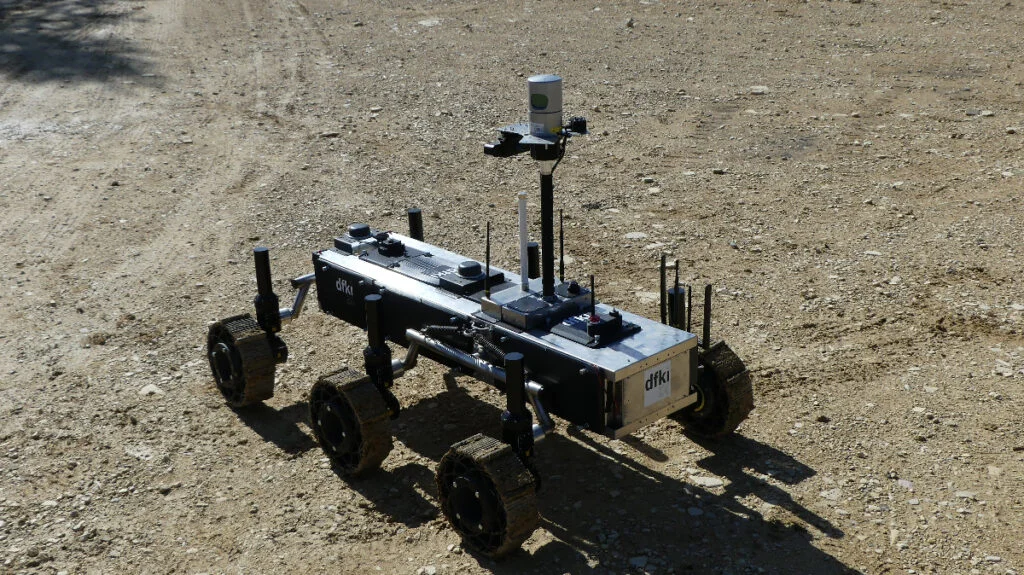
In July 2025, a field test was conducted at a former quarry in Bavaria as part of the Valles Marineris Explorer (VaMEx) project. This initiative aims to explore the vast Valles Marineris canyon system on Mars and investigate potential life within this unique geological formation. During the field test, various robots and drones were tested in an environment that mimics Martian conditions. I had the opportunity to participate for a day and conducted interviews with several project participants. Additionally, I explored the Explorer initiatives of the German Aerospace Center (DLR).
VaMEx and the Field Test
The VaMEx project focuses on developing technologies necessary for the exploration of Valles Marineris. Dr. Oliver Funke, one of the project's key figures, provided insights into the objectives and methodologies employed during the field test. The project aims to enhance our understanding of Mars and the potential for life there.
Robotic Innovations
The field test showcased a variety of robotic technologies, including autonomous mobile robots and unmanned aerial vehicles (UAVs). These machines are designed to navigate and gather data in challenging terrains, akin to those found on Mars. Notably, the JANUS rover was highlighted for its capabilities in traversing rocky landscapes.
Collaborations and Future Prospects
The project involves collaboration with various institutions, including the German Research Center for Artificial Intelligence (DFKI) and the University of Würzburg. The DFKI's contributions include the development of robust ground exploration technologies and advanced navigation systems to ensure precise positioning and orientation during missions.
The University of Würzburg is also playing a significant role, particularly in orchestrating swarms of robots for Mars exploration. Their project, VaMEx3-MarsSymphony, aims to enhance our understanding of the Martian environment and improve exploration strategies.
The Explorer Initiatives
Further discussions with Dr. Funke revealed the broader scope of the DLR's Explorer initiatives, which extend beyond Mars. The Enceladus Explorer and Europa Explorer projects are designed to investigate the potential for life on these icy moons. These initiatives reflect a growing interest in exploring celestial bodies that may harbor life.
The DLR's commitment to advancing space exploration is evident through its various projects, including the TRIPLE exploration system, which aims to enhance our understanding of planetary systems and their potential for hosting life.
As we continue to prepare for future missions, the insights gained from the VaMEx project will be invaluable. The field tests not only advance our technological capabilities but also deepen our understanding of the challenges and possibilities of exploring distant worlds.
Conclusion
The VaMEx project represents a significant step forward in our quest to explore Mars and understand its potential for life. As technology evolves and collaborations deepen, the future of planetary exploration looks promising, with the Valles Marineris canyon system at the forefront of our investigations.