Exploring the James Webb Space Telescope: A New Era in Astronomy
The James Webb Space Telescope is the most powerful space observatory, designed to explore the universe in unprecedented detail, revealing secrets about stars, galaxies, and potential exoplanets.
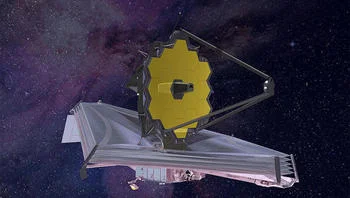
The James Webb Space Telescope (JWST) stands as the largest and most powerful space telescope ever constructed, poised to revolutionize our understanding of the universe. This groundbreaking observatory is designed to delve deep into the cosmos, uncovering the mysteries of stellar formation, the evolution of galaxies, and the potential for life beyond Earth.
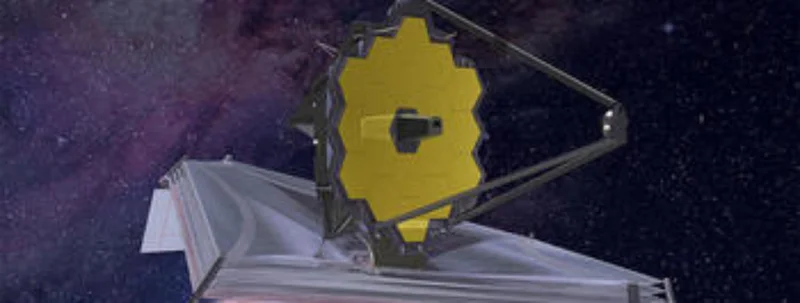
Launched on December 25, 2021, JWST is a collaborative effort between NASA, the European Space Agency (ESA), and the Canadian Space Agency (CSA). Its primary mission is to observe the universe in infrared wavelengths, allowing it to see through cosmic dust and gas that often obscure celestial objects from view. This capability is essential for studying the early universe, as it enables astronomers to observe the formation of stars and galaxies that occurred billions of years ago.
The telescope features a large segmented mirror with a diameter of 6.5 meters, which is significantly larger than its predecessor, the Hubble Space Telescope. The increased size enhances its light-gathering ability, making it possible to capture faint light from distant astronomical objects.
One of the most exciting aspects of JWST is its ability to identify exoplanets and analyze their atmospheres. By measuring the light that filters through a planet's atmosphere during transits, scientists can determine the chemical composition and potential habitability of these distant worlds. This could lead to groundbreaking discoveries regarding the prevalence of life-supporting conditions in the universe.
The JWST's observations are expected to provide insights into various phenomena, including supernovae, black holes, and the intricate dynamics of star formation within nebulae. Its advanced technology will allow astronomers to explore the universe with unprecedented clarity and detail, paving the way for new questions and discoveries in the field of astronomy.
As JWST begins its scientific operations, the astronomical community eagerly anticipates the wealth of data it will produce. The telescope’s findings could reshape our understanding of the cosmos and our place within it, making it a pivotal tool for both current and future generations of scientists.
Conclusion
In summary, the James Webb Space Telescope represents a monumental leap forward in our quest to understand the universe. With its powerful capabilities and innovative design, it is set to unveil the secrets of the cosmos and inspire a new era of exploration and discovery in astronomy.