AstronomiAmo APS AstroBlog - The January 2025 Conjunction of Venus and Saturn
On January 19, 2025, Venus and Saturn will meet in a spectacular conjunction. Discover what planetary conjunctions are, how to observe this event, and tips for astronomical photography.
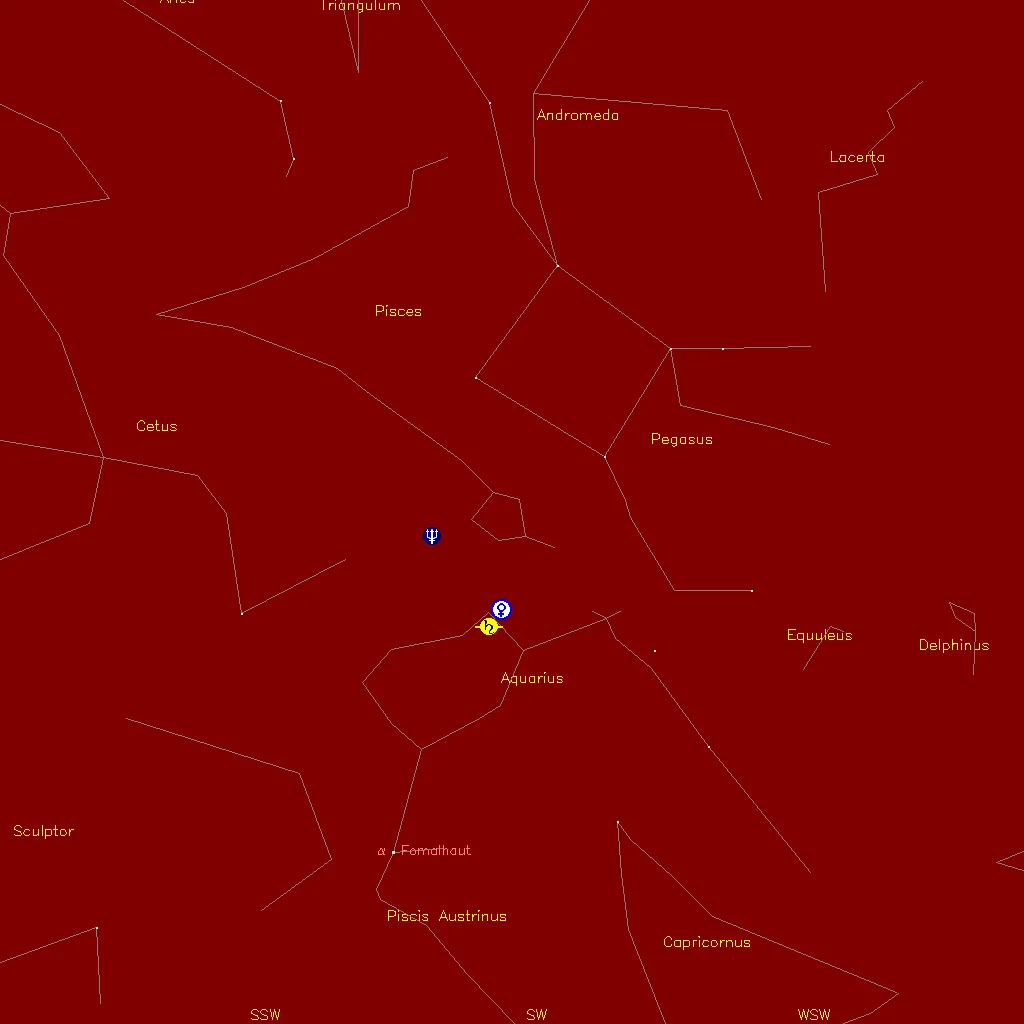
The night sky serves as a captivating stage for all, showcasing celestial bodies in motion that create both predictable and spectacular configurations. Among the many astronomical displays, planetary conjunctions stand out as particularly fascinating events. During these moments, two or more celestial bodies appear to draw close together in the sky, forming striking luminous arrangements. On January 19, 2025, observers will have the chance to witness such an event: a conjunction between Venus, a brilliant evening star at the time, and Saturn.
What Are Conjunctions?
In the realm of astronomy, a conjunction occurs when two celestial objects—such as planets, stars, the Moon, or asteroids—appear very close to each other in the sky from the perspective of Earth.
This phenomenon is purely a matter of perspective; the two objects are not physically near each other in space but are simply aligned along our line of sight. Imagine watching two cars traveling on parallel roads far apart; from a certain angle, they might seem almost overlapping while being separated by miles. Similarly, planets in conjunction appear close in the sky, even though their actual distances in space are vast. On the evening of January 19, 2025, Venus will be approximately 0.61 AU from Earth, while Saturn will be at a distance of 10.28 AU. For further details, one can refer to the SkyTour pages regarding the ephemerides of Venus and Saturn.
The Astronomical Units (AU) measure the average distance between the Earth and the Sun, which is about 150 million kilometers.
Planetary conjunctions happen because planets orbit the Sun in nearly coincident orbital planes (the ecliptic). Consequently, their apparent positions in the sky periodically come close together. The frequency of conjunctions between two specific planets depends on their orbital periods.
Venus and Saturn: A Rare Encounter
Conjunctions between Venus and Saturn are not particularly common. Unlike the monthly conjunctions involving the Moon, those between planets occur less regularly. The last time Saturn and Venus aligned in the evening twilight was on June 22, 2023, with the two celestial bodies even closer than they will be on January 19, 2025. However, while these events are not a daily sight, the interval between conjunctions is not excessively long.
Observing the January 19, 2025 Conjunction
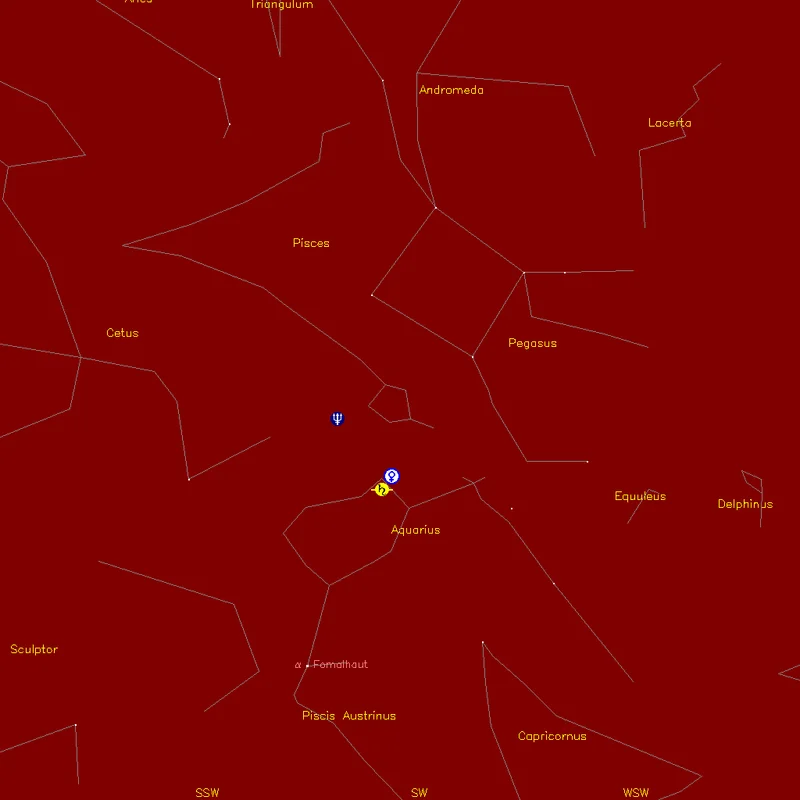 On January 19, 2025, Venus and Saturn will appear about 2° apart in the constellation Aquarius. They will be visible shortly after sunset in the western horizon. Venus, with its high brightness (an apparent magnitude of approximately -4.6), will dominate the view, while Saturn (with an apparent magnitude of about +1) will appear as a less intense bright spot but still easily visible to the naked eye in clear, dark skies. If you don't spot it immediately, don't be alarmed; Venus's brilliance can be misleading, but with a little patience, locating the second planet shouldn't be too difficult.
Tips for Observation and Photography
- Find a location with an unobstructed western horizon: Buildings, trees, or mountains may block the view of the planets, especially just after sunset.
- Observe right after sunset: The two planets will set a few hours after the Sun, so it's advisable to begin observations shortly after twilight.
- Use binoculars: Even modest binoculars can enhance the experience, allowing for a better appreciation of the proximity of the two planets and the ability to discern Saturn's disk.
- Utilize a telescope: A telescope with moderate magnification will enable you to see Saturn's rings, making the observation even more captivating. In January 2025, the rings will be tilted just 3.7% relative to the observational plane, so they won't appear very open from Earth.
- Photographing the conjunction: A digital SLR camera with a wide-angle lens or a telephoto lens can be used for photography. It's advisable to use a tripod to avoid motion blur. Set an exposure time of 2-3 seconds and keep the ISO not too high to minimize noise.