After the Eclipse, a Shower of Shooting Stars Awaits
Following the total solar eclipse, the Perseids meteor shower will peak on August 12-13, 2026, under ideal viewing conditions, promising an exceptional celestial display.
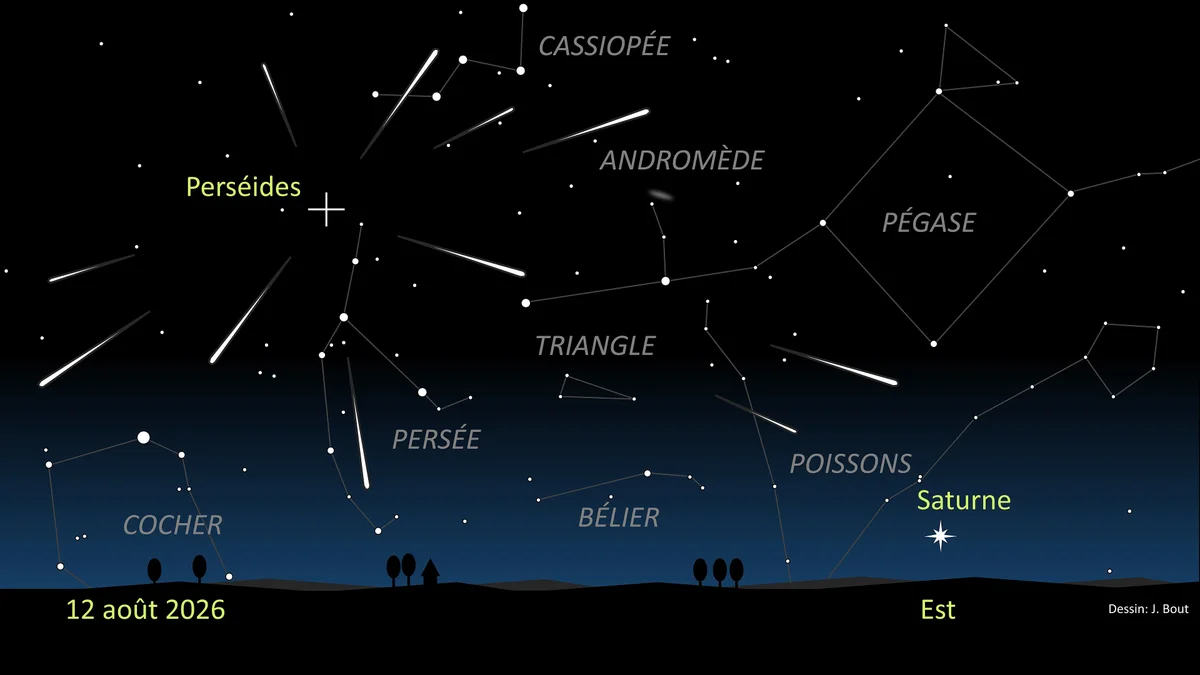
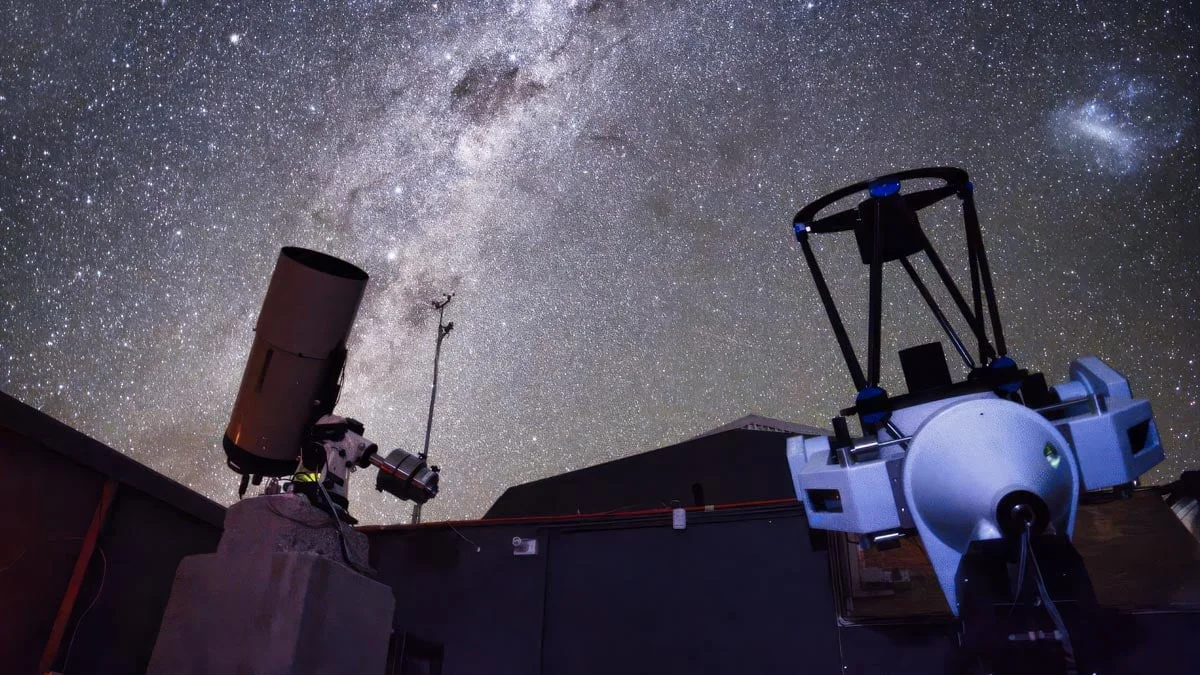
As the total solar eclipse draws to a close, stargazers can look forward to another celestial event of great significance. The night of August 12 to 13 will see the Perseids reach their peak activity, offering a spectacular display under a perfectly dark sky. This unique combination of circumstances makes 2026 an exceptional year for witnessing shooting stars.
A Celestial Finale
The Perseids will peak just hours after the solar eclipse on August 12, creating a remarkable astronomical week. Such an occurrence, where two of the year’s most stunning celestial events follow one another, is a rare treat.
The Perseids, along with the Geminids in December, are one of the two major meteor showers of the year. While the Geminids often boast greater numbers, they are frequently hindered by unpredictable weather and cold winter temperatures. In contrast, the Perseids benefit from warm summer nights, contributing to their enduring popularity.
Ideal Viewing Conditions
The 2026 meteor shower promises to be extraordinary. The total eclipse coincides with the New Moon, meaning the moon will be absent throughout the night, allowing for optimal visibility of the meteors without lunar interference.
The peak of activity is expected around 21:00 UTC on August 12, which translates to 23:00 in France and Spain. This timing is particularly favorable for European observers, who are well-placed to enjoy the show. Unlike some meteor showers that experience a brief peak, the Perseids maintain a steady activity for several hours before and after the theoretical maximum, providing a generous window for observation.
At the peak, the radiant point—the area in the sky from which the meteors appear to originate—will rise to about 20 degrees above the northeastern horizon. As the night progresses, it will ascend even higher, reaching nearly 70 degrees by dawn. The higher the radiant, the more meteors will be visible.
The Legacy of Comet Swift-Tuttle
Each year, Earth passes through a vast cloud of dust left behind by comet 109P/Swift-Tuttle. Tiny particles, measuring just a few millimeters, enter the atmosphere at speeds of 59 km/s. Heated to thousands of degrees, these particles burn up, creating the bright streaks we call shooting stars.
However, this dust cloud is not uniform. As the comet orbits the Sun, it deposits denser filaments of dust in some areas. When Earth encounters one of these denser regions, meteor activity can surge.
Researcher Jérémie Vaubaillon from the Laboratoire Temps-Espace predicts an initial increase in activity around 16:53 UTC, linked to dust released during the comet’s passage in 1079. Unfortunately, this surge will occur during daylight hours in Europe.
American astronomer Peter Jenniskens anticipates a potential encounter with another dust filament around 1:00 UTC, though with a five-hour uncertainty. If this prediction holds true, this surge could be observable from parts of Europe during the night.
Overall, observers in France can expect to see between 60 and 80 meteors per hour under a dark sky, far from artificial lights. Those with patience might even witness more if one of the filaments proves to be particularly active.
The Best Tool? Your Eyes!
Unlike planets or galaxies, shooting stars are best observed with the naked eye rather than through telescopes or binoculars. The entire night sky serves as their stage, making the human eye the ideal instrument.
Settle into a comfortable chair, allow your eyes to adjust to the darkness for 5 to 10 minutes, and scan the sky as a whole rather than fixating on a specific point.
Meteors can appear in any direction, though their paths will seem to converge toward the constellation Perseus, which lends its name to the shower. Early in the night, Perseus rises in the northeast, just below the easily recognizable Cassiopeia, which resembles a sideways “W” in the evening sky.
With no moon, a favorable peak for Europe, and the possibility of additional surges, the 2026 Perseids have all the ingredients for an extraordinary night of observation.
Find Your Dark Sky Spot
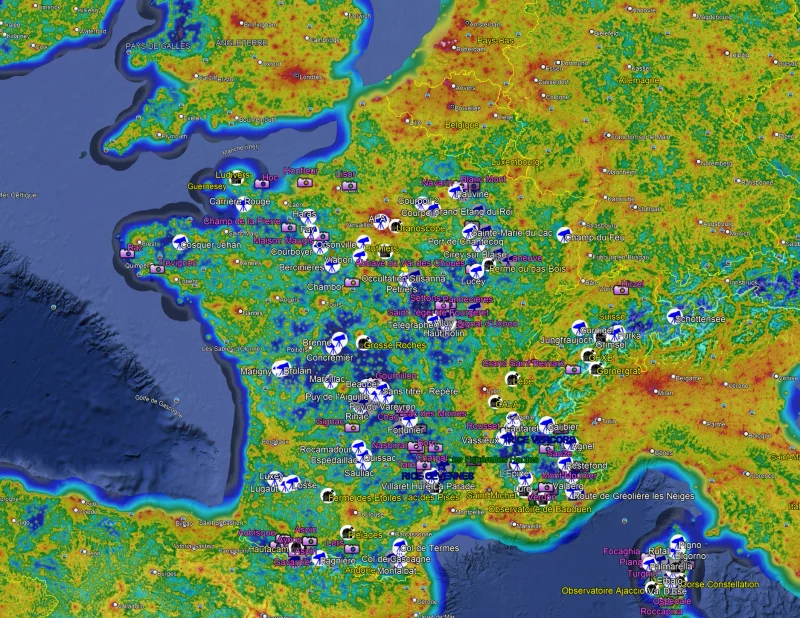
To fully enjoy the spectacle, seek out a location with a truly dark sky. The advantage of a moonless night will be lost if you remain in an urban area. To locate a suitable spot, you can refer to the dark sky map from Ciel & Espace.
There are three ways to access it. In any case, you will need to download it by clicking here or at the address: https://bit.ly/4yJc8Km (copy and paste the link if necessary). You can also scan the QR code below with your smartphone to obtain a file named: cielnoir_ciel_et_espace.kmz.
We recommend accessing it via the free Google Earth Pro software on your computer, as it provides the smoothest navigation. If you have the software installed, simply open the cielnoir_ciel_et_espace.kmz file, and it will launch automatically. If that doesn’t work, start the software and open the file manually using the File/Open menu.
You can also use the online version of the software or the smartphone app. Just open the file by going to the main menu and selecting Projects/New Project/Import KML File.
Each point on the map is clickable, providing access to associated information and precise geographic coordinates. In the smartphone version, you need to click on the names instead of the pictograms.