Thirty-Four New Variable Stars Discovered by an Amateur Astronomer from Sorrento
Observing a star that has never been studied before and knowing that you have contributed, through your work, to expanding the knowledge of the Universe is the dream of anyone involved in astronomical research.
Observing a star that has never been studied before and knowing that you have contributed, through your work, to expanding the knowledge of the Universe is the dream of anyone involved in astronomical research, whether professional or amateur.
For Nello Ruocco, an amateur astronomer at the "Nastro Verde" Astronomical Observatory in Sorrento (MPC code C82), that dream became a reality with the publication of the study Thirty-Four New Variable Stars Discovered in Lacerta in the Open European Journal on Variable Stars (OEJV).
The article, peer-reviewed and published in issue 272 of the journal (June 2026), presents the discovery and characterization of 34 new variable stars in the constellation Lacerta, observed between 2011 and 2019.
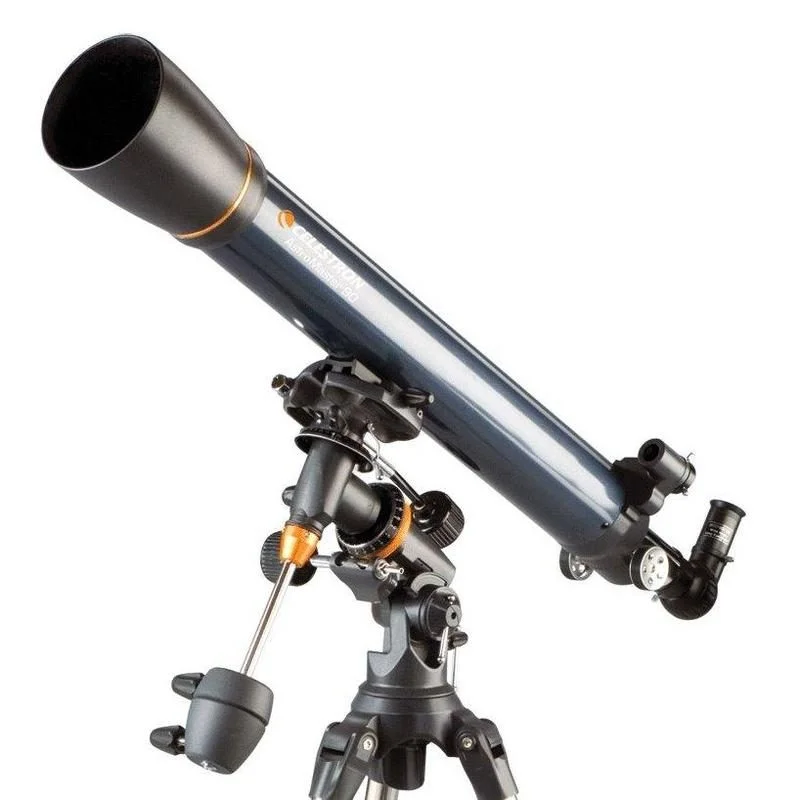
The investigation was entirely conducted by the "Nastro Verde" Observatory, using a 25 cm Meade LX200 Schmidt-Cassegrain telescope, SBIG CCD cameras, and differential photometry techniques, which allow for extremely precise measurements of the stars' brightness variations.
The 34 identified variables include:
- 24 W UMa-type contact binaries (EW);
- 8 Algol-type eclipsing binaries (EA);
- 4 Beta Lyrae-type systems (EB);
- 2 Delta Scuti candidates, one of which may belong to a different class, paving the way for further studies.
A particularly noteworthy result is the assignment of official designations in the General Catalogue of Variable Stars (GCVS) to three of the discovered stars, now registered as V0688 Lac, V0910 Lac, and V0912 Lac. Entering the GCVS means that these stars are now part of the international reference catalog for the study of variable stars.
The study was further enriched by the analysis of data from the Gaia DR3 satellite, which allowed for the construction of a color-magnitude diagram useful for confirming the nature of the observed stars and identifying any peculiarities.
This publication represents the pinnacle of a journey that began many years ago. Throughout his scientific career, Nello Ruocco has already authored or co-authored numerous papers published in the international journals JAAVSO and OEJV, contributing to the discovery and characterization of dozens of new variable stars.
The story of this work demonstrates how even an amateur astronomical observatory can produce internationally recognized scientific research when passion, method, and rigor come together. Amateur astronomy continues to provide tangible contributions to the global scientific community, confirming that the sky is still rich with phenomena to observe and understand.
The discovery of new variable stars is one of the areas where amateur astronomers can offer significant value. With relatively accessible tools, but with advanced skills in photometry, data analysis, and the scientific method, it is possible to identify objects that have never been cataloged before.
When a discovery is verified, entered into international catalogs, and published in a peer-reviewed scientific journal, it becomes part of the global scientific heritage and can be used by researchers around the world to deepen the understanding of the Universe.
The work is available in the Open European Journal on Variable Stars and represents a new important Italian contribution to research on variable stars. https://oejv.physics.muni.cz/issues/oejv_0272.pdf