The Solar System's Journey Through Supernova Dust
The Solar System is currently passing through a cloud of stellar debris. A team of nuclear physicists has traced iron-60 in Antarctic ice, revealing our galactic environment's connection to supernova remnants.
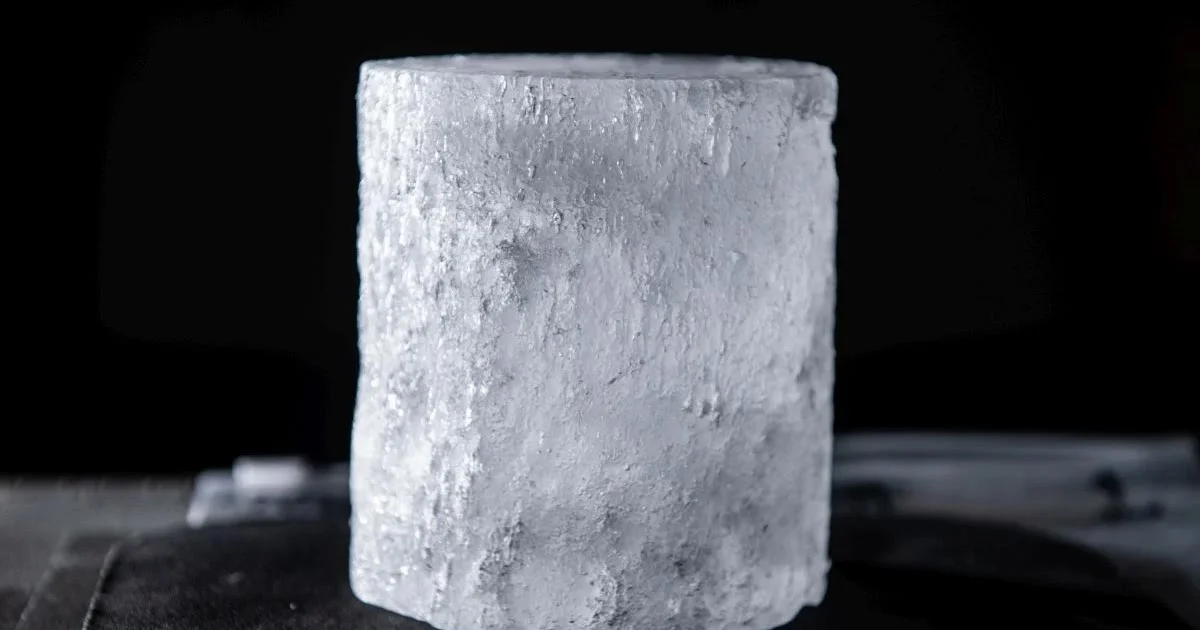
The Solar System is currently traversing a cloud of stellar debris. A recent study published in Physical Review Letters by a team of nuclear physicists has confirmed that our immediate galactic environment is infused with remnants from massive stellar explosions. The researchers tracked the isotope iron-60 in Antarctic ice to uncover these findings.
Since the 1990s, it has been established that supernovae exploded near the Sun millions of years ago, creating a "Local Bubble" filled with hot, low-density gas (approximately 0.05 atoms/cm³). Our Solar System has been moving through this Local Bubble for several million years, and we are currently situated within a denser structure known as the Local Interstellar Cloud (LIC), part of a larger complex of nearby interstellar clouds (CLIC). The origins of these clouds remain uncertain but may be linked to the dynamic effects of supernova shock waves. If supernovae are indeed responsible for these clouds or influence their characteristics, the CLIC could serve as a cosmic archive of such events.
However, a critical question arises: does the interstellar medium we are passing through still contain active traces of these cataclysmic events? The study led by Dominik Koll from the Technical University of Munich provides a definitive answer through advanced nuclear metrology.
Iron-60 is a radionuclide that serves as undeniable evidence of recent explosive nucleosynthesis. It forms through successive neutron captures on stable iron nuclei within the cores of massive stars, culminating in their type II supernova explosions. With a half-life of 2.62 million years, iron-60 is considered a "short-lived" isotope on a cosmological scale, meaning that if it existed at the birth of Earth 4.5 billion years ago, none would remain today.
Koll and his team collected a 495-kilogram ice core from the Kohnen Station in Antarctica, which dates back between 40,000 and 81,000 years. To extract the signal of iron-60 from the background noise, they employed Accelerator Mass Spectrometry (AMS) at the 14 MeV tandem accelerator in Garching, Munich. The technical challenge was twofold, as they needed to separate iron-60 from stable, ubiquitous nickel-60, which shares the same atomic mass.
AMS, developed in the late 1970s, was designed to measure extremely rare isotopes, including long-lived natural radioisotopes produced by cosmic rays. For instance, AMS can convert carbon atoms in a sample into measurable ion beams while removing most other atoms of the same atomic mass. This technique allows for direct counting of target atoms without waiting for their decay, unlike traditional counting methods. The AMS technique introduces multiple successive filters that eliminate nearly all isobars (nuclei with different compositions but the same atomic mass), using differential energy loss in a gas selector for differentiation. Nickel, having two more protons than iron (28 versus 26), interacts more strongly with the gas, allowing for selective deviation.
Although initially developed for cyclotrons, AMS is now predominantly implemented on tandem accelerators with voltages ranging from 0.5 to several megavolts. These particle accelerators, such as Van de Graaff electrostatic types, require the injection of negative ions. A high voltage accelerates these ions, which are then converted into positive ions at the anode by a stripper system. The German physicists transformed their ice core into water vapor, ionized it, and injected it into the accelerator.
Another technical challenge was that cosmic rays can also produce iron-60 through spallation reactions of iron or nickel nuclei found in terrestrial or atmospheric dust (by knocking out protons or neutrons). The team simultaneously measured another isotope, manganese-53, which is produced solely by cosmic rays, to compare its abundance with that of iron-60. They found that the ratio of iron-60 to manganese-53 was significantly higher than what would be expected from purely cosmic production, confirming an interstellar origin for the iron-60 in their ice sample.
In total, the researchers detected just 10 atoms of iron-60. While this number may seem minuscule, it represents a significant deposition rate when scaled to surface area and time: approximately 0.22 atoms of iron-60 per cm² per year, or one atom every five years on one cm² of ice surface. This finding is crucial for two reasons: it aligns, albeit slightly lower, with measurements from deep-sea sediments over the last 40,000 years, suggesting that Earth has been passing through a relatively homogeneous interstellar structure enriched with supernova dust for millennia. The study demonstrates that the Local Interstellar Cloud (LIC) is not merely composed of gas but also carries solid dust grains enriched with radioactive heavy elements from past supernovae.
The authors also note that variations in the heliosphere, due to its interaction with the changing interstellar medium while the Solar System moves through the CLIC, could lead to fluctuations in the intensity of galactic cosmic rays near Earth. The abundance of cosmogenic radionuclides on Earth, such as beryllium-10 or carbon-14, may reflect these variations. Known anomalies, such as Miyake events caused by solar activity variations, or the recently discovered Late Miocene anomaly, provide valuable insights into geological and cosmic processes. Targeted research into radionuclide anomalies during the Solar System's passage through the CLIC, combined with heliospheric models accounting for interstellar-induced modulations, could complement records of iron-60 produced by supernovae.
This discovery confirms that the Solar System navigates an environment shaped by stellar deaths. The iron-60 found in the ice likely originates from supernovae that exploded millions of years ago in the Scorpius-Centaurus stellar association, the nearest star-forming region to us. These dust particles traverse the interstellar medium, cross the magnetic boundary of our Solar System, and ultimately settle in the ice at Earth’s poles. We are collecting the remnants of long-dead stars within the ice today.