The Predictability of Eclipses: Insights from Ancient Civilizations
The Saros cycle, known since Babylonian times, allows for the prediction of solar and lunar eclipses. This article explores how ancient civilizations understood these astronomical events.
The Predictability of Eclipses: Insights from Ancient Civilizations
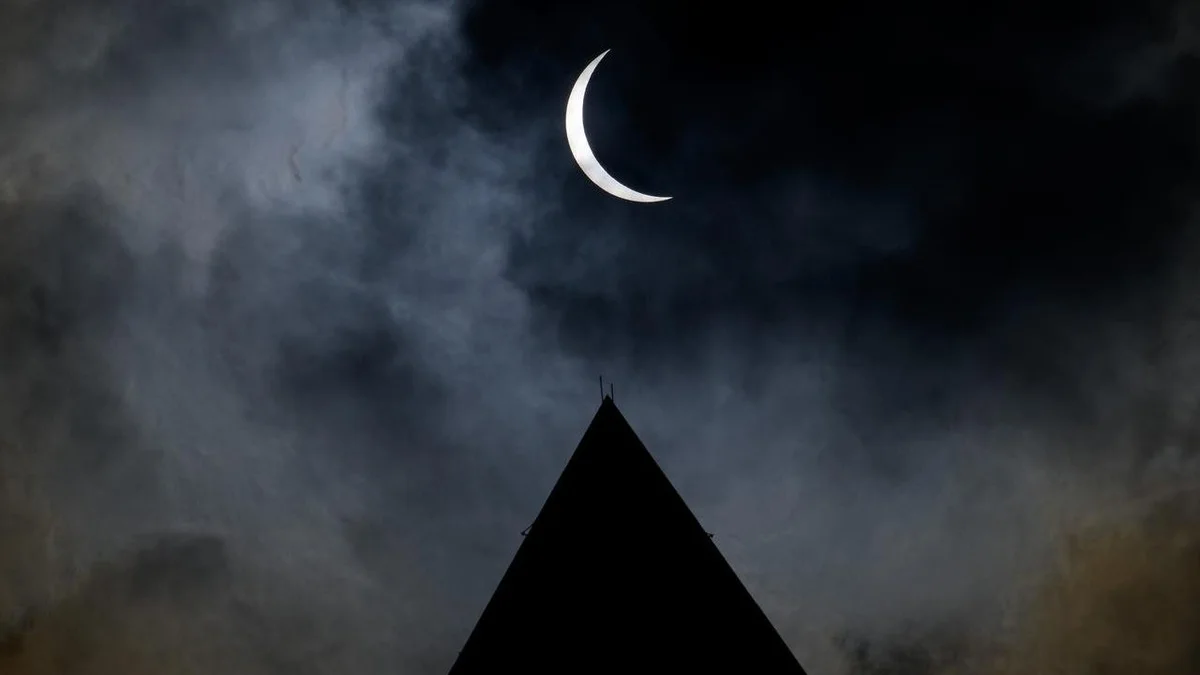
Eclipses, both solar and lunar, follow a predictable pattern, a fact that has been recognized since ancient times. The phenomenon known as the Saros cycle allows for the anticipation of these celestial events, with a cycle lasting approximately 18 years, 11 days, and 8 hours. This cycle is crucial for understanding the alignment of the Earth, the Moon, and the Sun, enabling predictions such as the upcoming August 12, 2026 eclipse, which is based on calculations that date back millennia.
Understanding the Saros Cycle
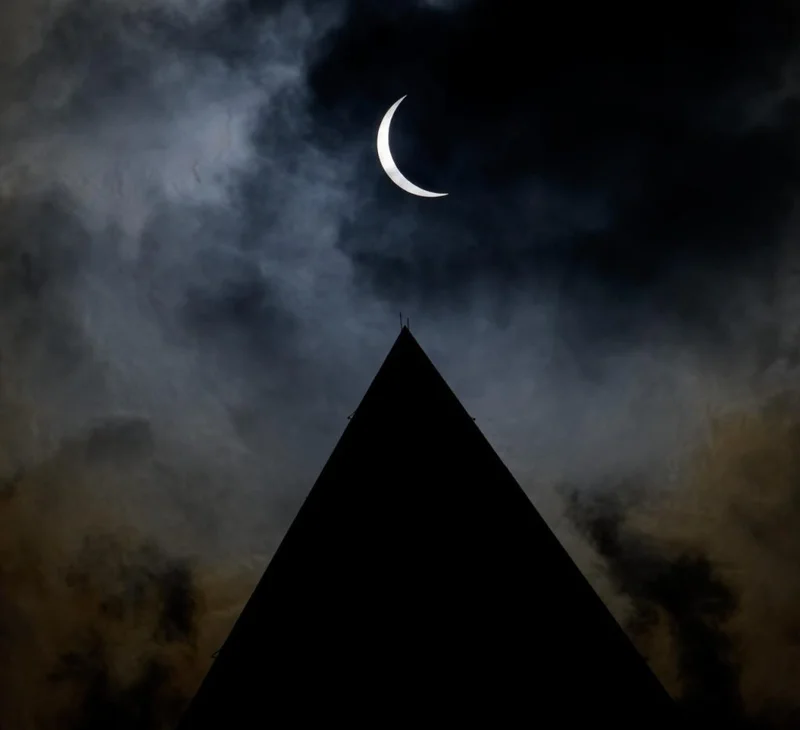
A Saros cycle is defined as the interval after which the Earth, Moon, and Sun return to nearly the same relative positions. This cycle was understood by the Babylonians, who utilized their advanced mathematical skills to uncover many astronomical phenomena. During each Saros cycle, approximately 40 solar eclipses and a similar number of lunar eclipses can occur. An interesting aspect of this cycle is the 8-hour offset, which accumulates over three cycles to equal a full 24-hour rotation of the Earth, allowing the same eclipse to be observed at the same location after this period.
Babylonian Insights into Eclipses
The ability to predict eclipses with accuracy is not a modern development; it has roots that extend back 2,700 years. The ancient Mesopotamians recognized the cyclical nature of these phenomena, and their astronomers meticulously calculated and recorded these observations. They documented their findings in astronomical diaries, which were inscribed on clay tablets in the Akkadian language. This historical record illustrates how contemporary science has inherited knowledge from these ancient cultures.
A Cultural Legacy
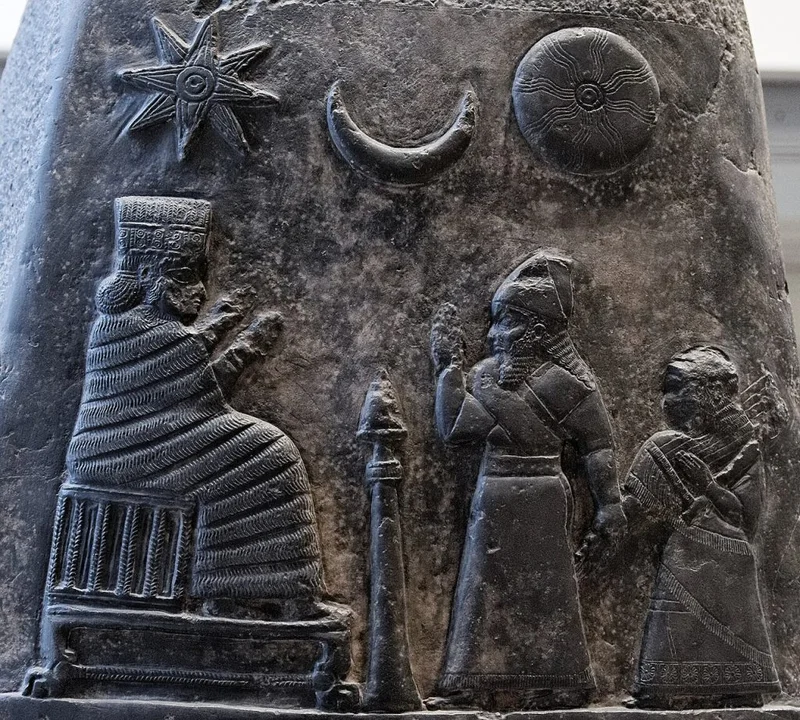
In ancient Near Eastern cultures, celestial bodies like the Sun and Moon were often linked to specific deities, reflecting their significance in religious practices and iconography. It is common to find representations of the Moon as a crescent and the Sun as a disc in various artifacts, showcasing the intertwining of religious devotion and scientific inquiry. The Saros cycles exemplify this blend of spirituality and scientific understanding. The years 2026 and 2027 are poised to be significant for eclipse events, reminding us that, like our ancient predecessors, we too look to the heavens with anticipation.