The Moon: A Gateway to Understanding Our Solar System
Explore the Moon, Earth's only natural satellite, its formation theories, surface features, and its impact on tides and timekeeping. Learn about its fascinating characteristics and phases.
The Moon
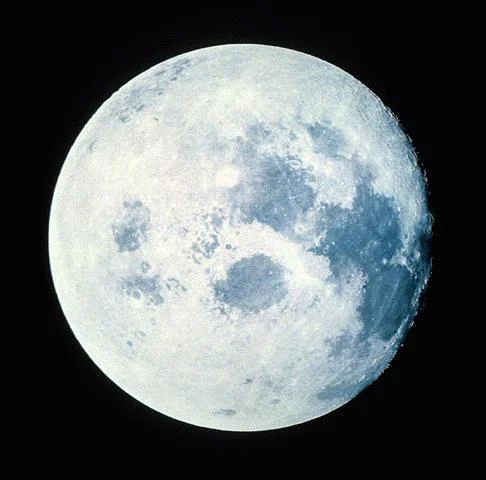
The Moon stands as Earth’s sole natural satellite and is the only celestial body in our solar system that can be observed in detail with the naked eye or through simple instruments.
It orbits the Earth while simultaneously rotating on its axis, a unique synchronization that results in the same side always facing us, as it takes the same amount of time to complete both a rotation and an orbit around our planet.
Basic Facts
The Moon
- Size: Equatorial radius 1,737 km.
- Average distance from Earth: 384,403 km.
- Day: Rotation period about its axis 27.32 days.
- Orbit around Earth: 27.32 days.
- Average surface temperature (day): 107 ºC.
- Average surface temperature (night): -153 ºC.
Lacking an atmosphere or water, the Moon's surface remains largely unchanged over time, only altered by occasional meteorite impacts, leading to its classification as a fossilized body.
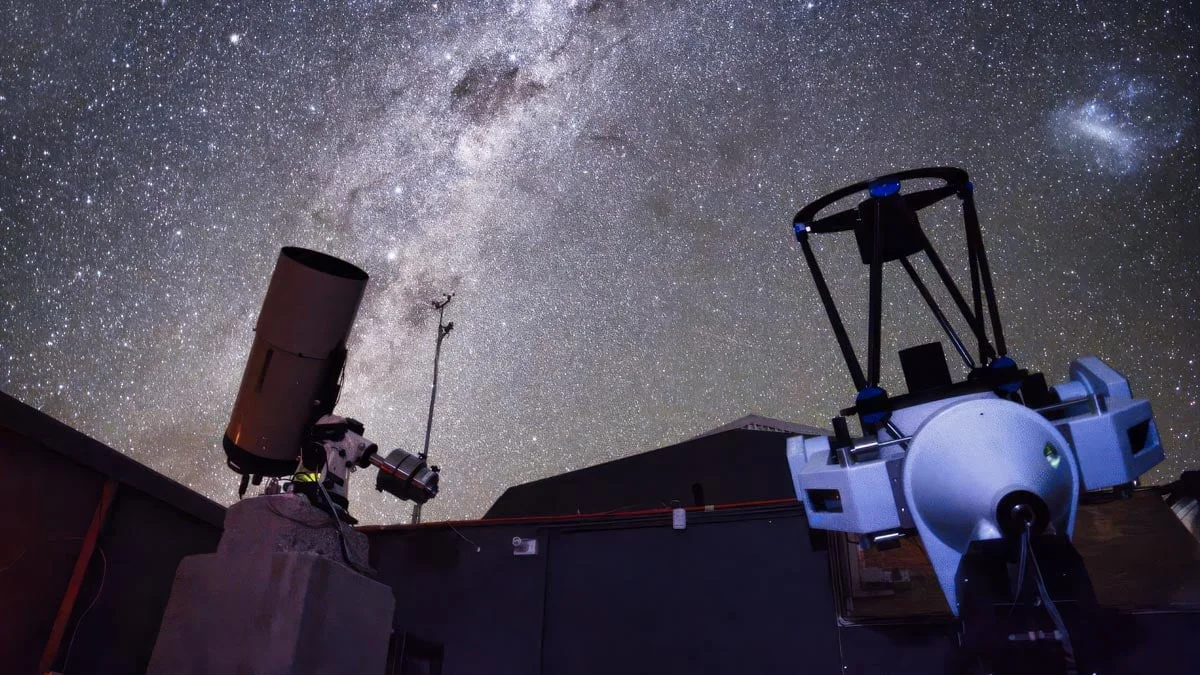
Since the Renaissance, telescopes have unveiled numerous details of the lunar surface, and space missions have further expanded our understanding. Today, we recognize that the Moon features craters, mountain ranges, plains or seas, fractures, peaks, rilles, and rays.
The largest crater is known as Bailly, measuring 295 km in diameter and 3,960 m deep. The most extensive mare is Mare Imbrium (Sea of Rains), spanning 1,200 km. The tallest mountains, located in the Leibniz and Doerfel ranges near the south pole, reach heights of up to 6,100 m, comparable to the Himalayas.
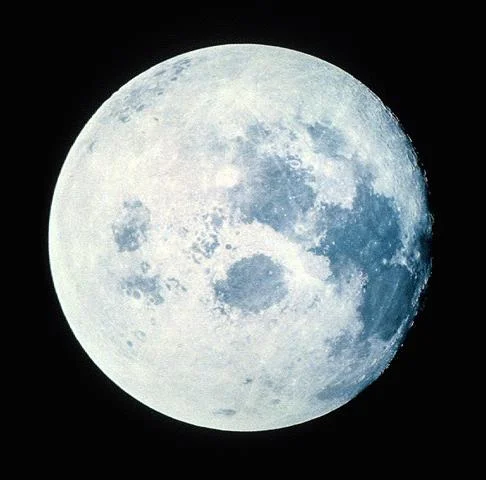
The origins of lunar craters have sparked considerable debate. Research indicates that most were formed by high-velocity impacts from meteorites or small asteroids, particularly during the early history of the Moon, when the solar system was still filled with such debris. Nonetheless, some craters, rilles, and peaks exhibit characteristics that are unmistakably volcanic in origin.
While nearly every planet in the solar system boasts moons, Earth’s satellite is notably larger than those of other planets. The Earth's size is approximately 3.6 times greater than that of the Moon, leading some to classify the Earth-Moon system as a double planet.
Several theories exist regarding the Moon's formation. One prominent hypothesis is the collision theory, which posits that a young Earth collided with an asteroid or comet, resulting in debris that formed a ring around the planet, eventually coalescing into the Moon.
Another theory introduced by George Darwin, son of Charles Darwin, is the fission theory, suggesting that the Moon separated from the Earth's crust. Despite various theories and hypotheses, the exact origins of the Moon remain a topic of ongoing investigation.
Nevertheless, the Moon orbits Earth at an average distance of 376,600 kilometers, exerting a gravitational pull that distorts the planet, particularly its oceans, and influences their movements, potentially initiating glacial periods.
The Moon and Tides
Tides refer to the periodic rise and fall of water levels, primarily caused by the gravitational forces of the Moon acting on Earth. This gravitational pull is stronger when the Moon is closer to Earth and weaker when it is farther away, leading to the phenomenon of high tides.
The decrease in water levels is referred to as low tide.
Phases of the Moon
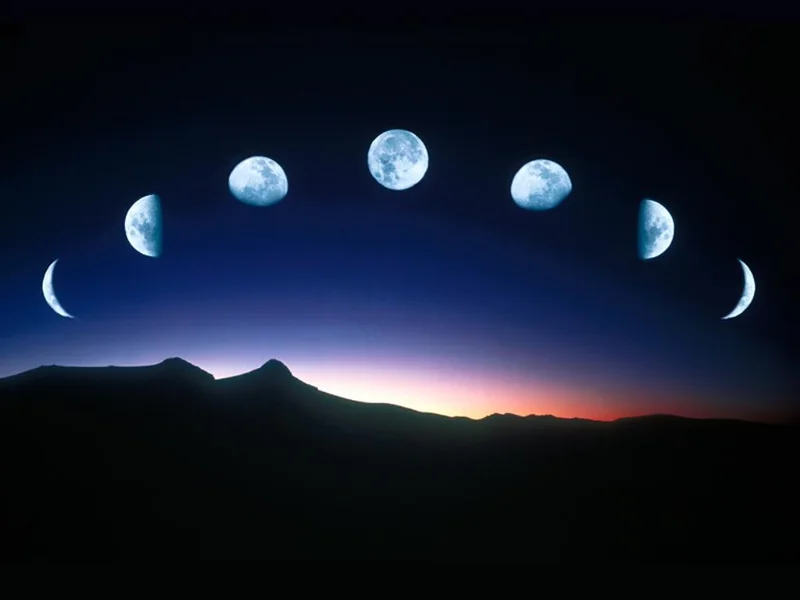
As the Moon orbits Earth, sunlight illuminates it from varying angles, creating its distinct phases. When the entire face visible to us is illuminated, it is termed a full moon. Conversely, when the Moon is completely obscured from view, it is known as a new moon. Between these two phases, we observe a portion of the Moon that appears as either a waxing or waning crescent or gibbous.
Early civilizations measured time by tracking the lunar phases. Each phase lasts about a week, with a complete lunar cycle spanning roughly a month.